September 19, 2026 · Uncategorized
Are Lab Grown Diamonds Good for Engagement Rings
You're in Las Vegas. Maybe you're downtown already. Maybe you've got dinner booked, a chapel in mind, and you finally decided tonight is the night. Then reality hits. Most ring shopping advice assumes you've got weeks to compare stones, order a setting, and wait for shipping.
That's not how Las Vegas works.
If you need a real answer to are Lab Grown Diamonds good for engagement rings, my answer is yes. In this market, especially for same-day proposals and chapel weddings, they're often the smartest choice. They're real diamonds, they're durable enough for daily wear, and they let you put your money into visible size and quality instead of paying the mined-diamond premium. For Las Vegas buyers who want to see the ring in person, review the paperwork, and leave with it the same day, lab-grown makes practical sense fast.
Table of Contents
- Are Lab Grown Diamonds Good for Engagement Rings
- What Lab Grown Diamonds Actually Are
- Durability, Appearance, and Certification Compared to Mined
- Price, Size, and What Your Budget Buys in Las Vegas
- Ethics, Sourcing, and What Lab Grown Does Not Fix
- Resale, Value Retention, and the Honest Trade-Offs
- How to Buy a Lab Grown Engagement Ring in Las Vegas Today
Are Lab Grown Diamonds Good for Engagement Rings
You're standing in Las Vegas with a reservation in two hours, a proposal plan for tonight, and no interest in waiting on a shipped ring. In that situation, lab-grown diamonds are usually the right call.
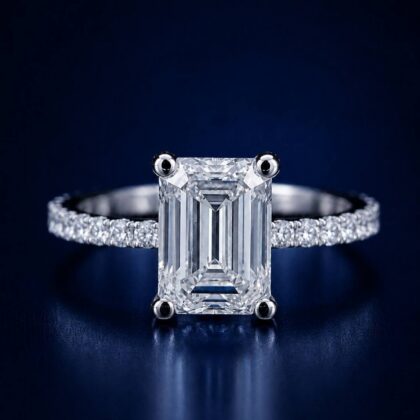
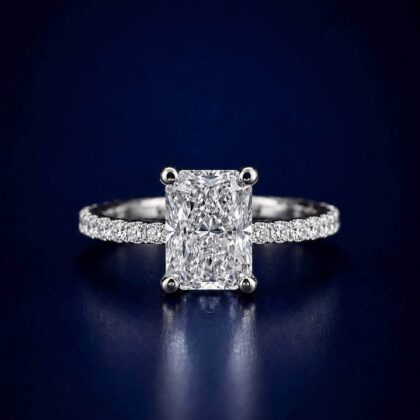
Yes, lab-grown diamonds are good for engagement rings. For many buyers walking into an appointment-only Las Vegas shop, they are the more practical choice. You get a real diamond that can handle daily wear, looks right in the ring box and in daylight, and leaves enough room in the budget for a better setting or a larger center stone.
That matters here. A lot of downtown proposals are fast decisions, not six-week shopping projects. Buyers want to sit down, compare a few stones side by side, check the IGI report in person, and leave with the ring that day. Lab-grown fits that buying pattern better than mined because the pricing is easier to work with and the size jump is immediate.
The budget difference is the strongest argument. BriteCo reported a 2025 median sales price of $4,557 for lab-grown diamond engagement rings versus $12,961 for natural-diamond rings, and noted that the median center stone size grew from 1.01 carats in 2019 to 2.0 carats in 2025 in its Jewelry, Diamond, & Watch Price Index. That lines up with what we see at the counter. In our Las Vegas inventory, buyers shopping around $3,000 to $5,000 usually have real options in lab-grown. In mined, that same budget gets tight fast.
Here's my direct recommendation. If your priority is getting the best-looking ring for the money, buy lab-grown. If your priority is long-term rarity or resale, buy mined and accept the higher price.
At our shop, that often means a customer can compare an IGI-certified lab-grown round around the 2-carat range against a much smaller mined option without leaving the appointment. That is why lab-grown keeps winning with same-day proposal buyers. You see the difference immediately, and you do not have to pretend the premium on mined always buys something visible.
The trade-off is simple. Lab-grown is the smarter purchase for wear, appearance, and budget. Mined still has the stronger story for scarcity. For an engagement ring you want to propose with tonight in Las Vegas, I'd steer most buyers to lab-grown.
What Lab Grown Diamonds Actually Are
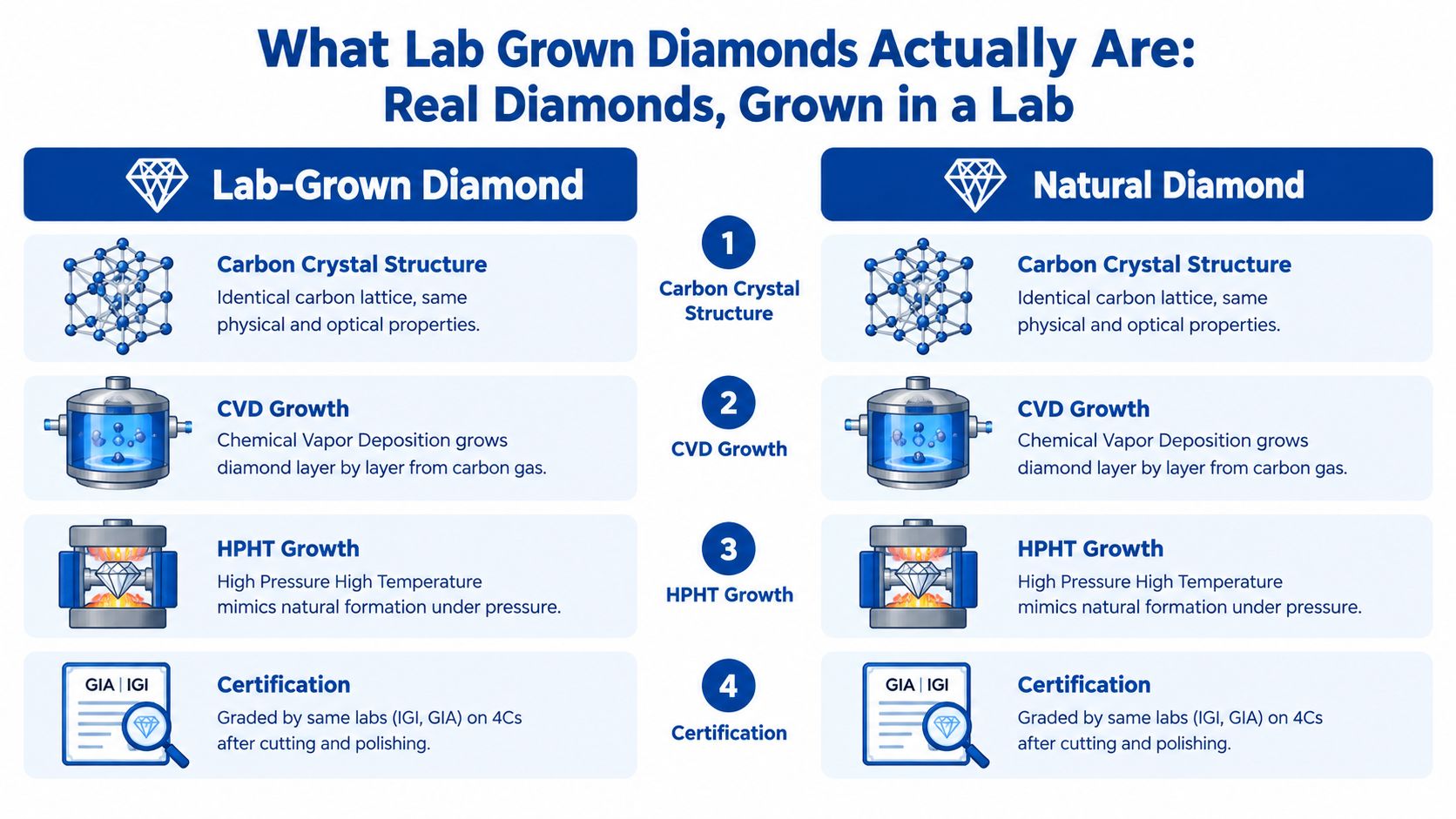
A lab-grown diamond is a real diamond crystal grown in a controlled facility instead of underground. It isn't fake. It isn't a diamond lookalike. It's carbon arranged in the same crystal structure as a mined diamond.
Two growth methods dominate the category. One is CVD, short for Chemical Vapor Deposition. The other is HPHT, short for High Pressure High Temperature. Both produce diamond crystal that then gets cut and polished the same way a mined diamond does.
A simple way to think about it is ice. Water can freeze in your freezer, or it can freeze outside in a winter storm. Different origin. Same material. Lab-grown and mined diamonds work like that.
What they are not
A lot of first-time buyers still mix up lab-grown diamonds with simulants. Don't.
- Cubic zirconia is not diamond.
- Moissanite is not diamond.
- Lab-grown diamond is diamond.
That distinction matters because the material affects how the stone wears, how it handles light, and how it's graded. A lab-grown diamond belongs in the same conversation as a mined diamond. CZ and moissanite belong in a different conversation.
Many also assume they'll be able to tell the difference by eye. They won't. Under a standard loupe, and often even with common diamond testers, the separation isn't obvious to a typical shopper. In practice, buyers rely on the grading report and the laser inscription on the girdle to verify whether the stone is lab-grown or mined.
Here's a quick visual explainer before you keep reading.
Why this matters in a Las Vegas ring purchase
If you're shopping for an engagement ring in Las Vegas, especially on a short timeline, understanding this category saves you from wasting time on the wrong comparison. The actual decision isn't “real diamond or fake diamond.” The key choice is lab-grown diamond or mined diamond.
That's a price, values, and logistics decision. Not a durability panic.
Buy based on what the ring needs to do for you. Don't buy based on outdated language that treats lab-grown like costume jewelry.
Durability, Appearance, and Certification Compared to Mined
In the store, this part is simple. If you need a ring that can handle daily wear, look sharp under restaurant lighting on the Strip, and be verified before you leave the appointment, a lab-grown diamond clears the bar.
Three things that actually matter
- Durability
For engagement-ring wear, lab-grown and mined diamonds perform the same way. Both are diamond. Both resist scratching at the top end of the hardness scale. What causes problems is usually not the origin of the stone. It is poor cut choices, exposed corners on certain shapes, weak settings, or an inclusion placed where the stone takes a hit.
That matters in Las Vegas because plenty of buyers are shopping on a deadline. If you are trying to propose tonight or this weekend, stop worrying that a lab-grown diamond is somehow too delicate for real use. It is not.
- Appearance
A well-cut lab-grown diamond can look every bit as crisp, bright, and lively as a well-cut mined diamond. The eye does not reward you for paying extra just because a stone came out of the ground.
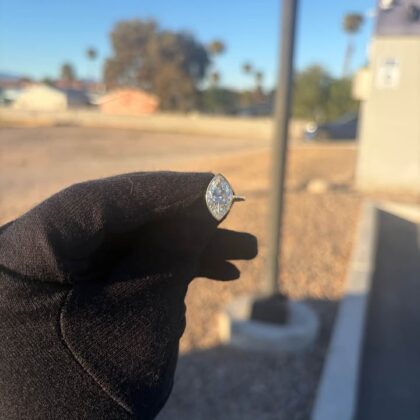
What does show up fast is shape, cut precision, and how the stone faces up in its setting. An oval that hides weight well can look bigger than a round at the same carat weight. A poorly cut cushion can look sleepy no matter what its paperwork says. If you are still deciding between outlines, review these engagement ring shapes and cuts before you compare stones in person.
- Certification
Buyers either protect themselves or get sloppy.
Both lab-grown and mined diamonds can come with grading reports from major labs. For lab-grown, I tell clients to stick with certified stones and read the report line by line. Check the color, clarity, measurements, cut details, and whether any treatment is disclosed. Then match the report number to the laser inscription on the girdle.
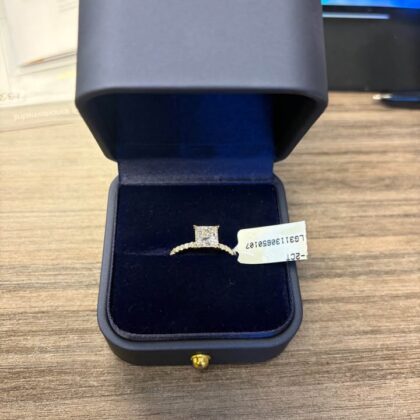
At Last Call Rings LV, we handle that verification in the appointment. We do not ask you to buy a stone blind and wait for paperwork to show up later. If you are buying for a same-day or next-day proposal downtown, that in-person check matters.
Lab Grown vs Mined Diamond Matched Comparison
| Attribute | Lab Grown Diamond | Mined Diamond |
|---|---|---|
| Material | Diamond | Diamond |
| Crystal structure | Same as mined | Same as lab-grown |
| Hardness | Same practical scratch resistance for daily wear | Same practical scratch resistance for daily wear |
| Everyday wear | Suitable for engagement rings | Suitable for engagement rings |
| Visible appearance | No obvious naked-eye category difference when well cut | No obvious category advantage when well cut |
| Grading reports | Available from major labs, with lab-grown origin disclosed | Available from major labs |
| Main buying question | Price, seller transparency, future value | Price, rarity, future value |
My recommendation as a jeweler
Buy lab-grown if your priority is how the ring looks, how fast you can get it, and how much size and quality your money buys. Buy mined if the origin itself matters to you and you are willing to pay for that preference.
Either way, require the report. Match it to the inscription. Look at the actual stone under normal lighting, not just jewelry-counter spotlighting.
Practical rule: For a daily-wear engagement ring, durability is already covered. The decisive quality control step is certification plus a clean visual inspection in person.
Price, Size, and What Your Budget Buys in Las Vegas
Lab-grown diamonds usually win the argument.
The broad market data is clear. A 2026 comparison reported that lab-grown diamonds are typically 80 to 86% less expensive than mined diamonds of comparable quality, with a 1.0-carat lab-grown stone around $800 to $1,500 versus $4,500 to $8,000 for a comparable mined stone, and a 2.0-carat lab-grown stone around $1,800 to $3,500 versus $16,000 to $30,000 for mined in this 2026 lab-grown versus mined comparison.
That price spread changes the ring you can walk out with in Las Vegas. You're not shaving a little off the bill. You're often moving from “small center stone, plain setting” to “noticeably larger center stone, cleaner specs, better mounting.”
What budget shoppers should expect
A mainstream retailer-quality comparison from 2026 said a 1.5ct F/VS2 lab-grown diamond generally retails around $2,800 to $3,400, while an equivalent mined stone runs about $7,500 to $8,500, according to this retailer-quality pricing comparison. That's the budget mechanic that matters. Same visual category. Very different spend.
For Las Vegas buyers, that usually means one of three moves:
- Go bigger: Keep the same budget and move up in carat.
- Go cleaner: Stay near the same size and improve color or clarity.
- Go stronger on the setting: Use the savings for a hidden halo, pavé band, or a more substantial gold mounting.
What Your Budget Buys in Las Vegas Lab Grown vs Mined
| Budget | Lab Grown (approx.) | Mined Equivalent (approx.) | Visible Difference |
|---|---|---|---|
| $1,500 | Around a 1.0-carat stone in the price ranges cited above | Entry point in mined is much tighter at comparable quality | Lab-grown usually gives a stronger size-for-budget result |
| $3,000 | In range with the cited 1.5ct F/VS2 lab-grown retail examples | Still below equivalent mined 1.5ct pricing | Lab-grown can look significantly larger on the hand |
| $5,000 | Well positioned for a larger or finer-quality lab-grown ring | Comparable mined options remain more constrained | Buyer often gets more size or a better setting with lab-grown |
If you want a Las Vegas-specific breakdown of how local in-stock options tend to line up against budget, this page on lab-grown diamond engagement rings in Las Vegas and what you actually get for your money is worth reading before you book an appointment.
My direct advice
If your total ring budget is fixed, start with lab-grown first. Compare what that budget buys you in person. Then look at mined only if rarity matters enough to justify the smaller stone or higher spend.
That's especially true for same-day Las Vegas buyers. A buyer with a realistic budget can leave that afternoon with a visibly stronger ring instead of starting a custom order and waiting.
Ethics, Sourcing, and What Lab Grown Does Not Fix
Lab-grown diamonds have ethical advantages. They also get oversold. You need to hold both ideas at once.
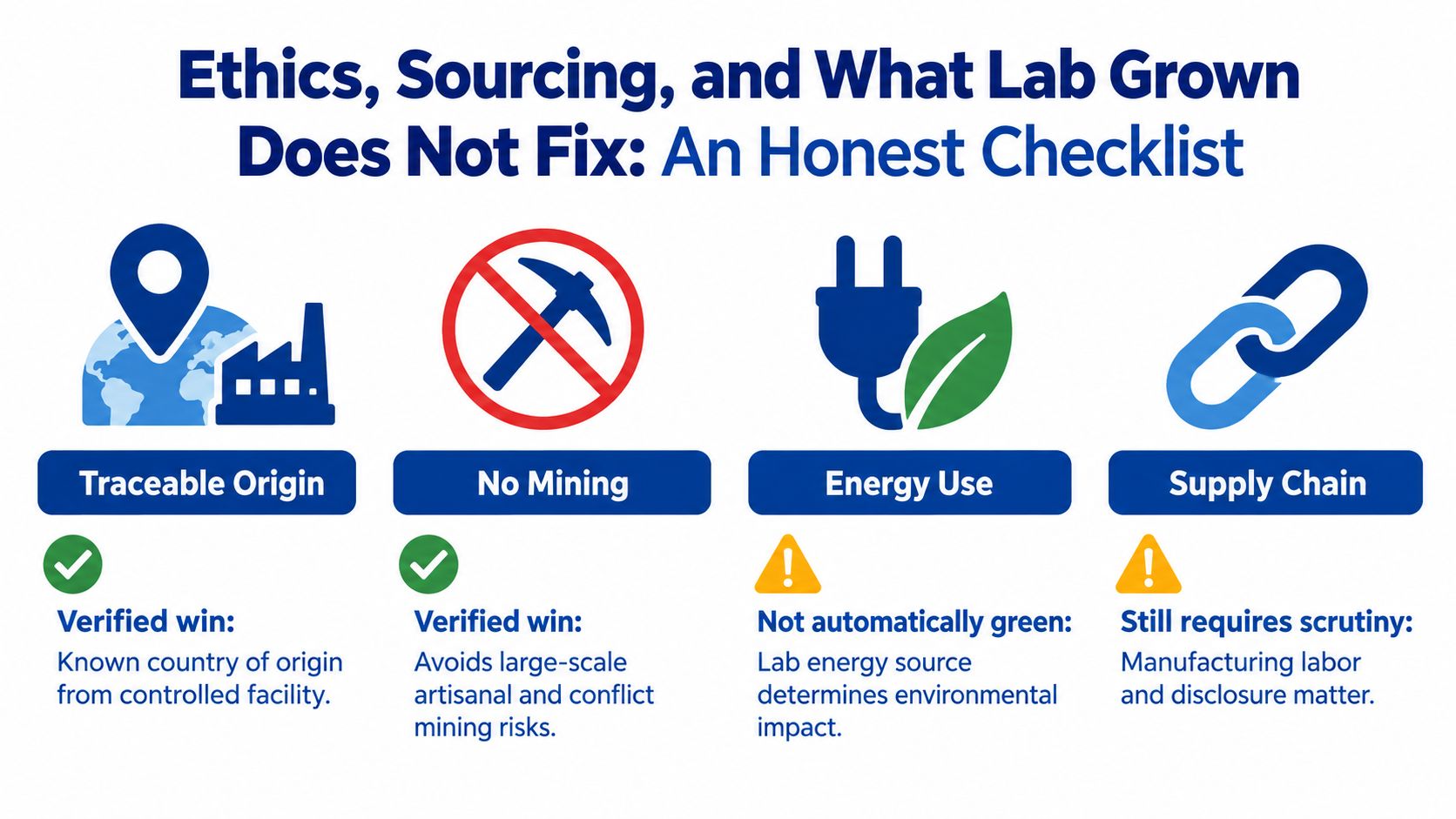
The cleanest ethical argument is traceability and mining avoidance. A controlled production chain gives buyers a more knowable origin story than the old “trust the supply chain” pitch that surrounded many mined diamonds. That matters to people who don't want a proposal ring tied to large-scale mining risk.
What lab-grown does improve
Lab-grown is a reasonable choice if your goal is to avoid the social baggage many buyers associate with mining. It also gives you a supply chain that's easier to discuss in plain language at the counter.
That said, ethics doesn't come printed in full on a grading report.
What it does not fix
A lab-grown diamond doesn't automatically mean low-impact production. Growing diamonds uses industrial equipment and power. Some producing regions rely on grid energy that may or may not match the sustainability story attached to the ring.
It also doesn't solve every labor question. Manufacturing, cutting, polishing, mounting, and distribution still involve people across multiple stages. If a seller can't explain what they know about those stages, don't fill in the blanks for them.
Ask direct questions:
- Growth method: Was it grown by CVD or HPHT?
- Disclosure: Does the report note any post-growth treatment?
- Origin clarity: What can the jeweler verify in writing?
- Store policy: What claims is the shop willing to stand behind after the sale?
Ethics is layered. If someone tries to reduce it to one word on a sales tag, they're selling a mood, not giving you usable information.
For Las Vegas shoppers, the smartest move is to verify what you can in person and stay skeptical about claims you can't.
Resale, Value Retention, and the Honest Trade-Offs
This is the part most sellers soften. I won't.
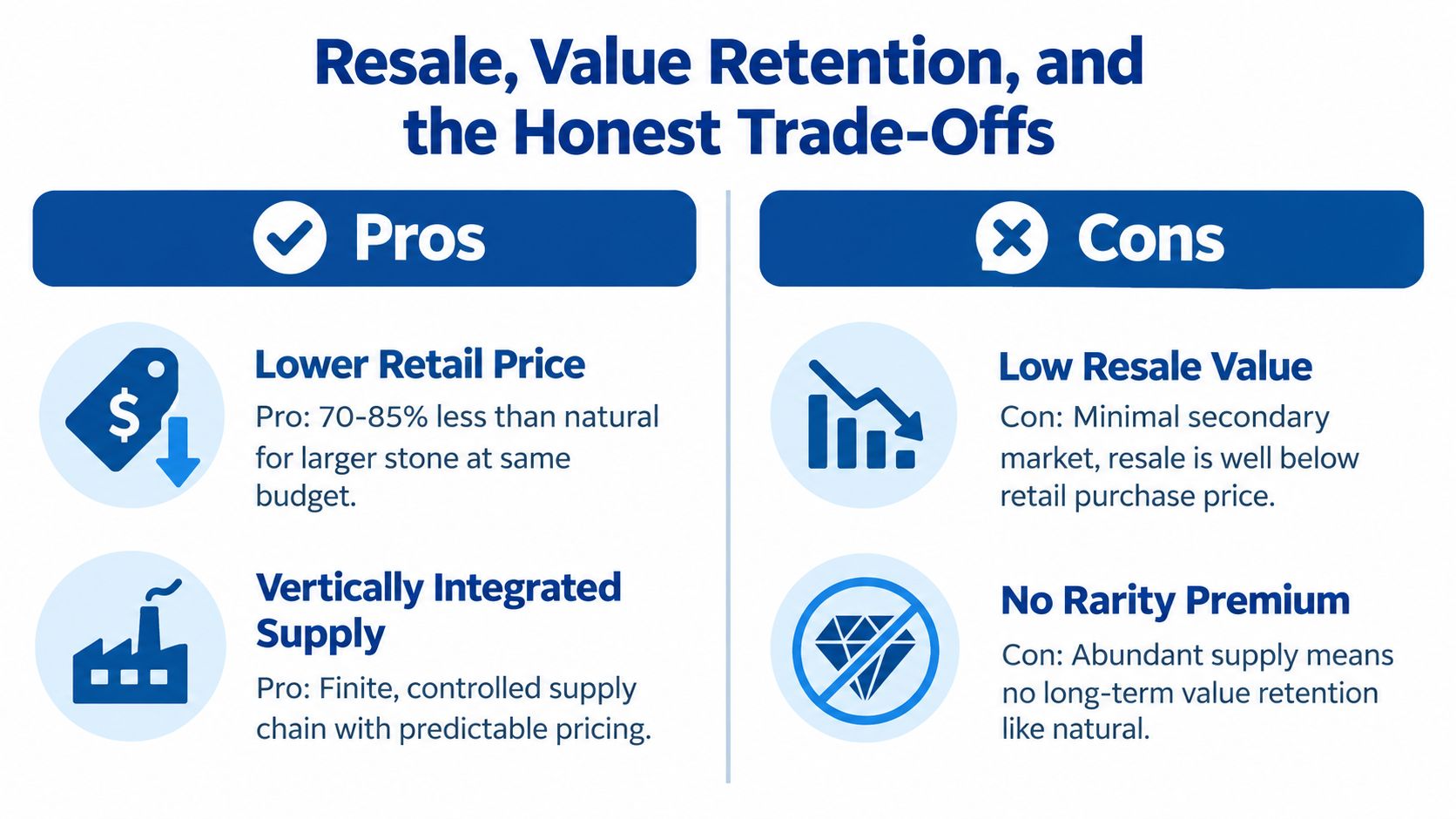
Lab-grown diamonds usually have weak resale value. That is the primary trade-off. The stone may be excellent for wearing, gifting, and proposing. It usually isn't strong as a future asset.
Independent market summaries cited typical cash recovery at around 5 to 20% of original retail in some exit routes, with broader ranges of roughly 10 to 30% or 20 to 40% depending on channel and timing, in this 2026 summary of lab-grown diamond resale value. That's why I tell engagement-ring buyers to treat lab-grown as a purchase for use, not a purchase for appreciation.
What that means in plain English
You're buying more ring today and giving up future liquidity.
That sounds harsh until you look at how people use engagement rings. People wear them. They don't flip them. They don't trade them like commodities. So the question becomes whether you'd rather have a larger, better-looking ring now or preserve a resale advantage you may never use.
Who should choose mined instead
Mined still makes more sense for some buyers.
- Heirloom-focused buyers: If continuity across generations matters, mined can fit that story better.
- Rarity-driven buyers: If geological origin is part of the emotional value, pay for it intentionally.
- Future-swap thinkers: If you know resale matters to you, be honest early.
Who's usually well-served by lab-grown
Lab-grown works especially well for first-time buyers, same-day proposal shoppers, and couples who care more about the ring on the hand than future secondary-market value. It also fits buyers who expect to upgrade later and want to preserve cash now.
Consumer hesitation still exists around authenticity language and value retention, which is part of why this topic keeps coming up in bridal sales, as discussed in this consumer-focused coverage of natural versus lab-grown concerns.
Buy a lab-grown diamond because you want the ring, not because you expect it to behave like an investment.
How to Buy a Lab Grown Engagement Ring in Las Vegas Today
Las Vegas ring buying works better when you stop pretending it's a slow luxury ritual and treat it like a real local purchase. If you want a ring today, handle the basics before you walk in.
Start with four pieces of information:
- Budget range: Give a real number, not “seeing what's out there.”
- Shape preference: Round, oval, radiant, pear, emerald.
- Metal choice: White gold, yellow gold, or rose gold.
- Best-guess size: Borrowed ring, traced ring, or a straightforward estimate.
That lets a jeweler pre-pull the right options instead of making you stare at random inventory. In Las Vegas, speed matters.
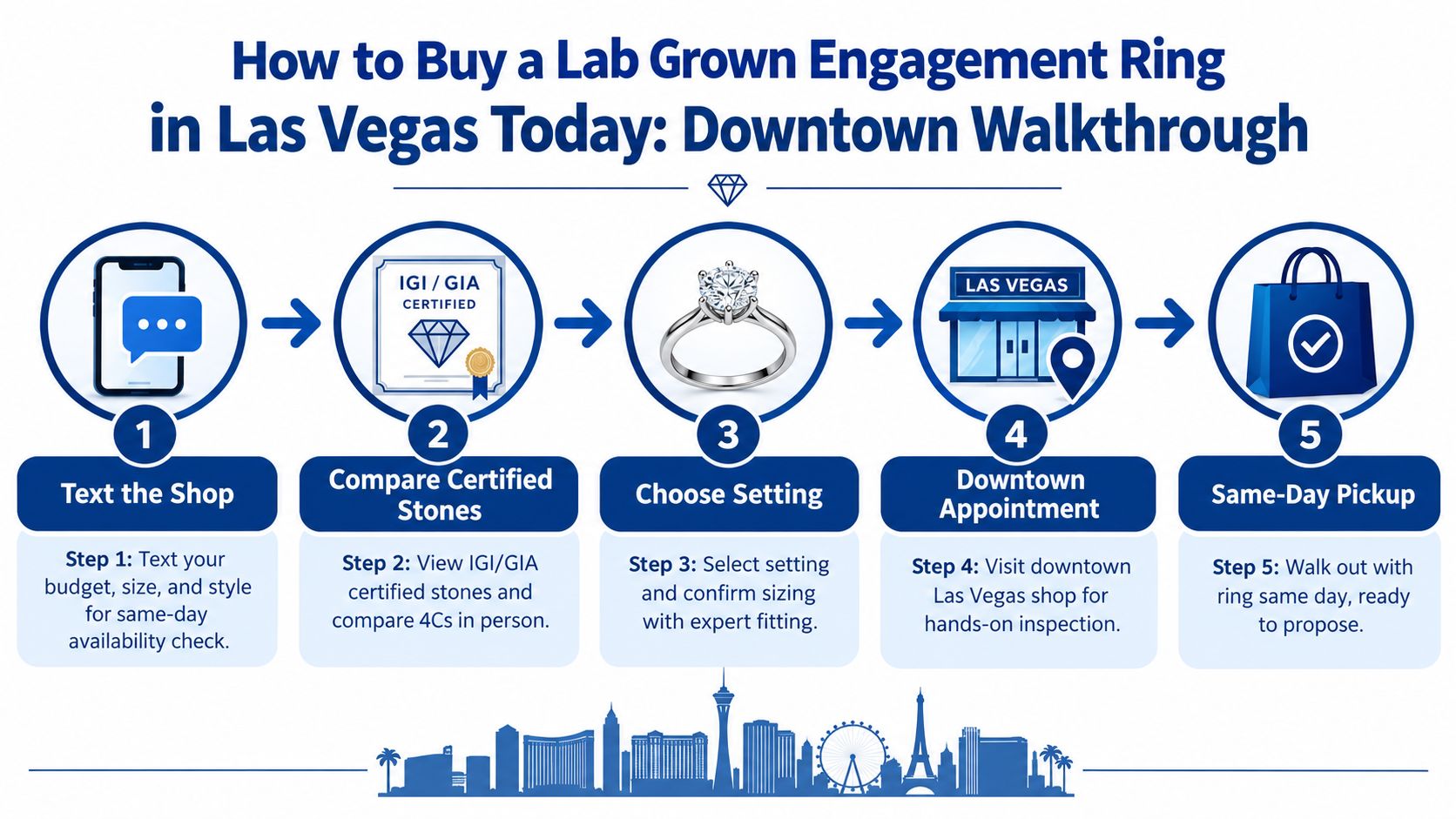
What an efficient appointment should look like
You should see the stone under proper lighting. You should review the grading report. You should compare more than one option if your budget allows it. And you should know exactly whether the ring is ready to leave with you today.
That's where an inventory-first local model matters. Last Call Rings LV is a by-appointment Las Vegas jeweler at 2925 Fremont St with in-stock lab-grown engagement rings, transparent listed pricing, IGI-certified stones, and no shipping model, which fits buyers who want to inspect the ring and take it home the same day. If you're shopping locally, start with their Las Vegas engagement rings page and narrow by what's physically available.
Why local timing matters in this city
Las Vegas has a built-in same-day wedding system. The Clark County Marriage License Bureau at 201 E. Clark Avenue is open 7 days a week from 8 a.m. to midnight, including holidays, according to the official Weddings.Vegas contact page. That's a big deal for ring buyers here. You can handle the legal side and the ring purchase on the same day without crossing half the valley.
This is why I push buyers away from vague “we can order that” promises. If you need the ring now, buy what's in the case now.
What to text before you go
Send a short message with the details that matter.
- Your budget: Keep it honest.
- Your shape: One favorite, one backup.
- Your timeline: Today, tonight, or this weekend.
- Your ring size guess: Exact if known, estimated if not.
- Your setting style: Solitaire, hidden halo, pavé, or three-stone.
Bring your ID, your payment method, and one clear photo of what your partner likes if you have it. Don't overcomplicate this. A good appointment should feel focused, private, and fast enough that you can still make your dinner reservation.
If you want a lab-grown engagement ring in Las Vegas without waiting on shipping or guessing what's in stock, Last Call Rings LV offers private, text-scheduled appointments with in-case rings that are ready to view and purchase downtown. If your plan involves a same-day proposal, a chapel timeline, or a fixed budget, that local setup makes more sense than ordering blind and hoping the ring shows up the way you pictured it.