September 18, 2026 · Uncategorized
3 Carat Round Solitaire Diamond Engagement Rings Guide
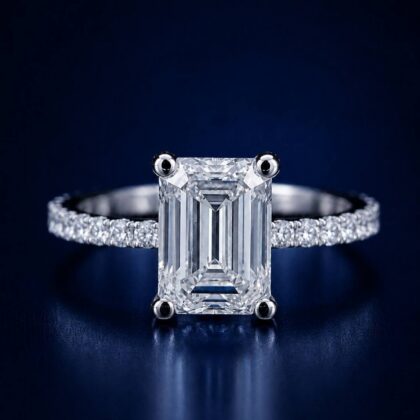
You're in Las Vegas, the proposal is planned for tonight, and the ring still isn't on your finger. Maybe you're heading downtown for a marriage license, meeting a chapel coordinator near the Strip, or trying to turn a short visit into a surprise engagement. In that situation, an online ring that ships later isn't useful. You need a 3 carat round solitaire diamond engagement ring that's certified, physically available, priced clearly, and ready to leave with you.
A round solitaire is still the cleanest high-impact choice. The question is whether you should buy natural or lab-grown, how to avoid paying for hidden weight, and how to coordinate the purchase with a same-day Las Vegas proposal or ceremony. The advice below is built for a smart buyer who wants the stone to look exceptional without showroom pressure.
Table of Contents
- Planning a Las Vegas Proposal with a 3 Carat Ring
- Understanding 3 Carat Lab Grown vs Natural Diamond Pricing
- What to Look for in an Ideal 3 Carat Cut
- Is a 3 Carat Round Still the Best Value in 2026
- How to Verify IGI Certification and Report Numbers
- Buying Your Ring Same Day in Downtown Las Vegas
- Your Next Steps for a Confident Purchase
Planning a Las Vegas Proposal with a 3 Carat Ring
A couple can start the day at the Clark County Marriage License Bureau, take photographs downtown, and still have a chapel ceremony or proposal planned for later. The pressure comes from the timing. You're not casually browsing for a ring that may arrive in several weeks. You're looking for a finished piece that fits the occasion and can be checked before you pay.
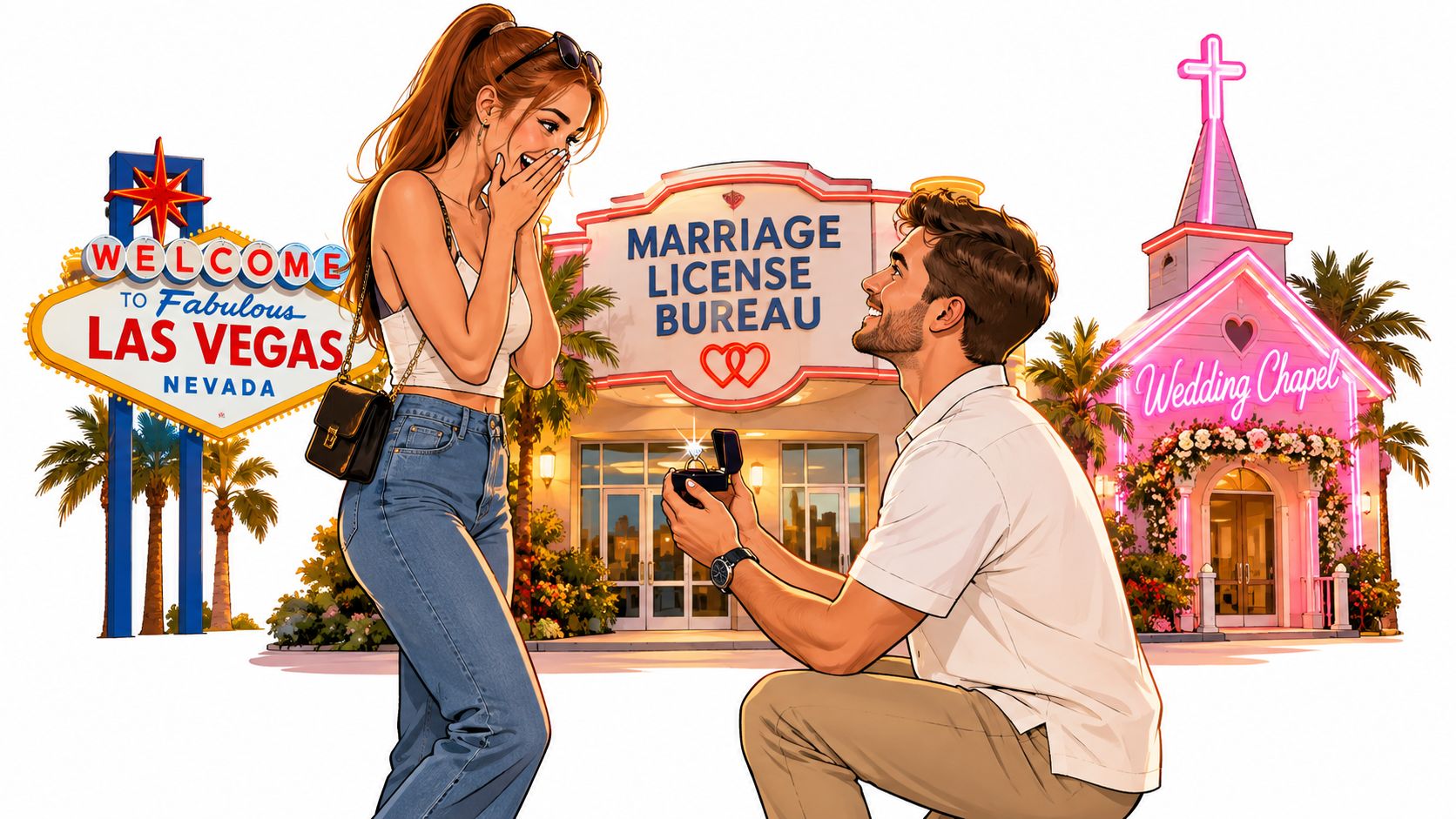
The downtown location matters because Las Vegas wedding logistics are unusually concentrated. Clark County's Marriage License Bureau is at 201 E. Clark Avenue, and it's open 7 days per week from 8 a.m. to midnight, including holidays, according to the official Clark County location and hours page. The county identifies 8 a.m. to 10 a.m. and 8 p.m. to midnight as the least busy times, which can help couples coordinate a license visit around a private appointment with a jeweler.
Decide what must be ready today
Before you contact a store, separate your essentials from your preferences.
- Center stone: Round brilliant, close to 3 carats, with a report you can verify.
- Diamond origin: Natural or lab-grown, chosen before the appointment rather than under sales pressure.
- Setting: Solitaire, with a secure head and a ring size that can be taken home immediately.
- Budget: A maximum total price, not just a loose-diamond target.
- Timing: Pickup before the proposal, courthouse visit, or chapel ceremony.
A 3 carat center is visually dominant, so the setting shouldn't compete with it. A simple white-gold or yellow-gold solitaire can look more intentional than a crowded design, especially when you're buying quickly and need to judge the ring in person.
Practical rule: Don't pay for a “ready today” promise until you confirm that the exact ring is physically in the Las Vegas case and that its report number matches the stone.
Text scheduling is useful in this setting because you can send your budget, preferred metal, ring size, and natural versus lab-grown preference before leaving your hotel or home. Ask for photographs of the actual ring, the listed size, the grading report, and the pickup terms. Since this market is built around urgent proposals and chapel weddings, a local appointment should reduce uncertainty, not add another layer of waiting.
Understanding 3 Carat Lab Grown vs Natural Diamond Pricing
The natural market has a wide spread, and a headline average won't tell you what a particular stone should cost. In 2026, independent trackers place the average asking price for a 3 carat round natural diamond at about $35,620 to $40,800, while reported listings range from $883 to $120,552 depending on the 4Cs, retailer, and listing quality, as shown by The Diamond Price's 3 carat round natural diamond data.
That range isn't a contradiction. A low-priced listing may have major compromises in cut, clarity, color, documentation, or seller quality. At the other end, a well-cut stone with desirable grades can move far above the average. Round brilliant diamonds also generally carry a premium over many other shapes, which is why round is a useful benchmark when comparing listings.
Lab-grown pricing is dramatically lower in the same category. One 2026 market page places the fair market price for a 3 carat round lab-grown diamond around $3,170, with a current range of $2,940 to $3,560. Another index lists about $2,018 for the category, so buyers should treat these as market indicators rather than a guaranteed quote for a specific certified stone.
Compare the actual buying tiers
| Diamond Type | Quality Range | Price Range |
|---|---|---|
| Natural | Broad 3 carat round market | $35,620 to $40,800 average asking price, with listings from $883 to $120,552 |
| Lab-grown | Broad 3 carat round market | About $2,018 to $3,560 in cited market indicators |
| Natural | 3.00 to 3.09 carat round, G to H color, VS1 to VS2 clarity | About $41,200 to $63,900 |
| Lab-grown | 3.00 to 3.09 carat round, G to H color, VS1 to VS2 clarity | About $13,400 to $18,600 |
The quality-specific comparison is more useful than the broad average. A premium lab-grown stone in the G to H color and VS clarity range may cost far less than a natural stone with comparable stated grades, but you still need to inspect cut quality, fluorescence information where provided, proportions, and the grading report.
A recent 3 carat diamond ring pricing guide from Brilliant Earth estimates a natural solitaire at $11,150 to $103,150 and a lab-grown solitaire at $2,650 to $35,650, showing how much the setting, quality combination, and retailer can affect the finished-ring price. The same guide reports that lab-grown stones made up 51% of newly appraised engagement rings in early 2026, while 61% of surveyed consumers chose a synthetic center stone. Those figures explain why a Las Vegas buyer may see more substantial lab-grown inventory than natural inventory at a comparable budget.
For a buyer who wants size, clarity, and immediate availability, lab-grown usually creates the more efficient budget. Natural makes sense when rarity and mined origin matter more than maximizing visual scale. Don't let a salesperson frame the choice as ethical versus careless or prestigious versus cheap. It's a value and priority decision.
For a practical explanation of how lab-grown pricing translates into the finished ring, review what a lab-grown engagement ring budget actually buys in Las Vegas.
What to Look for in an Ideal 3 Carat Cut
At 3 carats, cut quality is the first filter. A large stone gives you more surface area to inspect, so dull areas, uneven brightness, and visible leakage are harder to dismiss. Carat weight tells you how much the diamond weighs. Cut determines how effectively it handles light and how much of that weight appears across the finger.
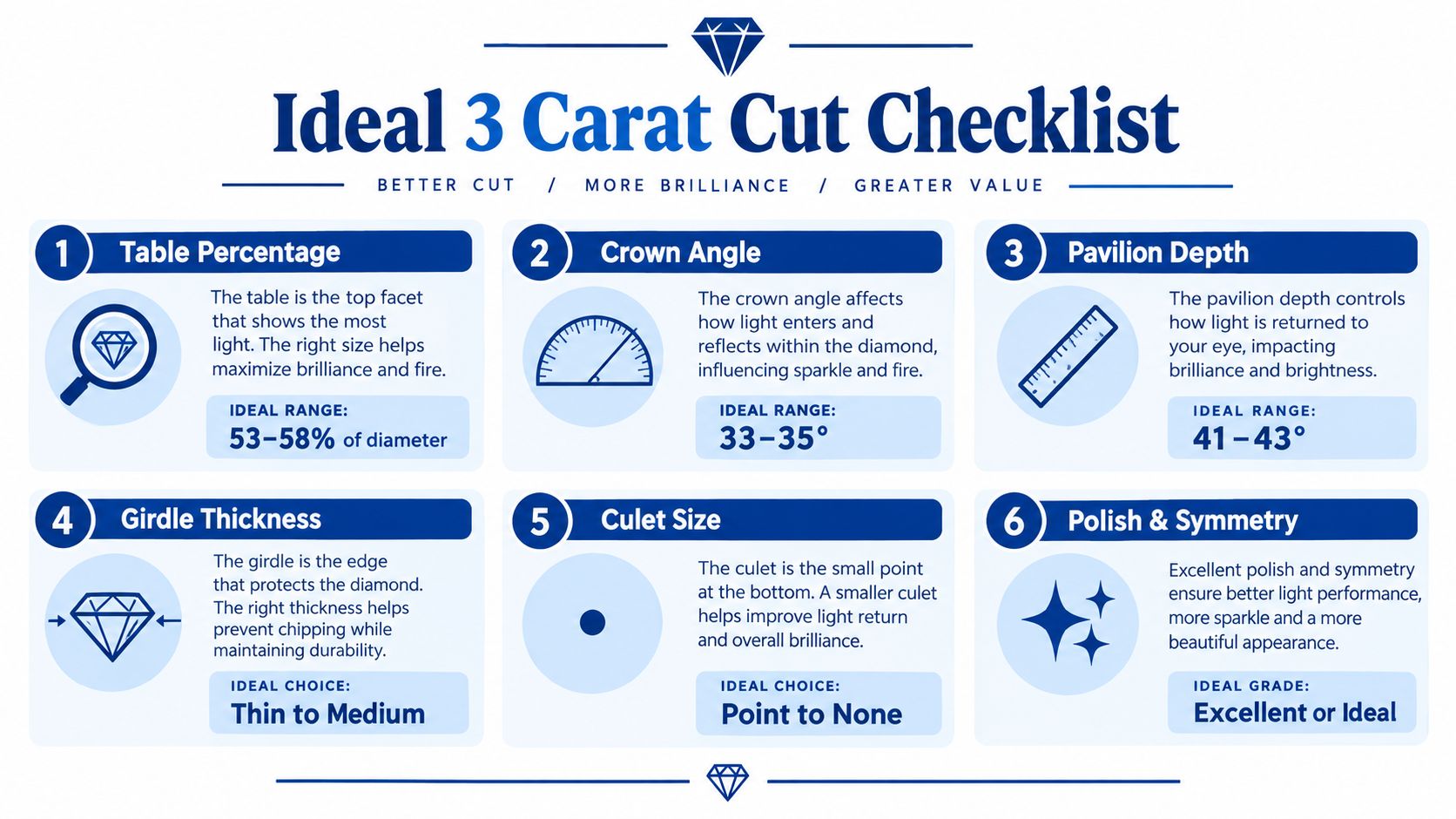
For round brilliants, expert proportion guidance commonly clusters around a 54% to 57% table, 59% to 62.5% total depth, crown angles near 34° to 35°, and pavilion angles around 40.6° to 41°, according to this round brilliant cut proportion guide.
Read the proportions before the sparkle
Use the report and listing details in this order:
- Start with the cut grade. Prioritize Excellent or Ideal where the grading system provides those categories. A strong grade narrows the field, but you should still inspect the actual stone.
- Check table and depth together. A table around 54% to 57% and depth from 59% to 62.5% are practical benchmarks. For visual spread and budget efficiency, guidance often prioritizes 61% to 62.5% depth rather than a stone that buries too much weight below the girdle, as explained by this table and depth buying guide.
- Review crown and pavilion angles. The crown helps create fire, while the pavilion is central to light return. Angles outside the balanced ranges deserve closer inspection rather than automatic rejection.
- Watch for leakage. Tilt the diamond and look for gray or transparent zones that fail to return light. A 3 carat stone should remain lively across the face, not sparkle only under a spotlight.
- Check polish and symmetry. Excellent grades are preferable because uneven facets or weak symmetry can affect the pattern you see.
The most useful in-person test is simple. View the ring under ordinary store lighting, move it through different angles, and compare it with another stone rather than trusting a single bright display lamp. Ask to see the stone loose if possible, or request a side-by-side comparison with a similarly graded option.
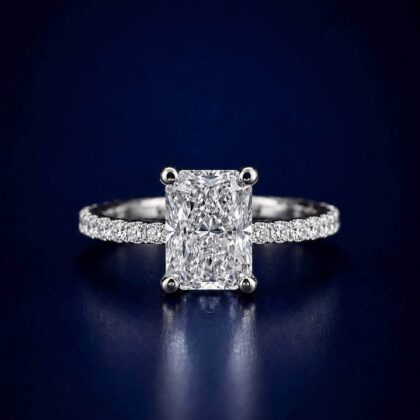
This guide to engagement ring shapes and cuts can help you compare the round brilliant with oval, pear, emerald, and radiant designs before you commit. My recommendation is direct: if you choose round, spend on cut before chasing the highest color or clarity grade available.
Is a 3 Carat Round Still the Best Value in 2026
Round is still the safest choice for buyers who want maximum recognition, symmetry, and established demand. It remains the standard comparison point in independent diamond pricing, and round diamonds generally command a premium over many other shapes. That premium buys a familiar look and strong buyer acceptance, not automatically better sparkle.
The market is changing most visibly in lab-grown inventory. BriteCo reports that the average lab-grown center diamond for engagement rings rose from 1.31 carats in 2019 to 2.45 carats in 2025, while round diamonds represented 24.3% of lab-grown diamonds sold in 2025, compared with 47.9% of natural diamonds, according to its diamond and jewelry market analysis.
Round versus elongated shapes
An oval or pear can create a larger-looking outline for the same weight because the shape stretches across the finger. That can make an elongated shape the better visual value when your priority is coverage. The trade-off is that fancy shapes vary more in outline, bow-tie appearance, symmetry, and facet pattern, so you need to judge the individual diamond instead of relying on the shape name.
A round solitaire is the better choice when:
- You want classic proportions: Round works with nearly any wedding band and metal color.
- You value market familiarity: Round remains a major benchmark for comparing quality and pricing.
- You want predictable brilliance: A well-cut round brilliant has a highly developed light-performance standard.
- You're buying under time pressure: It's easier to compare round listings consistently than unusual shapes.
An oval or pear may be smarter when the priority is a larger face-up impression or a distinctive silhouette. Lab-grown buyers have helped push center stones larger while also broadening interest in non-round designs. That doesn't make the round solitaire outdated. It makes round the premium, conventional option rather than the only sensible option.
My value verdict
Choose round if you love round. Don't choose it because a salesperson calls it the default. If the same budget gives you a noticeably better-cut oval or radiant and your partner prefers finger coverage, compare both in person. If symmetry, sparkle, and timeless styling matter most, the 3 carat round solitaire remains a strong buy, even when another shape offers more visible spread.
Resale should not drive a lab-grown purchase. Buy the stone for its appearance, wearability, documentation, and price. Treat any future resale expectation as uncertain, and make the natural versus lab-grown decision before you start comparing settings.
How to Verify IGI Certification and Report Numbers
A grading report is your protection against paying for a description that the stone doesn't support. It won't replace your own inspection, but it gives you a documented reference for the diamond's identity and stated grades. For a fast purchase, that paper trail matters even more because urgency can make buyers skip basic checks.
IGI reports include a report number that can be verified through IGI's official verification tool, as described by the Las Vegas Compass guide to marriage and ring planning. The number should connect the physical diamond to the report, rather than leaving you dependent on a seller's listing copy.
Follow this verification sequence
- Request the complete report. Ask for the report itself, not only a screenshot of the color and clarity fields. Confirm whether it identifies the stone as lab-grown or natural.
- Locate the report number. Check that the number is readable and that any laser inscription on the diamond's girdle, if present, corresponds to the report.
- Use IGI's verification tool. Enter the report number into IGI's official verification page and compare the returned record with the document in front of you.
- Match the 4Cs. Confirm the carat weight, shape, color, clarity, cut grade, polish, and symmetry. A mismatch is a reason to stop and ask questions.
- Inspect the actual ring. A report can identify the diamond, but it doesn't tell you whether the setting feels secure, the ring size is right, or the stone looks lively in normal lighting.
What should make you pause
Be cautious if the seller refuses to show the report before payment, provides a number that doesn't verify, or gives you a report that describes a different shape or origin. A seller should also explain what is included in the ring price, including the setting, center stone, and any listed accents.
The report confirms identity and stated grading. Your eyes still confirm whether the diamond looks bright, balanced, and attractive in the setting.
Same-day buying doesn't justify skipping verification. It means you should prepare the questions before your appointment. Save the IGI verification page on your phone, ask to compare the report with the stone, and take a moment to read the return or exchange terms before signing. Clear documentation turns a rushed purchase into a controlled decision.
Buying Your Ring Same Day in Downtown Las Vegas
A same-day ring purchase works best when the jeweler treats inventory as physical merchandise, not as a catalog of stones that still need to be ordered. Send your budget, preferred metal, ring size, and round-solitaire requirement by text before you arrive. Ask for the exact report number and confirmation that the ring is in stock at the Las Vegas location.
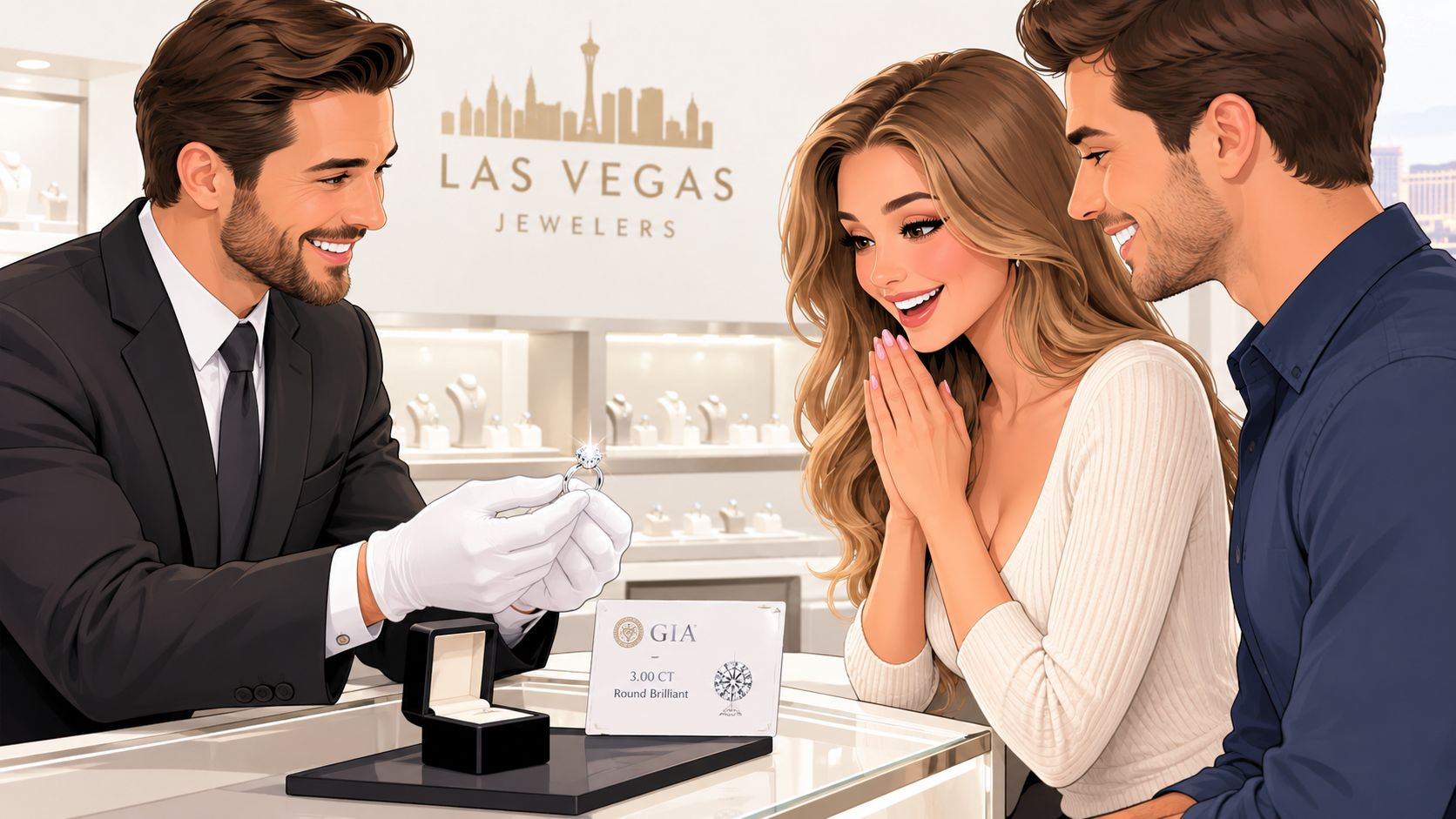
A practical appointment can be quiet and focused. You review a small selection rather than standing at an open showroom counter while a salesperson cycles through unrelated options. Compare the stones under different angles, read the reports, check the ring size, and decide whether the finished piece looks right on the hand.
Coordinate the ring with the wedding schedule
The downtown timing is workable because the Marriage License Bureau operates daily from 8 a.m. to midnight at 201 E. Clark Avenue, including holidays, according to Clark County's official FAQ. A couple might collect the license early, pick up the ring during a private appointment, and continue to a chapel or proposal location. Another buyer might propose first and handle the license later.
The order depends on your surprise plan, but the ring appointment should happen before the moment you need it. Build in time to inspect the report, confirm the size, and check the setting. Don't assume resizing can happen on site, especially when you're buying a ready-to-take-home ring.
Use a short, disciplined buying process
- Text the essentials: Share your total budget, metal preference, ring size, and whether you want natural or lab-grown.
- Confirm physical inventory: Ask whether the exact listed ring is in the downtown case and available for same-day pickup.
- Review curated options: Limit the appointment to rings that match your stated requirements.
- Verify documentation: Match the IGI report number and diamond details before payment.
- Check the fit: Confirm the listed ring size because immediate pickup may not include on-site resizing.
- Leave with the ring: Obtain the receipt, report information, and written terms before heading to the proposal or chapel.
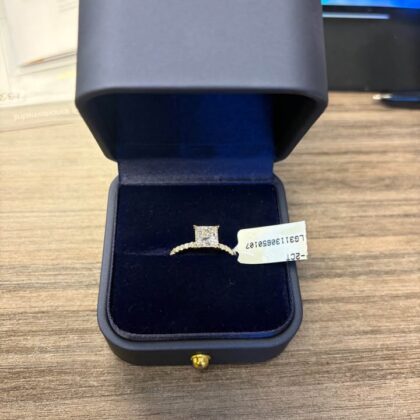
A local appointment-only jeweler such as Last Call Rings LV's Las Vegas engagement ring service can fit this inventory-first model, with text scheduling, visible listing prices, and ready-to-take-home rings. The relevant question isn't whether a store sounds convenient. It's whether the exact ring is present, certified, correctly sized, and available when you arrive.
Your Next Steps for a Confident Purchase
Start with the decision that affects every other choice: natural or lab-grown. Natural gives you mined origin and rarity. Lab-grown gives you more room to prioritize carat weight, clarity, and a finished ring that can be purchased locally without stretching the budget. Neither choice removes the need to inspect cut quality and documentation.
Next, write down your requirements before texting a jeweler. Include the maximum total price, round brilliant shape, preferred metal, ring size, desired pickup window, and whether you'll accept a nearby alternative such as an oval only if the round options don't meet your visual standard. A clear brief prevents a salesperson from turning a specific search into an open-ended upsell.
Your appointment checklist
- Ask for the actual ring. Don't rely on a stock photograph or a promise that the piece can be brought in.
- Read the report. Confirm origin, carat, color, clarity, cut, polish, and symmetry.
- Verify the number. Use IGI's official verification tool and compare the result with the report.
- Inspect the diamond. Look for consistent brightness, strong contrast, and a setting that holds the center securely.
- Confirm size and terms. A same-day ring must fit well enough to wear immediately, and you should understand the store's exchange or return policy.
- Plan the route. Coordinate pickup with the Marriage License Bureau, downtown photographs, your chapel appointment, or the proposal location.
Don't let the phrase “3 carat” make you overlook depth, leakage, or an uncomfortable setting. A well-cut stone with a sensible solitaire design will look more convincing than a heavier stone that hides weight below the girdle. The right purchase is the one you can verify, wear, and afford without regret.
For a visitor, the simplest route is to schedule by text before leaving the hotel, arrive with the ring size and budget ready, and keep the rest of the day flexible. For a local buyer, an appointment lets you compare the actual inventory rather than making a decision from online photographs. Either way, insist on an in-stock ring and a report you can verify before money changes hands.
Last Call Rings LV offers by-appointment, same-day viewing and pickup for physically in-stock lab-grown engagement rings in downtown Las Vegas, with transparent listing prices and IGI report information. Send your budget and ring preferences by text, then visit Last Call Rings LV to review ready-to-take-home options before your proposal or chapel wedding.