September 10, 2026 · Uncategorized
Engagement Ring Shapes and Cuts in Las Vegas
You're probably on a clock right now. Maybe you're in Las Vegas for a chapel wedding, maybe you've got one night before the proposal, or maybe you promised yourself you'd keep this simple and still ended up comparing ring cases with zero time to spare. In that situation, engagement ring shapes and cuts stop being abstract jewelry talk and start becoming the difference between walking out with the right ring or settling for whatever's left.
The smart move is to separate shape from cut. Shape is the outline you see from above, round, oval, pear, emerald, marquise, and so on. Cut is how the facets are arranged to handle light, which is why two stones with the same outline can perform very differently. For a same-day buyer in Las Vegas, that matters more than the brochure language. If the ring has to be ready today, the geometry has to work today too.
Table of Contents
- Navigating Diamond Cuts for Las Vegas Proposals
- The Shift from Round Brilliants to Elongated Shapes
- Evaluating Round Brilliant Cut Quality and Proportions
- Comparing Popular Fancy Shapes and Length-to-Width Ratios
- Assessing Trendy Step Cuts and East-West Settings
- Maximizing Carat and Clarity with Lab-Grown Diamonds
- Matching the Cut to Lifestyle and Daily Wear
- Securing a Same-Day Ring Near the Marriage License Bureau
- Final Verification and Quick Reference Lookup
Navigating Diamond Cuts for Las Vegas Proposals
A couple walks in on a Thursday afternoon with one hard deadline, a proposal on the Strip before dinner, or a ceremony tied to the marriage license run downtown. They don't need theory first. They need a ring that looks right in hand, holds up under lighting, and is available to leave with the same day.
That's why the shape-versus-cut distinction matters so much. Shape tells you whether the stone reads as round, oval, pear, or emerald. Cut tells you how the stone throws light back at the eye. A round stone and an oval stone can both sparkle, but they won't do it the same way, and they won't cover the finger the same way either.
What buyers should care about first
Start with the practical questions, not the romance language.
Practical rule: if the proposal is today, ask what's physically in the case before you ask what's trending online.
For Las Vegas buyers, same-day reality beats customization. Inventory that's already here saves you from waiting on a setting, a reset, or a shipment that won't help your timeline. That's especially true if you're trying to match a dress, a chapel schedule, or a flight home.
A smart buyer looks for three things right away, availability, certification, and visual performance. If one of those is missing, the deal gets weaker fast. A ring that exists only in a render doesn't help on a day-of purchase. A ring that's certified but looks dull in person doesn't help either.
The fastest path is the one that keeps the decision grounded in what you can hold in your hand. In Las Vegas, that usually means choosing from ready inventory, not building a ring from scratch.
The Shift from Round Brilliants to Elongated Shapes
The round brilliant has been the standard for more than a century, and the market still treats it that way. Modern versions trace to Marcel Tolkowsky's 1919 calculations for maximizing light return with 58 facets, and the first recorded diamond engagement ring dates to 1477, when Archduke Maximilian of Austria proposed to Mary of Burgundy with a diamond ring. In more recent market reporting, round diamonds still account for about 60% of shape share in some mid-2020s estimates, and a major trend report found round center stones made up 82% of natural-diamond jewelry center stones in 2024. Those numbers show why round remains the baseline for sparkle, symmetry, and buyer expectations. Historical and market context for round brilliant dominance
But the momentum has shifted toward elongated shapes, and that shift is easy to understand if you're shopping with a budget. Oval cuts have become the clearest growth story, with recent summaries showing roughly 25% to 33% share in some datasets, and one report saying oval share rose from 21% in 2022 to 33% in 2025, a 57% increase in three years. Another industry trend report put oval shapes at almost 8% of natural-diamond jewelry center stones in 2024. The exact share depends on the market, but the direction is obvious. Oval growth data and market variation
Why elongated shapes win on the hand
Elongated stones do two things buyers care about. They make the stone look larger from above, and they stretch the visual line of the finger. That matters when the ring has to read well from across a room, under bright Strip lighting, or in quick phone photos before the proposal.
They also help with budget pressure. If you're comparing stones at the same carat weight, an oval or pear can often deliver more face-up presence than a round because the outline spreads the weight differently. That doesn't make them “better” in every case. It makes them smarter when you care about visible size and the ring has to look impressive without pushing the budget too far.
Ovals, pears, and other elongated fancy shapes are not just style choices. They're visual strategies.
Evaluating Round Brilliant Cut Quality and Proportions
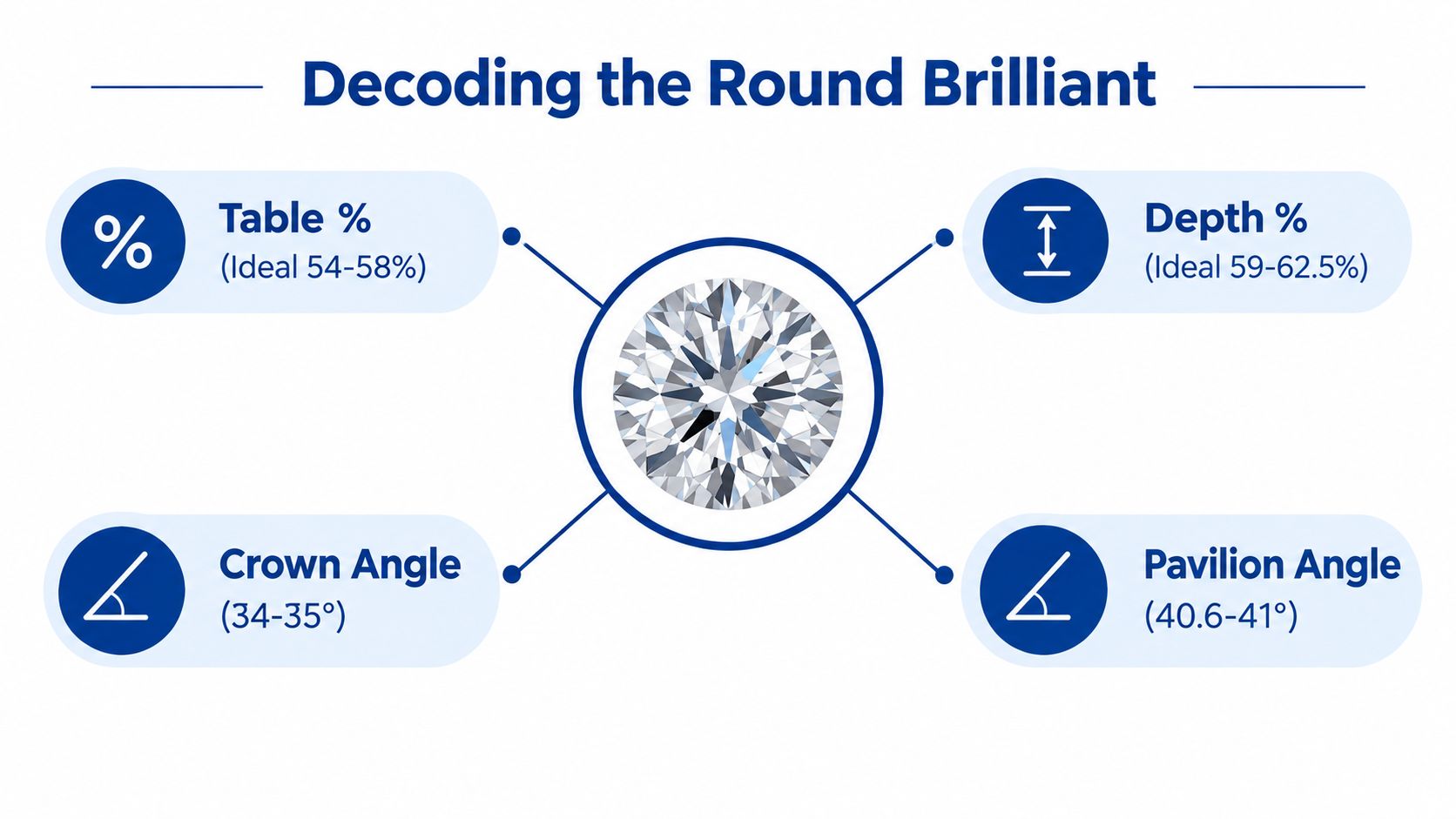
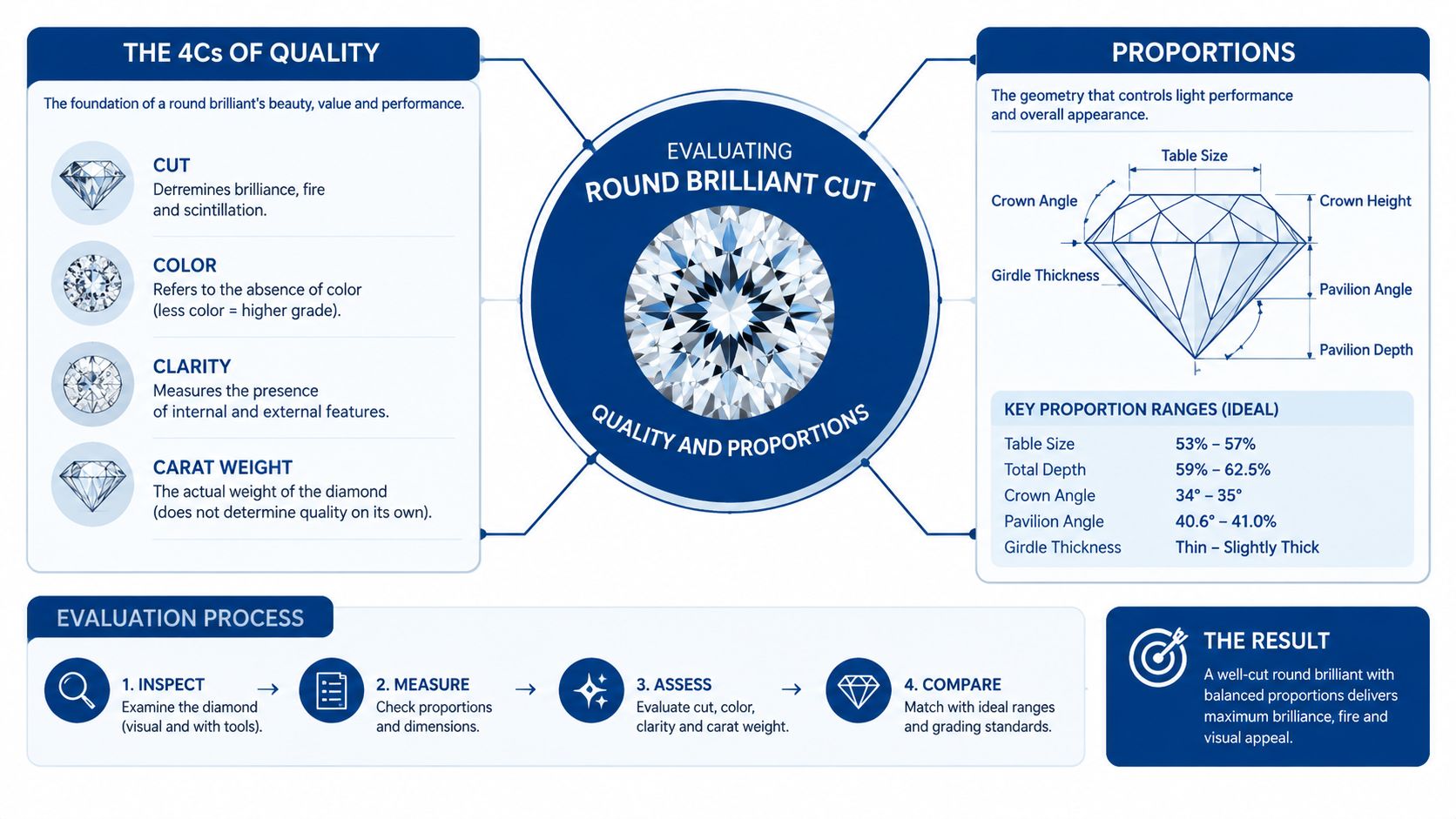
Round diamonds deserve the most disciplined evaluation because the cut grade can lull buyers into false confidence. The Gemological Institute of America says round cut quality depends on how table size, crown angle, pavilion depth and angle, girdle thickness, culet size, star length, and lower-half facet length work together. GIA's Excellent table range is 52% to 62%, but it also says there isn't a single perfect proportion formula because the measurements interact to control brightness, fire, and scintillation. GIA cut evaluation for round diamonds
A lot of shoppers stop at the word Excellent. That's too shallow. Two round stones can share the same cut grade and still face up differently because the proportions aren't identical. One may throw more light. Another may look smaller or less lively once it's set. For a same-day Las Vegas purchase, you can't afford to assume the certificate has already solved the whole problem.
How to read the report the right way
Use the report as a map, not a verdict.
- Check the proportion diagram. Look at how the table, depth, and angles relate to each other, not just the headline grade.
- Ask for symmetry and polish. A clean grade band doesn't guarantee the stone will look crisp in person.
- Study the stone from multiple distances. A round diamond can look strong under the loupe and flat at arm's length.
- Compare two stones side by side. The better performer usually shows itself fast once the light hits it.
Internal note for buyers: Round brilliant diamonds and buying details
The main takeaway is simple. For round brilliant diamonds, the grading report gets you into the right lane, but your eyes finish the job. If a stone looks lively, balanced, and bright in the case, that matters more than chasing a theoretical “perfect” ratio that doesn't exist.
Don't buy a round diamond on grade alone. Buy the one that stays bright when you move it under different light.
Comparing Popular Fancy Shapes and Length-to-Width Ratios
Fancy shapes need a different standard because there usually isn't a universal lab cut grade like there is for round brilliant stones. That means the buyer has to lean harder on proportion, outline, and visual balance. The most commercially relevant shapes for engagement rings are oval, emerald, radiant, and pear, because each one changes how the stone sits on the hand and how big it reads face-up. Shape-specific guidance for fancy cuts
Fancy Shape Proportion and Style Reference
| Shape | Ideal Length-to-Width Ratio | Sparkle Profile | Primary Visual Risk |
|---|---|---|---|
| Oval | Roughly 1.30 to 1.50 | Bright, brilliant, lively | Bow-tie darkness |
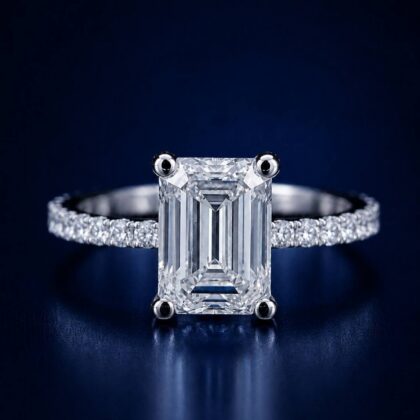
| Emerald | Roughly 1.30 to 1.40 | Step-cut, mirror-like clarity | Inclusions and flatness |
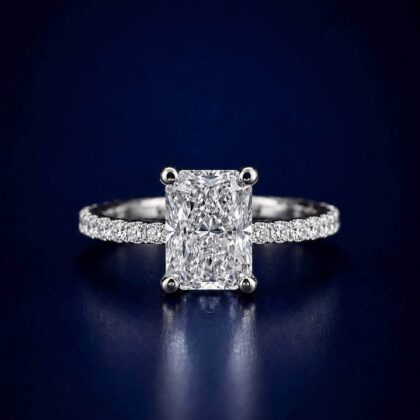
| Radiant | No single universal ratio, depends on outline | Brilliant with a crushed-ice look | Uneven outline, hidden darkness |
| Pear | Roughly 1.40 to 1.75 | Bright, brilliant, elongated | Bow-tie darkness and tip vulnerability |
The oval is the safest crowd-pleaser if you want length without losing too much sparkle. It gives you finger coverage, a modern feel, and a look that still reads as classic enough for a proposal that has to land with almost anyone. Pear shapes can push the elongation even further, but the pointed end needs a careful setting and a balanced outline or the whole stone starts to look awkward.
Emerald cuts are different. They don't compete on fireworks. They compete on precision, clarity, and that long, elegant hallway effect created by step facets. Radiants sit between those worlds, with more sparkle than emerald and more structure than many brilliant cuts.
If you're shopping fast and you want maximum presence per dollar, an oval is usually the first fancy shape I'd pull. If you want a quieter, more architectural look, emerald earns its place. Pears are the most dramatic, but they need the most careful inspection before you commit. A useful browsing shortcut is this oval lab-grown diamond engagement ring guide, because ovals are one of the easiest shapes to compare against round stones in real inventory.
Assessing Trendy Step Cuts and East-West Settings
Some trend pieces look sharper online than they do on a hand. East-west settings, marquise stones, and step cuts like emerald and Asscher get plenty of attention because they photograph well and feel different from the standard solitaire. That doesn't automatically make them the right choice for daily wear.
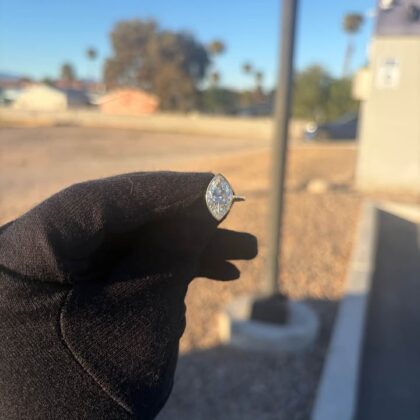
The first trade-off is durability. Marquise and pear shapes have pointed ends, and those points deserve protection. If the setting leaves them exposed, you're buying more risk with the style. The second trade-off is optical honesty. Step cuts show what's inside the stone more easily than brilliant cuts, so they demand cleaner material and better visual judgment from the buyer. The broad appeal is real, but so are the limits.
Where trend and practicality split
East-west settings make a ring feel modern fast, especially with elongated stones. They can also shift the way the stone sits on the hand, which changes how it wears under sleeves, gloves, and everyday movement. That's not a dealbreaker, but it's a choice you should make with your eyes open.
A trendy setting is only smart if it survives the life you're actually going to wear it in.
Step cuts reward stillness and structure. They look elegant when the stone is clean and properly proportioned, but they're less forgiving if the facets are messy or the body is cluttered with visible flaws. Brilliant cuts hide more. Step cuts reveal more. That's the whole game.
For buyers under time pressure, lab-grown inventory changes the equation because it opens up more accessible high-clarity options in shapes that need them. That's especially useful if you want an emerald or Asscher look without hunting through a limited mined inventory. Trends are fine. Practicality pays the bill.
Maximizing Carat and Clarity with Lab-Grown Diamonds
Lab-grown diamonds change what's realistic in a same-day purchase. When you're working with fixed budget and limited time, you're not just choosing a shape. You're choosing how much visible size and clarity you can get in stock. That's why lab-grown inventory matters so much for engagement ring shapes and cuts in Las Vegas.
IGI says lab-grown diamonds are screened with state-of-the-art technology to determine whether a stone is naturally mined, laboratory-grown, or a simulant, and its reports authenticate the stone's man-made origin. IGI also notes that lab diamond reports can include the growth process and any treatments in the comments section, which gives buyers more than a simple yes-or-no origin check. IGI lab-grown diamond education IGI lab-grown report details
Why this matters for fancy shapes
Fancy shapes, especially oval, emerald, radiant, and pear, are where lab-grown inventory can be especially useful. If you want a larger look or a cleaner step-cut appearance, you need enough selection to compare stones side by side. Lab-grown stock usually makes that easier to do without stretching the budget as hard as a mined stone often would.
The report becomes part of the buying tool, not just the paperwork. You can see shape, measurements, and origin details together, which makes it easier to choose a stone that's ready to leave with you the same day. That's the right model for a rushed Vegas buy.
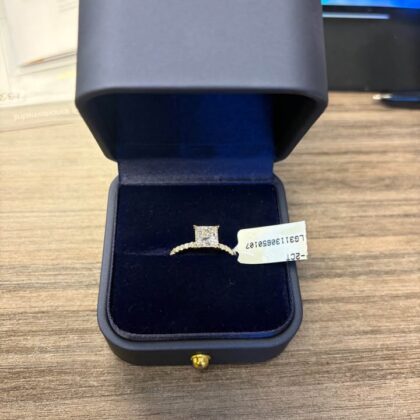
One practical option in downtown Las Vegas is Last Call Rings LV, which works from physically in-stock lab-grown rings with visible pricing and same-day pickup. That format fits buyers who want to see what's available, compare shapes in person, and leave with the ring without waiting on a special order.
Matching the Cut to Lifestyle and Daily Wear
The best-looking ring in the case is the wrong ring if it catches on everything or takes a beating at work. Active buyers, healthcare workers, people who wear gloves often, and anyone rough on jewelry should lean toward shapes that sit cleaner and protect the stone better. Round and radiant cuts are the easy picks when durability and everyday comfort matter.
Elongated shapes look great, but they're not all equally forgiving. Pear and marquise shapes need more attention because their points can snag and chip if the setting isn't right. Emerald cuts don't have point risk in the same way, but their open look means you'll notice any optical weakness quickly.
A fast decision grid
- Round brilliant, choose it if you want the safest blend of sparkle, durability, and all-day wear.
- Radiant, choose it if you want more shape character without giving up much practicality.
- Oval, choose it if you want strong face-up size and a flattering silhouette.
- Pear or marquise, choose it only if the wearer is okay with extra care and a protective setting.
- Emerald, choose it if the wearer likes clean lines and doesn't mind a more exacting look.
Ring size matters too, especially when the store doesn't do on-site resizing for ready-to-take-home inventory. If you're buying same-day, know the size before you sit down. A published ring size on the listing helps, but it doesn't replace a real fit check.
Securing a Same-Day Ring Near the Marriage License Bureau
Las Vegas rewards buyers who move fast and show up prepared. The Clark County Marriage License Bureau is open 7 days a week from 8 a.m. to midnight, including holidays, and it doesn't take appointments. It's located downtown at 201 E. Clark Avenue in Las Vegas, which makes same-day ring shopping a practical part of the wedding timeline rather than a separate errand. Clark County Marriage License Bureau hours and location
The cleanest process is simple. First, send your budget and style notes by text. Second, look at a curated set of physically in-stock rings that already match those notes. Third, buy the one that fits and leave with it. That flow cuts out the open-ended showroom wandering that burns time when you're trying to get from ring to proposal to license.
What a tight-timeline visit should look like
You don't need a two-hour sales pitch. You need a short list that's already filtered for shape, size, and price. Text-based scheduling helps because it lets the jeweler pull rings before you arrive, which is the whole point when the proposal is tonight or the wedding is tomorrow.
The best same-day ring appointment is the one where the case is already narrowed before you walk in.
The downtown setting matters because it's close to the wedding infrastructure buyers are already using. If you're pairing a ring pickup with a license run or a chapel stop, the route makes sense. That's also why inventory-first shops do better in Las Vegas than made-to-order models do. Time is part of the product here.
For buyers planning a downtown pickup, the engagement ring collection at Last Call Rings LV in Las Vegas is built around ready-to-take-home inventory, which is the right fit when same-day matters more than endless options.
Final Verification and Quick Reference Lookup
Before you pay, verify the stone like it has to perform in real life, because it does. Start with the report number and the laser inscription on the girdle, and make sure they match. Then compare the exact measurements on the report with the ring and setting, since millimeter fit affects how the stone sits and how balanced it looks once worn.
Next, look at the diamond under more than one light source. A stone that looks strong in one spotlight but weak in another is telling you something. You want edge-to-edge brightness, a clean outline, and a face-up look that still works when you move your hand. That matters for every shape, but especially for ovals, pears, emeralds, and radiants.
Quick check before you leave
- Match report and stone, confirm the inscription and certification details.
- Compare measurements, make sure the stone's dimensions fit the setting cleanly.
- Inspect in motion, tilt the ring and watch how the light moves across it.
- Check the outline, look for balance, symmetry, and any obvious bow-tie darkness in elongated shapes.
- Confirm wearability, make sure the ring won't feel awkward if it's going straight from the counter to a proposal.
The best purchase is the one you don't have to second-guess on the way out. If the geometry looks right, the certification matches, and the stone still looks bright in different lighting, you've done the job correctly. That's the standard I'd use for any same-day Las Vegas engagement ring.
If you need a ready-to-take-home ring in Las Vegas, Last Call Rings LV keeps physically in-stock lab-grown options with visible pricing and same-day pickup. Visit Last Call Rings LV to text your budget and shape preferences, see what's available, and leave with a ring that fits your timeline.