September 17, 2026 · Uncategorized
2 Ct White Gold Engagement Ring Vegas Guide
You're in Las Vegas with a proposal or chapel wedding on the calendar, but the ring still isn't on your finger. You want a 2 ct white gold engagement ring, preferably with a lab-grown center stone, and you need to see the actual ring before you pay for it. Waiting weeks for a custom setting or hoping a shipped ring arrives on time isn't a sensible plan.
For a same-day purchase, prioritize physical inventory, certification, correct sizing, secure construction, and a clear pickup plan. The right ring isn't the largest stone available. It's a ready-to-wear piece that looks substantial, protects the center diamond, and fits your Las Vegas schedule.
Table of Contents
- Navigating the Las Vegas Same-Day Ring Market
- Understanding Carat Weight and Lab-Grown Value
- White Gold Durability and Maintenance Realities
- Selecting Settings and Matching Wedding Bands
- Executing a Same-Day Downtown Vegas Purchase
- Finalizing Your In-Stock Ring Selection
Navigating the Las Vegas Same-Day Ring Market
A couple arrives downtown with a proposal planned for that evening. They've already chosen the restaurant, the photographer, and perhaps a chapel. The missing piece is the ring. Online browsing has produced plenty of attractive photos, but photos don't confirm whether the exact setting is in stock, whether the prongs are secure, or whether the published ring size will work.
That's where the local inventory model matters. A jeweler with the ring physically in the case can show you the actual center stone, setting profile, band width, and finish. You can examine the ring under magnification, compare it with other options, and leave with the same piece you approved. A made-to-order ring or a dropship listing creates uncertainty that a same-day buyer can't afford.
Start with what's ready today
Search for Las Vegas engagement rings with a specific emphasis on in-stock and ready-to-pick-up inventory. If a listing shows the exact ring size, metal, diamond shape, certification details, and price, use those details to narrow the visit before you arrive. Texting is often more efficient than calling when your schedule includes travel, photos, a license appointment, and a ceremony.
Don't assume that an online listing means the item is sitting locally. Ask directly:
- Exact inventory: Is this exact ring physically in the downtown case?
- Center stone: Is the diamond lab-grown, and does it have an IGI report?
- Sizing: What size is the ring now, and is on-site resizing available?
- Pickup: Can you complete the purchase and take the ring with you today?
- Viewing: Can the jeweler reserve private counter time for a focused comparison?
Practical rule: For a same-day proposal, “available online” isn't enough. You need “physically here, verified, and ready to leave with you.”
Downtown Las Vegas is especially practical because the wedding infrastructure is concentrated around the Fremont Street and chapel corridor. A local buyer can build the day around one private jewelry viewing instead of driving between distant showrooms or waiting for a delivery window.
The strongest strategy is simple. Send your budget, preferred cut, ring size, and timing by text before you travel to the jeweler. Ask for a small group of certified, in-stock 2 ct white gold rings to be pulled in advance. That turns a high-pressure search into a controlled decision.
Understanding Carat Weight and Lab-Grown Value
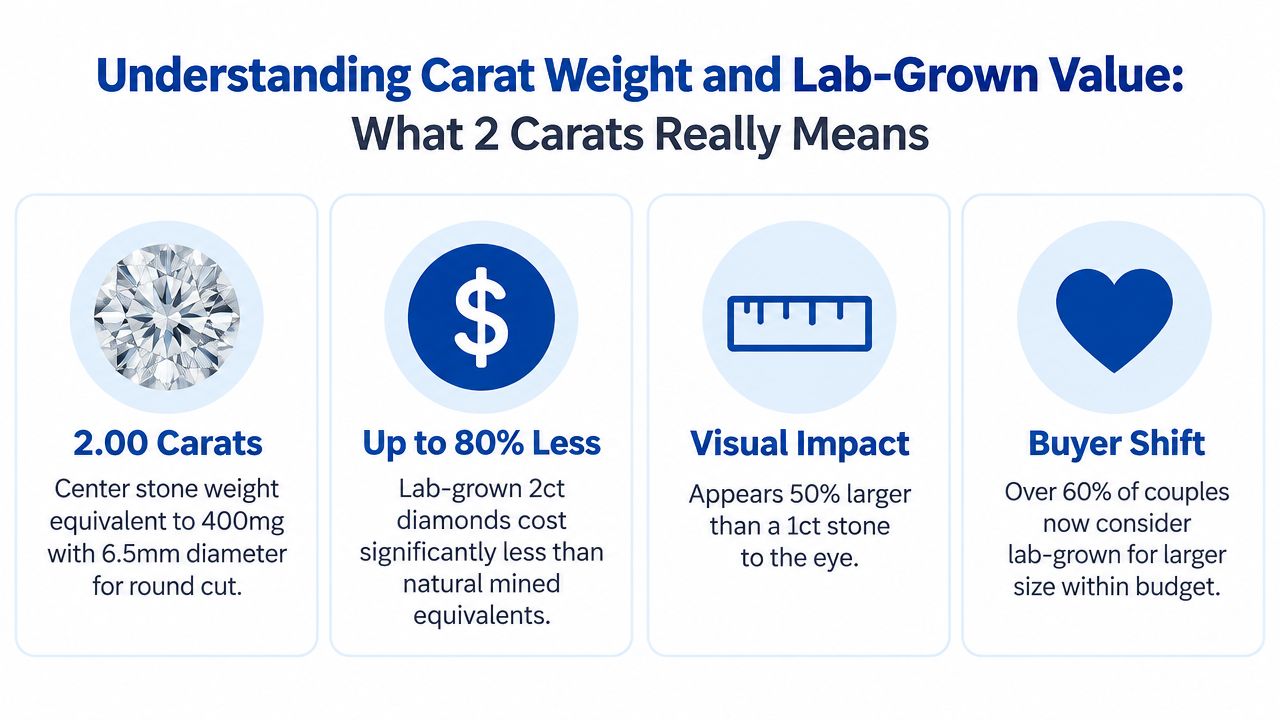
A 2 ct center stone is larger than the typical engagement-ring center stone. The Knot's 2024 Jewelry & Engagement Study average-size data places the average engagement ring at 1.7 carats overall and 1.8 carats for the center stone, with both figures up from 2023. A 2 ct center diamond is therefore roughly 11% larger than the 1.8 ct center-stone average and about 18% larger than the 1.7 ct all-in average.
That difference explains why many buyers see a 2 ct ring as a milestone purchase rather than a routine engagement-ring choice. In white gold, the combination has a bright, contemporary appearance and sits toward the premium end of mainstream expectations. It isn't automatically an outlier luxury purchase, especially when the center stone is lab-grown.
Why lab-grown changes the budget conversation
Lab-grown diamonds are real diamonds, but their pricing can make a larger center stone more accessible than a comparable natural diamond. The market has moved decisively in that direction. Lab-grown center stones represented 61% of engagement-ring purchases in 2025, while the median sales price was $4,557 for lab-grown diamond engagement rings compared with $12,961 for natural diamond engagement rings, according to JCK's 2025 engagement-market coverage.
Those figures don't mean every 2 ct ring costs the same, and they shouldn't replace an inspection of the actual diamond. They do show why couples with a defined budget increasingly consider lab-grown when they want more size, clarity, or a more elaborate setting. A 2 ct lab-grown ring can deliver the visual presence buyers want without forcing the same tradeoffs associated with a natural center stone.
Current expectations are also changing. One 2025 lab-grown and natural diamond market report recorded average lab-grown engagement-ring size rising from 1.31 carats in 2019 to 2.45 carats in 2025. The same report cited lab-grown stones at 47.7% of engagement-ring sales, while The Knot's 2025 study cited 61%. The difference reflects separate industry datasets, but both point to the same conclusion: 2 carats no longer carries one universal social meaning.
In a natural-diamond comparison, 2 carats can feel unusually substantial. In lab-grown shopping, it's increasingly a common target for buyers prioritizing finger coverage and budget control. Judge the ring by proportion, cut performance, setting security, comfort, and the price of the complete piece, not carat weight alone.
For a practical look at the purchase decision, review this guide to lab-grown diamond engagement rings in Las Vegas and what your money buys.
White Gold Durability and Maintenance Realities
For a ring worn every day, I recommend 14K white gold over a softer, higher-karat white-gold option. Lower-karat alloys contain less pure gold and more strengthening metals, which generally improves resistance to bending and prong deformation. That matters more with a 2 ct center stone because a larger diamond creates a greater mechanical advantage when the ring receives a knock or twisting force.
Industry guides place 14K white gold around 150 to 200 HV on the Vickers hardness scale, while some 18K palladium-white-gold formulations measure about 150 to 165 HV and some nickel-white-gold formulations about 160 to 180 HV, as described in this gold hardness guide. These figures are alloy-dependent, so the practical question is not “14K or 18K?” Ask what alloy the jeweler uses and inspect the prongs and basket directly.
The setting needs attention, not fear
A harder alloy doesn't make a ring indestructible. Prongs still wear, the head can shift, and a large stone can catch against hard surfaces. Before purchase, look for evenly formed claws that reach securely over the diamond, a basket with no visibly thin transition points, and a band that doesn't feel overly light for the center stone.
White gold also carries a finish-related maintenance tradeoff. The bright white surface usually comes from rhodium plating, and that plating wears with regular contact from hands, clothing, soap, and household surfaces. When it thins, the underlying white-gold color can become more visible, particularly on exposed edges and the underside of the shank.
A white-gold ring is a maintenance choice, not a maintenance-free choice.
Plan for periodic rhodium replating if you want the bright, mirror-white appearance to remain consistent. The exact interval depends on wear, skin chemistry, work habits, and the alloy, so a jeweler should assess the ring rather than promise a universal schedule. During servicing, ask for prong inspection, cleaning, polishing where appropriate, and a check of the center-stone security.
The larger center stone makes that service conversation more important. Replating restores appearance, while inspection protects the structure holding the diamond. If you prefer a warmer metal that doesn't rely on rhodium for its visual identity, compare the alternatives in this guide to white gold versus yellow gold engagement rings. For a bright white look and a same-day purchase, 14K white gold remains my practical recommendation, provided you accept the upkeep.
Selecting Settings and Matching Wedding Bands
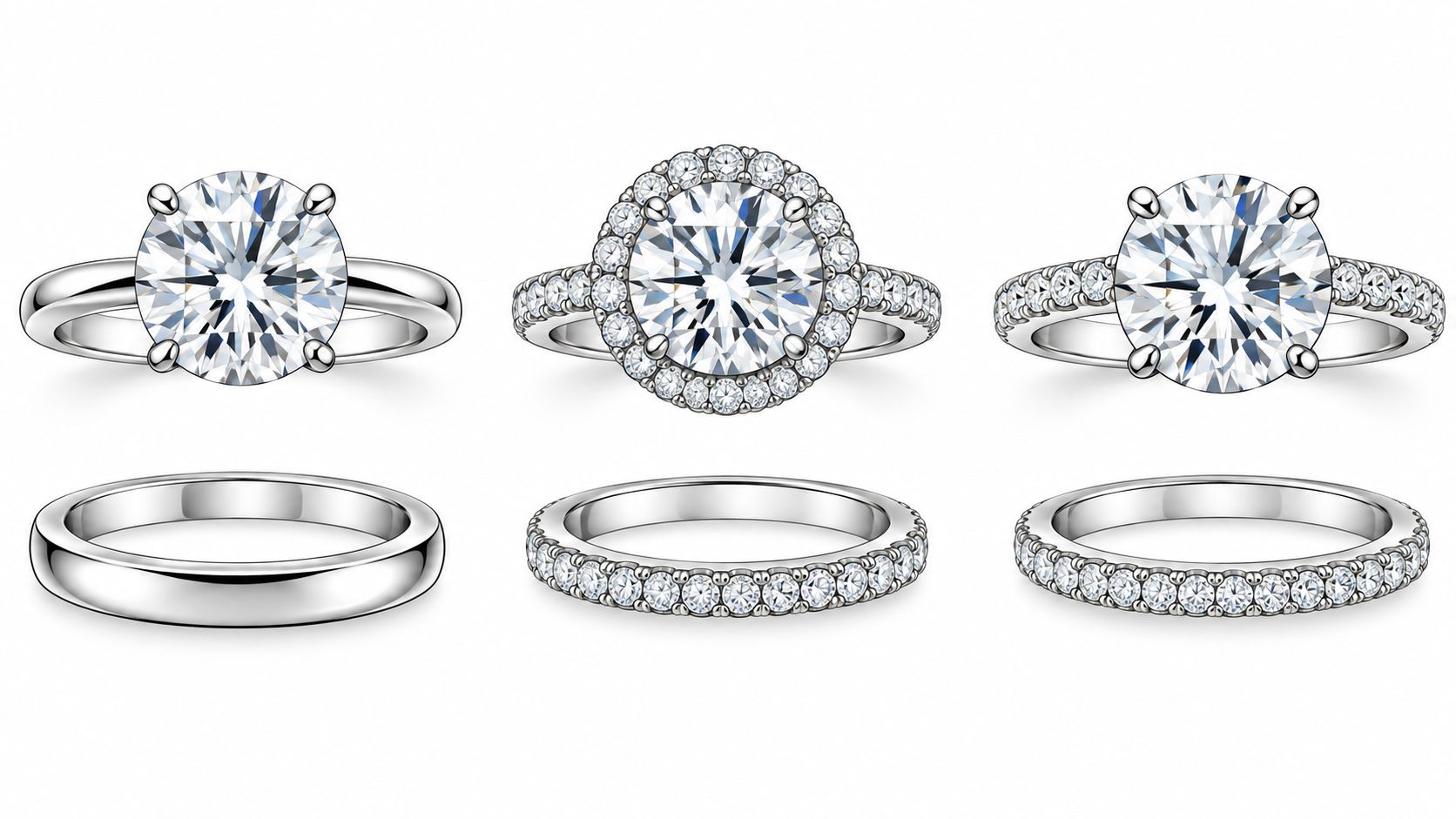
A 2 ct diamond needs a setting that supports its size without making the ring feel bulky. I'd start with a sturdy solitaire basket or a well-built halo, then compare how each design changes the stone's presence on the finger. The right choice depends on whether your priority is a clean center-stone look, extra sparkle, finger coverage, or protection from everyday contact.
Match the cut to the visual goal
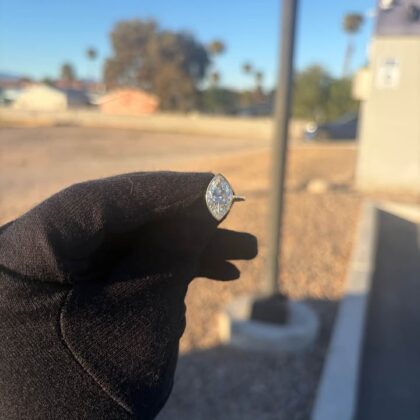
Oval cuts stretch across the finger and can create an elongated appearance. Inspect the center of the stone for a bowtie effect, then choose the example that still returns attractive light when viewed from several angles.
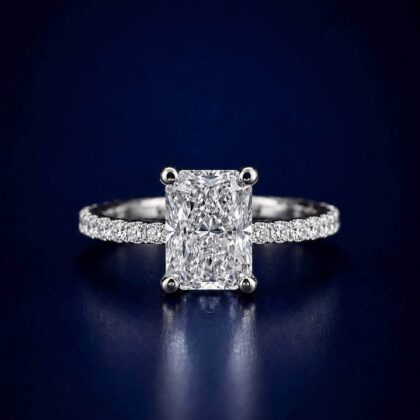
Radiant cuts offer a rectangular or square outline with lively faceting. They work well for buyers who want strong finger coverage and a modern profile, but the corners need protection from a well-designed setting.
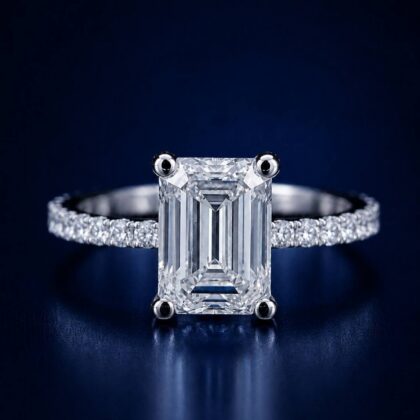
Emerald cuts emphasize clean step facets and broad reflections rather than the intense sparkle associated with brilliant cuts. They're less forgiving of visible inclusions, so examine the stone carefully instead of choosing from a photograph.
Pear cuts deliver a distinctive outline and directional movement. The pointed end needs a secure prong, and many buyers prefer to orient the point away from the hand for a traditional silhouette.
A hidden halo can add sparkle beneath the center stone without changing the main outline dramatically. A visible halo increases the overall footprint and creates a more decorated look. Neither is automatically safer. The quality of the metalwork and the protection around the center diamond matter more than the label.
Check the basket before admiring the sparkle
For daily wear, prioritize prongs that are substantial enough to hold the stone without appearing clumsy. A low-profile basket can reduce snagging, but it shouldn't sit so low that the center diamond presses against the finger or prevents a wedding band from fitting beside it. A higher setting may accommodate a straight band more easily, but it can also expose the stone to more contact.
A matching band should be tested beside the engagement ring, not selected by description alone. A straight band may leave a gap beneath an oval, pear, or radiant setting. A contoured or notched band can follow the outline more closely, while a curved band may create a softer, intentional separation.
Use the actual ring to test three things:
- Gap: Does the band sit where you want it, or does it leave an unintended space?
- Height: Does the wedding band slide under the center setting without forcing it?
- Comfort: Do the two rings pinch, rotate, or catch on clothing?
The ring should look balanced from the top and feel stable from the side. Don't sacrifice a secure basket for a perfectly flush band unless you've confirmed both rings work together.
The video below offers another visual reference for comparing ring silhouettes and pairing decisions.
Executing a Same-Day Downtown Vegas Purchase
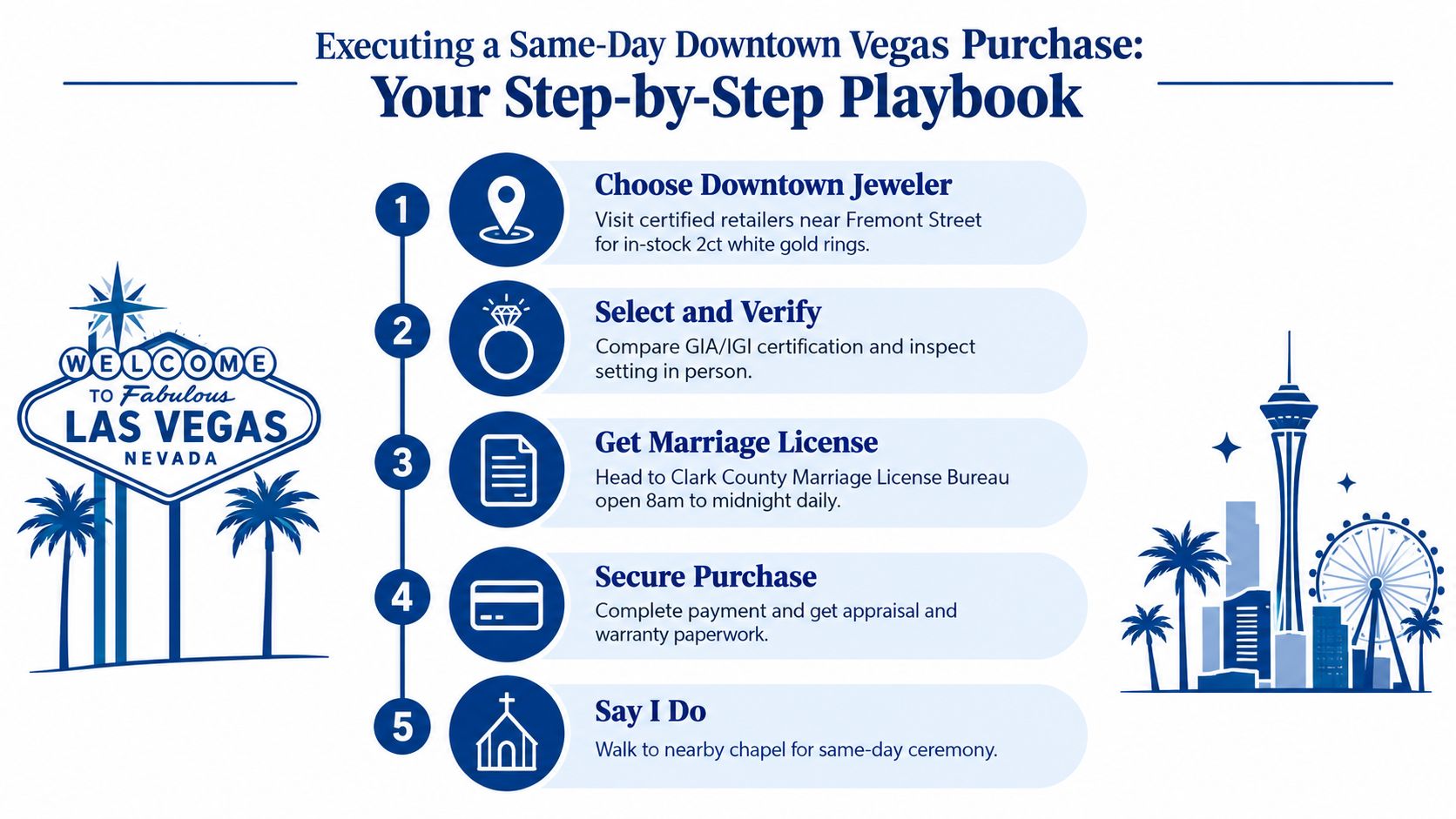
A same-day ring and wedding plan works best when you schedule the legal paperwork and jewelry viewing as connected appointments. Clark County's Marriage License Bureau is at 201 E. Clark Avenue and is open every day of the year from 8 a.m. to midnight, including holidays, according to Visit Las Vegas's marriage-planning information. The bureau uses a walk-in process rather than appointments.
Nevada also has no waiting period for marriage licenses, so couples can use the license the same day it's issued, as explained by the Las Vegas marriage-license guide. Both applicants must appear in person at the same time, a requirement stated in Clark County's marriage-license requirements.
Build the day around synchronized timing
-
Text a downtown jeweler first. Send your budget, preferred diamond shape, desired metal, ring size, and proposal or ceremony timing. Ask for exact, in-stock 2 ct white gold options, not a general catalog search.
-
View and verify the ring. Examine the actual stone and setting in person. Confirm the IGI report details, inspect the prongs, look at the white-gold finish, and try the ring on if possible. If the listing says ready today, make sure the item is physically available before you commit to the trip.
-
Go to the Marriage License Bureau with your partner. Since both applicants need to appear together, don't send one person ahead while the other shops. Coordinate transportation and documents before leaving the hotel.
-
Complete the purchase and collect the paperwork. Request the receipt, appraisal documentation if provided, certification details, warranty terms, and any care instructions. Keep the ring secured during the rest of the day, especially if you're moving between the bureau, restaurants, photography locations, and a chapel.
-
Leave time for the proposal or ceremony. The license process may be immediate, but your day still includes walking, traffic, parking, hotel transfers, and chapel check-in. Treat the ring purchase as one scheduled stop, not an errand to squeeze between unplanned activities.
Why downtown location helps
A downtown jeweler near Fremont Street and the regional wedding corridor can reduce the number of separate drives in a compressed schedule. This is especially useful for visitors who don't know Las Vegas traffic patterns or who have a ceremony booked later in the day.
For local options and ready-to-take-home inventory, review the Las Vegas engagement-ring selection. Confirm the current location, viewing availability, and exact ring status by text before you leave.
The legal framework creates a genuine same-day window, but it doesn't eliminate the need for planning. Both applicants must be present, the ring must be physically in stock, and the selected size must be wearable when you walk out. Those three checks prevent most avoidable delays.
Finalizing Your In-Stock Ring Selection
Your final decision should come from a short, physical inspection, not from scrolling through dozens of photographs. For a 2 ct white gold engagement ring, I'd rather see you choose a well-supported 14K setting with a clearly documented lab-grown center stone than chase a slightly larger visual effect in a fragile design.
Use this checklist before you text the jeweler:
- State the budget clearly: Ask for complete-ring prices, not loose-stone comparisons. A lab-grown center stone can make the target size more accessible, but the setting, accent diamonds, and construction still affect the total.
- Name the preferred cut: Mention oval, emerald, radiant, or pear. If you're flexible, say whether you value sparkle, length, finger coverage, or a clean outline most.
- Confirm the certification: Request the IGI report number or certification information for the exact center stone. Match the report to the ring you inspect.
- Give the ring size: Ready-to-wear inventory depends on the size already available. On-site resizing isn't offered, so don't assume the jeweler can adjust the ring before pickup.
- Ask about the metal: Confirm that the setting is 14K white gold if durability is your priority. Ask how the jeweler handles future cleaning, inspection, and rhodium replating.
- Inspect the structure: Look at the prongs, basket, band thickness, underside, and any halo or side-stone settings. A large diamond deserves a setting that feels secure, not merely attractive.
- Test the wedding band: If you're buying one at the same time, place it beside the engagement ring. Check for gaps, rubbing, snagging, and comfort.
- Confirm the pickup window: Make sure the ring is physically at the location and can be purchased and taken home that day.
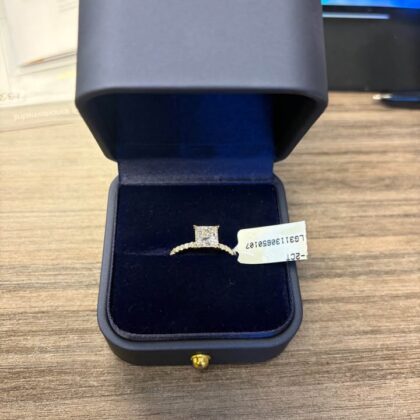
A private, appointment-only viewing is useful because it lets you compare a focused group of rings without showroom pressure. Last Call Rings LV operates this way, with text-based scheduling, physically stocked lab-grown engagement rings, IGI-certified stones, listed prices, and ready-to-take-home 14K settings. The shop doesn't offer on-site resizing, so size confirmation belongs at the top of your message.
When you arrive, judge the ring in person under different angles and lighting. Confirm that the center stone looks lively, the white gold is even, and the setting feels comfortable on the hand. If those details check out, you've found a ring that suits both the proposal and the practical demands of daily wear.
Last Call Rings LV offers by-appointment access to physically stocked, IGI-certified lab-grown engagement rings in Las Vegas, including 14K white gold options that can be viewed and purchased for same-day pickup. Text your budget, preferred cut, ring size, and timeline, then visit Last Call Rings LV to arrange a private counter viewing.