September 8, 2026 · Uncategorized
What Is a Radiant Cut Diamond Engagement Rings Guide
You've got a proposal planned downtown, a chapel appointment later, and only a short window to choose the ring. At the counter, one shape keeps catching your eye: rectangular, bright, and softened at the corners. You may be asking, what is a radiant cut diamond engagement ring, and whether it's the right choice for a same-day Las Vegas purchase.
A radiant cut can make sense when you want strong sparkle, a defined outline, and protected corners without automatically choosing a round brilliant. It can also suit a fixed budget, especially when you compare lab-grown and mined diamonds on equal carat weight. This guide explains how the shape looks, how its proportions affect brilliance and size on the hand, how it compares with oval, emerald, and princess cuts, and how to inspect one before buying today in Las Vegas.
Table of Contents
- Introduction to Radiant Cut Engagement Rings in Las Vegas
- What Makes a Radiant Cut Diamond Different
- How Radiant Cuts Sparkle and Show Size on the Hand
- Radiant Cut Compared With Oval Emerald and Princess Shapes
- How to Evaluate a Radiant Cut Without a Standard Cut Grade
- Finding Your Radiant Cut Ring for a Same Day Las Vegas Proposal
Introduction to Radiant Cut Engagement Rings in Las Vegas
A Las Vegas ring purchase often happens alongside a larger schedule. You might be visiting from out of town, collecting a marriage license downtown, or trying to leave a private appointment with a ring before heading to a chapel. In that situation, a generic explanation of diamond shapes isn't enough. You need to know what the stone will look like in person, what to check on its report, and whether the ring is physically available for same-day pickup.
A radiant cut is especially interesting for this kind of decision because it brings several priorities together. Its brilliant-style faceting creates lively sparkle, its rectangular or square outline gives it a modern presence, and its clipped corners offer more edge protection than sharp-corner shapes such as princess cuts. The result feels structured without looking quiet.
The shape also gives budget-conscious shoppers another route to visual impact. Independent pricing guides report that lab-grown diamonds commonly cost 50% to 70% less than comparable mined diamonds, while some 2026 market summaries report differences of 70% to 90%, depending on size and grade, as explained by industry pricing coverage of lab-grown diamonds. Those figures aren't a promise for every stone, but they explain why a lab-grown radiant can be worth comparing when your budget is fixed and you want more center-stone presence.
Las Vegas also supports unusually immediate wedding timelines. The Clark County Marriage License Bureau's official FAQ states that both parties appear in person, no blood test is required, and Nevada has no waiting period after the license is obtained. A ring decision can therefore be part of a real same-day plan, not just a theoretical shopping scenario.
What Makes a Radiant Cut Diamond Different
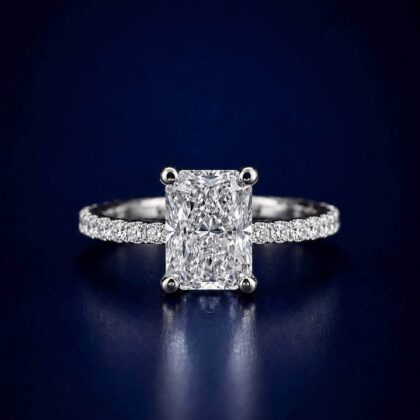
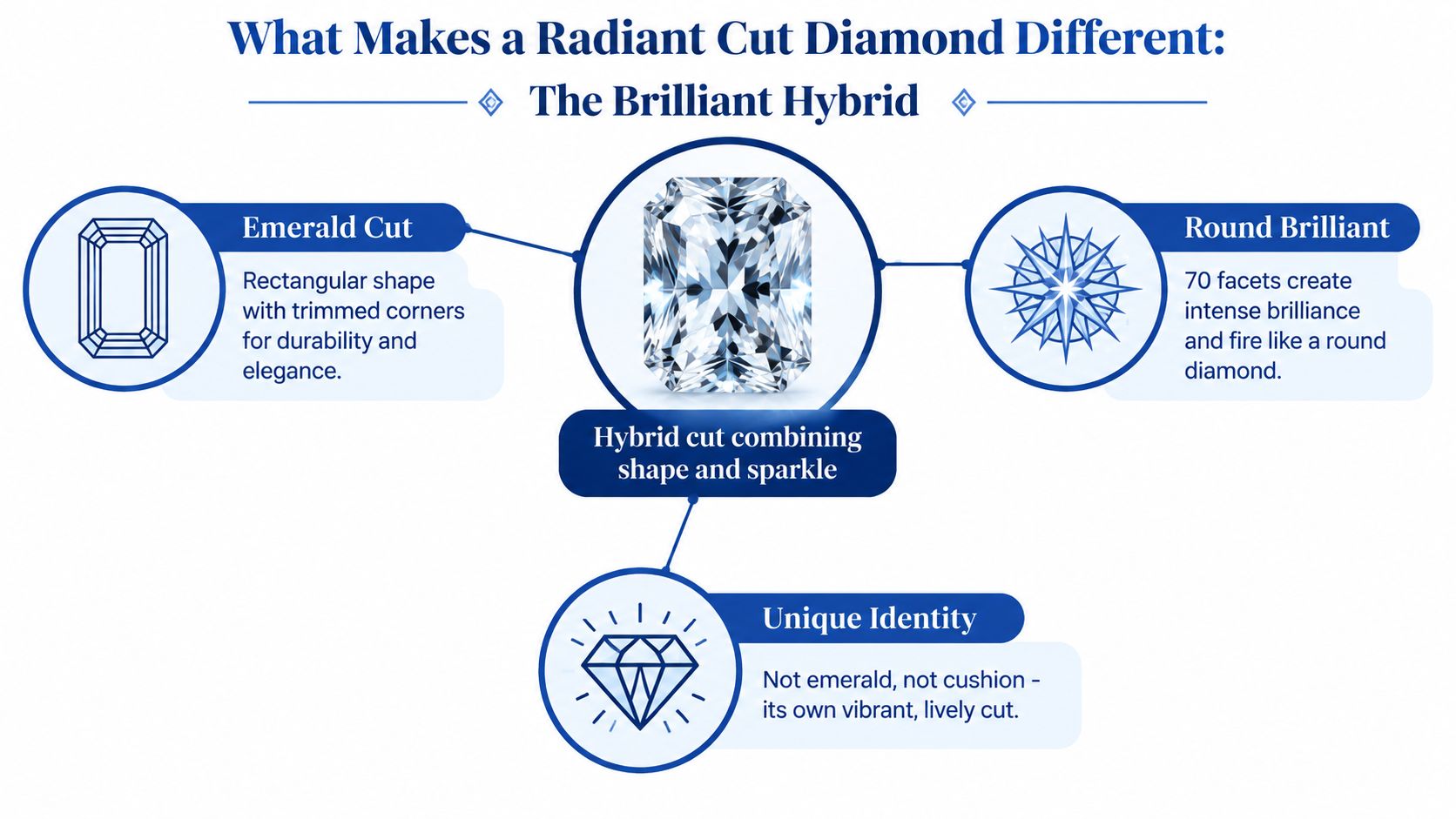
Start with the outline. A radiant cut is usually square or rectangular with clipped, beveled corners. Those corners change the stone's personality immediately. Instead of the pointed geometry of a princess cut or the open, linear appearance of an emerald cut, the radiant has a softened frame with a more animated interior.
Next, look at the faceting. The shape was created to combine the elegant rectangular outline of an emerald cut with the brilliance of a round brilliant. That combination is the easiest way to remember it, but it isn't just a marketing description. The radiant uses a brilliant-style pattern across the stone, so light breaks into many flashes rather than forming the long, calm reflections associated with step-cut designs.
Easy memory rule: A radiant cut borrows the emerald cut's geometry and the round brilliant's sparkle, then adds clipped corners to create its own identity.
A modern shape with a clear origin
Henry Grossbard, a New York diamond cutter, invented the radiant cut in 1977 while seeking this balance between outline and light performance. Historical accounts note that the original design used 70 crown facets, before Grossbard later settled on 66, and that the design became commercially formalized through the Radiant Cut Diamond Company in the late 1970s, according to this radiant cut history and design guide.
That history matters because radiant is a relatively modern engagement-ring shape. Round, princess, and emerald cuts carry much older market associations, while radiant's identity comes from a late-20th-century attempt to solve a specific design problem. Its patent expired in the late 1990s, which helped make the cut more broadly available and often more competitively priced than it had been as a protected niche design.
Square or elongated
A near-square radiant feels balanced and architectural. A rectangular radiant creates more length across the finger and can look especially graceful in a simple setting. Neither is automatically better. The right choice depends on whether you prefer compact symmetry or a stretched outline with more visual movement.
How Radiant Cuts Sparkle and Show Size on the Hand
At a downtown Las Vegas counter, a same-day proposal often comes with a fixed budget and little time for comparison. A radiant can help because its brilliant-style facets create lively sparkle, while clipped corners protect the outline and suit many settings. Lab-grown options may also provide more size within that budget, but the face-up view still matters more than the carat label alone.
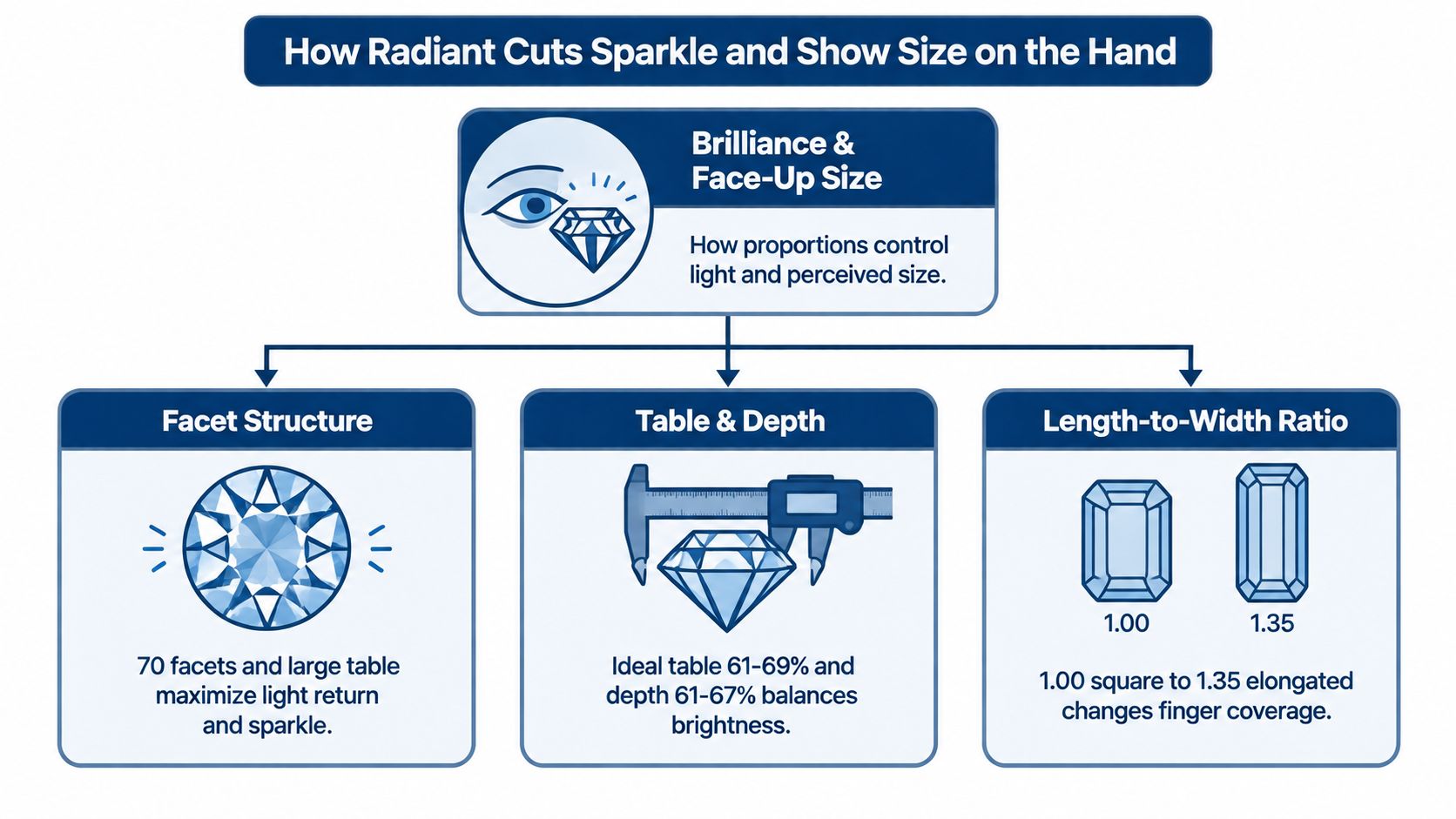
A radiant's appearance comes from how its facets and proportions work together. Read the table, depth, and length-to-width ratio as one layout rather than separate scores. Balanced starting ranges commonly sit near a 61% to 69% table, 61% to 67% depth, and 1.25 to 1.40 length-to-width ratio, as outlined in this radiant diamond proportion guide. These figures help narrow a search, while your eyes confirm whether the pattern looks bright and even.
Radiant cuts are typically built around a 70-facet brilliant-style structure. Facet arrangement affects how light returns to the viewer, but proportions affect how much of the diamond's weight appears from above.
Reading the measurements simply
The table is the large top facet visible when you look down at the stone. The depth measures how far the diamond extends from top to bottom compared with its width. Excessive depth can place more weight below the visible face, making the radiant look smaller for its carat weight.
The length-to-width ratio controls the outline. A square radiant sits near 1.00, while a longer shape may approach 1.35, as shown in this radiant cut education guide. Elongated radiants around 1.20 to 1.35 can give the finger a longer-looking footprint without making the stone excessively narrow.
Carat measures mass, not visible length or width. One carat equals 200 milligrams. A one-carat lab-grown radiant and a one-carat mined radiant have the same carat weight when their shape is the same, although origin can change the price.
At the counter: Compare two stones face-up, then check their measurements. The heavier stone is not automatically the one that looks larger.
A 3-carat lab-grown radiant engagement ring collection shows why face-up appearance deserves attention. Carat weight can attract interest, but outline, depth, and brightness decide how convincingly the stone presents on the hand.
Radiant Cut Compared With Oval Emerald and Princess Shapes
Shape choice becomes easier when you name the priority. If you want a lively, angular center stone, radiant may lead. If you want a softer outline, oval may feel more natural. If you prefer quiet reflections and architectural elegance, emerald may be the better match. Princess offers crisp square geometry, but its corners need more attention.
| Shape | Look and Sparkle | Durability and Setting Note | Best For |
|---|---|---|---|
| Radiant | Brilliant-style sparkle in a square or rectangular outline | Clipped corners provide more edge protection than sharp-corner shapes | Buyers who want flash, structure, and versatility |
| Oval | Elongated, rounded outline with lively brilliance | The curved outline avoids pointed corners, but the stone still needs a secure setting | Shoppers prioritizing a softer elongated look and finger coverage |
| Emerald | Step-cut reflections with a calm, hall-of-mirrors appearance | Clipped corners help protect the outline, while the open facet pattern makes clarity important | Buyers drawn to understated, vintage-influenced elegance |
| Princess | Square, brilliant-style appearance with sharp geometric definition | Pointed corners are more vulnerable to chipping and benefit from protective prongs | Shoppers who want a crisp square look and are comfortable prioritizing corner protection |
Radiant versus oval
A radiant gives you straight edges and trimmed corners. An oval gives you a continuous curve and a more traditional elongated impression. Both can create strong finger coverage, but they communicate different styles. Someone who wants a modern, sleek silhouette may prefer radiant, while someone who wants softness may lean toward oval. You can compare an oval lab-grown diamond engagement ring beside a radiant to see that distinction directly.
Radiant versus emerald
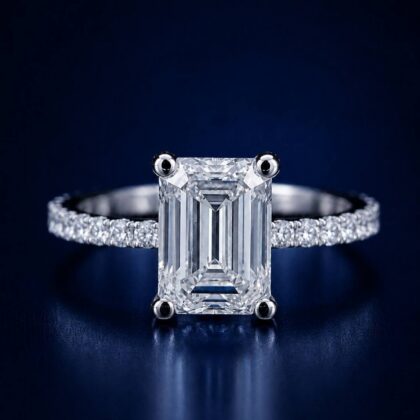
The outlines can look similar at first glance, especially when both stones are rectangular. The interior is where they separate. Radiant facets create scattered brilliance and flashes, while emerald's step-cut facets create broader, more orderly reflections. Choose radiant if sparkle is central to the decision. Choose emerald if you enjoy a quieter stone whose beauty depends on clean lines and visible clarity.
Radiant versus princess
Princess cuts are known for pointed corners. Those points can be protected with prongs, but the design demands more care around the edges. A radiant's clipped corners make it a practical alternative for someone who likes a square or rectangular outline but wants a more forgiving edge profile for everyday wear.
How to Evaluate a Radiant Cut Without a Standard Cut Grade
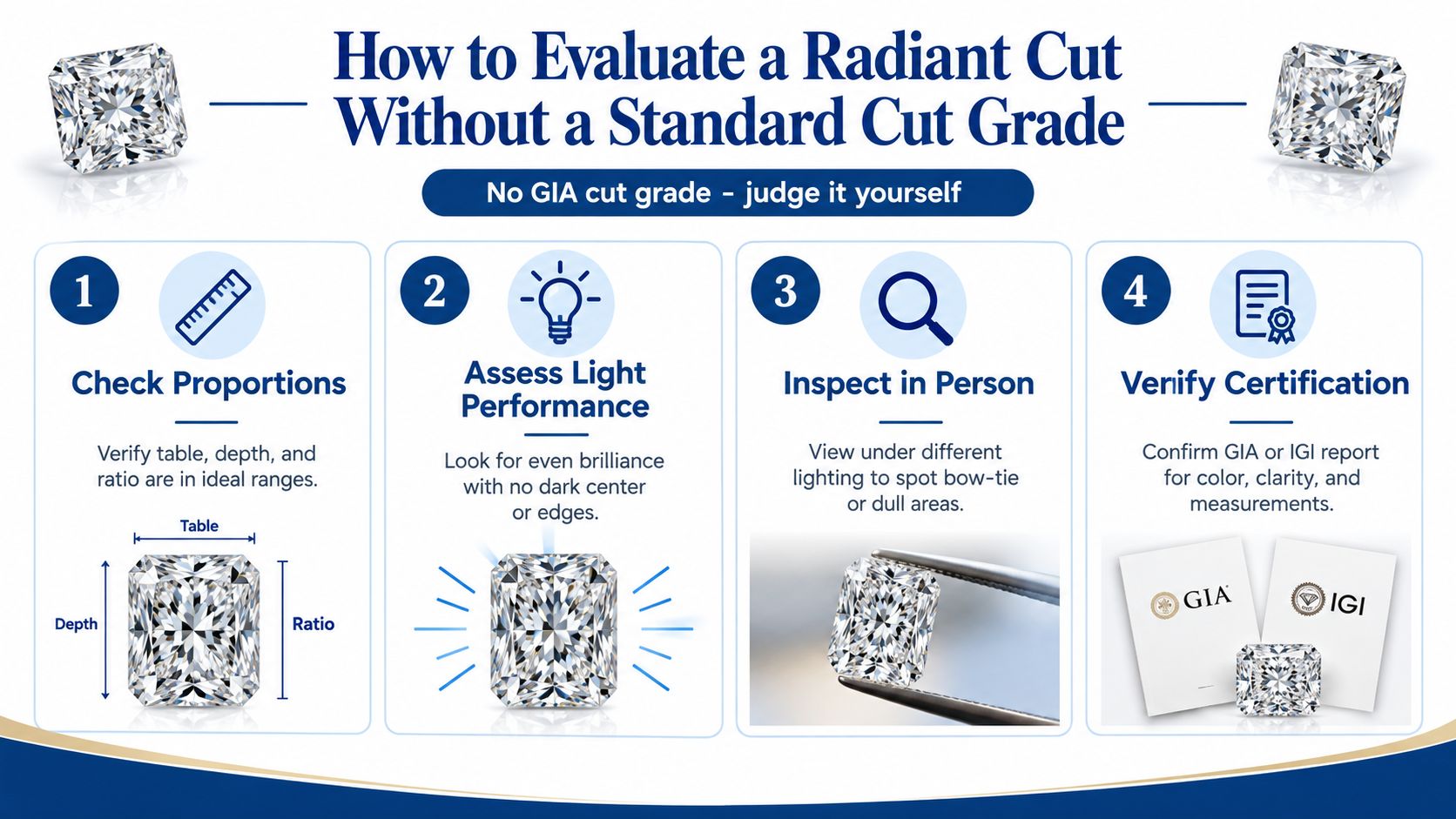
Radiant cuts don't receive an official GIA cut grade in the same way round brilliants do. That means an “excellent cut” label alone shouldn't settle the purchase. You need to combine the report with direct observation, particularly when you're comparing lab-grown stones during a short Las Vegas appointment.
A practical inspection routine
Start with the report. Check the table, depth, measurements, length-to-width ratio, color, clarity, polish, and symmetry. An IGI report can document the stone's identity and grading details, but it can't replace your visual judgment of brilliance.
Look straight down at the stone. A strong radiant should show lively light return across the face. Watch for a center or edge that stays noticeably dark while the rest of the stone flashes.
Tilt it slowly. Move the diamond under more than one light source. A radiant can show changing contrast as it moves, but a persistent dull patch deserves attention.
Inspect the corners and symmetry. The clipped corners should look balanced from left to right and top to bottom. Uneven corners or a visibly skewed outline can affect how the stone sits in its setting.
Compare it beside another radiant. Side-by-side viewing helps you distinguish genuine brightness from a favorable display light. Look at the stones from the same distance and angle, then ask which one stays more visually active.
Practical rule: A certificate tells you what the diamond is. Your eyes tell you whether this particular radiant is beautiful.
Overly deep stones may hide weight beneath the face-up surface, while a poorly balanced table and depth combination can affect optical performance. You don't need to memorize every proportion formula. You do need to ask for the measurements, look at the stone in person, and avoid buying solely because a listing uses a broad cut-quality label.
Finding Your Radiant Cut Ring for a Same Day Las Vegas Proposal
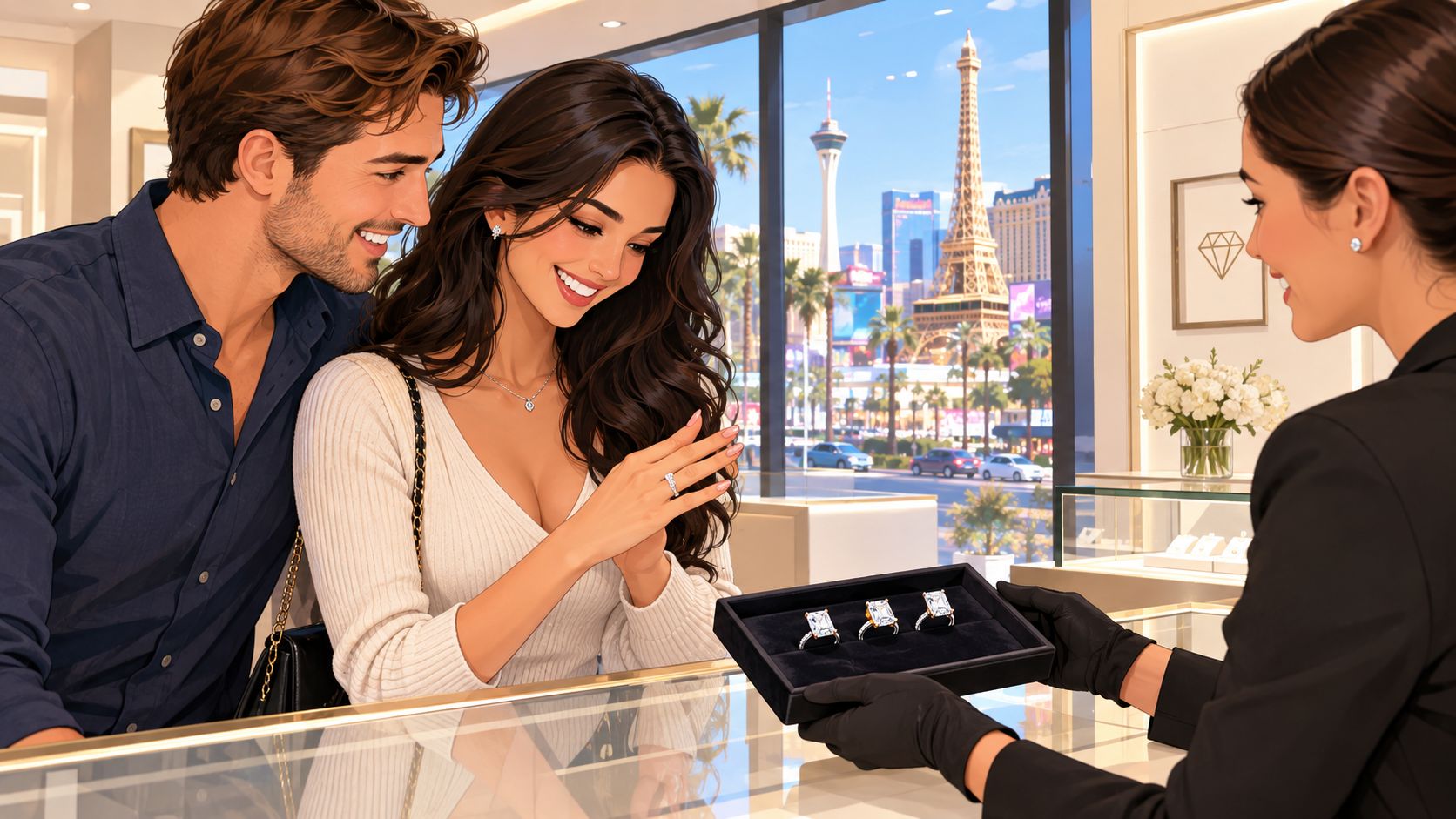
A last-minute downtown proposal still benefits from a short plan. Before visiting a jeweler, text your budget, preferred metal, approximate ring size, and whether you want a square or elongated radiant. The counter team can then show relevant rings instead of asking you to sort through every shape in the case.
Las Vegas timing matters too. The Clark County Marriage License Bureau at 201 E. Clark Avenue in Las Vegas is open 365 days a year, including holidays, from 8 a.m. to midnight, according to the official county bureau information. Sundays and Tuesdays are typically less busy, and quieter periods are 8 to 10 a.m. and 8 p.m. to midnight. Use that information to place license errands and ring viewing around a downtown wedding or chapel schedule.
What to confirm before you leave
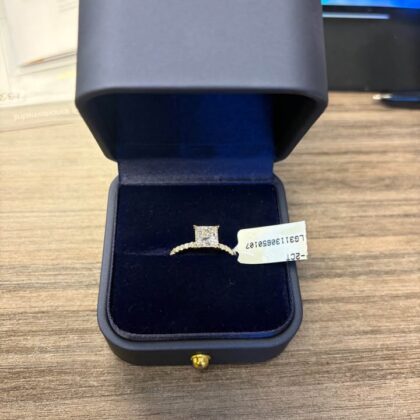
Ask whether the ring is physically in stock, whether the center stone has an IGI report, which ring size is listed, and whether same-day pickup is available. A ring ready to take home is different from one that must be ordered. If the store does not resize on site, the listed size affects your decision, so confirm the fit before paying.
With a fixed budget, decide your priority before you arrive: maximum carat, higher clarity, or an elongated outline. Ask the counter to pull only radiants that meet that priority. Clipped corners, broad face-up presence, and lab-grown availability can make that focused search practical for a proposal planned on short notice.
For a specific option, review this 3.03ct radiant cut lab diamond engagement ring in 14K white gold, then verify current availability before scheduling.
Choose with your eyes, verify the documentation, and match the ring size to the actual listing. Last Call Rings LV offers appointment-only viewing of physically in-stock lab-grown diamond engagement rings in downtown Las Vegas, with listing prices, IGI-certified stones, and same-day purchase and pickup. Text your budget and style preferences, then visit Last Call Rings LV to arrange a private viewing before the proposal.