August 31, 2026 · Uncategorized
3 Carat Lab Grown Diamond Engagement Ring: A 2026 Guide
A 3-carat lab-grown diamond engagement ring in Las Vegas can usually be viewed and walked out with the same day, with a fixed price already published online, instead of waiting weeks for a custom build. If you're marrying downtown, that matters because the ring, the license, and the chapel clock all have to line up.
Visitors who walk into my downtown counter usually aren't browsing for fun. They've got a chapel time, a license in hand, and a budget they want respected. They want a certified 3-carat lab-grown center stone that looks right on the hand, doesn't feel overpriced, and leaves with them that day.
Table of Contents
- Walking Out Engaged on Fremont Street Today
- What a 3 Carat Lab Grown Diamond Actually Looks Like
- What a 3 Carat Lab Grown Diamond Costs in 2026
- Cut, Color, and Clarity Trade-Offs at 3 Carats
- Setting Choices and Ring Size Without On-Site Resizing
- Same-Day Pickup Around the Marriage License Bureau
- Reading the IGI Certificate on Every Listing
- Is a 3 Carat Lab Grown Ring Too Big or Just Right
Walking Out Engaged on Fremont Street Today
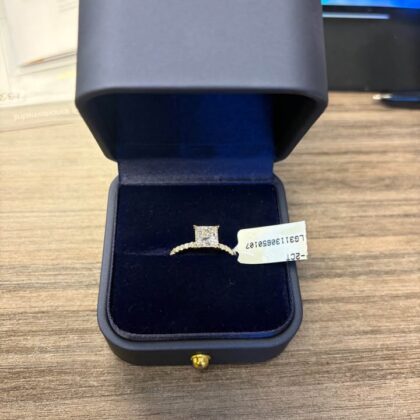
A couple came in on a wedding morning with the whole day compressed into a few hours, and they did exactly what smart Las Vegas buyers do. They had already been to the Clark County Marriage License Bureau, they texted a budget the night before, and they showed up ready to choose fast. By lunch, they were leaving with the ring in a platinum-style solitaire box and a chapel reservation still ahead of them.
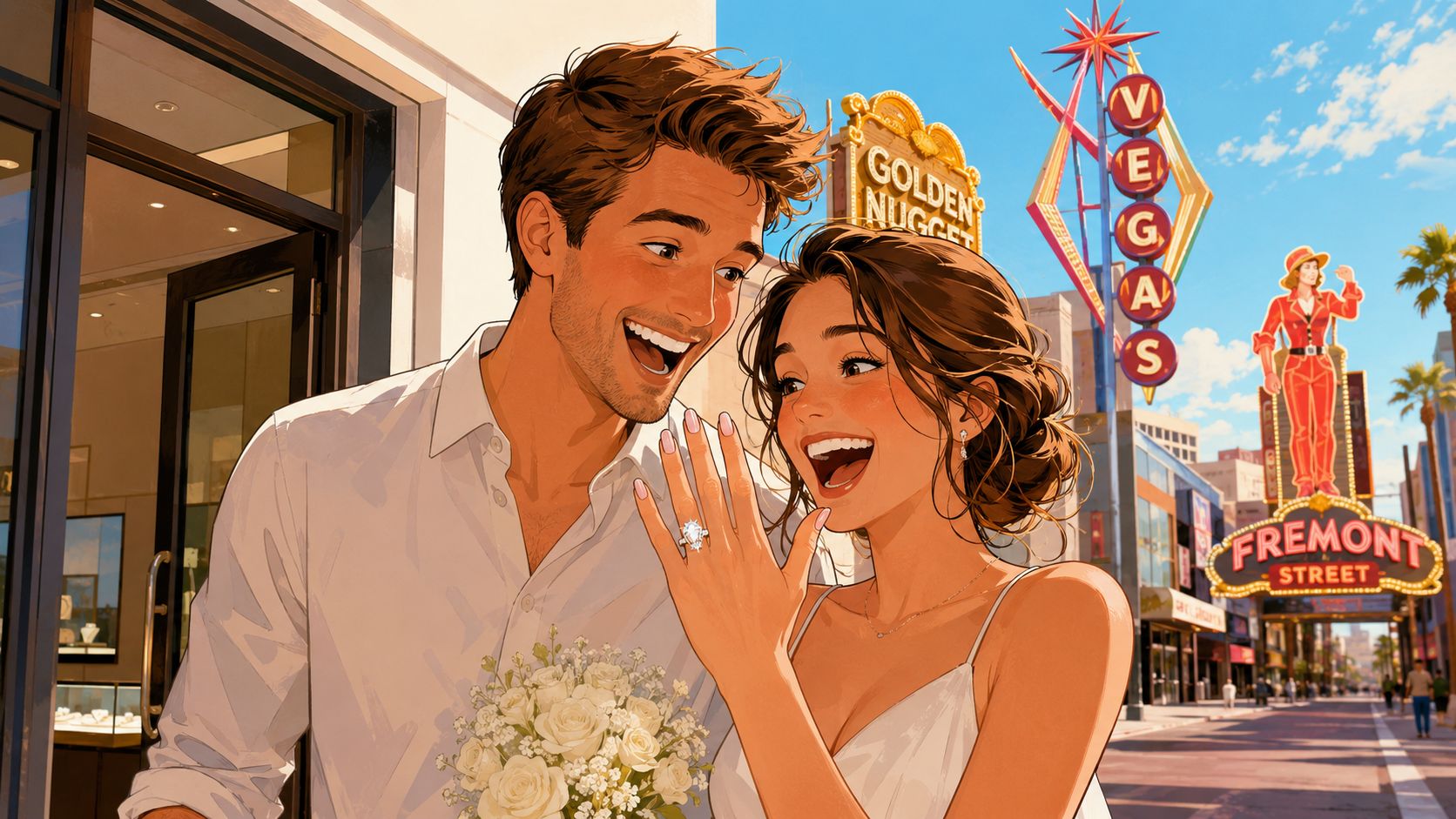
The downtown counter is built for same-day decisions
At a by-appointment counter, speed doesn't mean pressure. It means the case is already curated, the prices are printed, and the stones are physically there to look at instead of waiting on a factory order. That's the right model for a 3 carat lab grown diamond engagement ring when the wedding day is already on the calendar.
The Las Vegas reality is simple. If you're downtown, you don't need a fantasy shopping trip. You need a clean selection process, a certificate that checks out, and a ring that leaves with you before the chapel call time.
Practical rule: if the stone isn't in the case, it's not a same-day ring.
That's why I'm opinionated about inventory-first buying. For visitors who've already done the license run and are racing a chapel clock, the ring should be ready, photographed, priced, and waiting. No waiting list. No “we'll call you next week.” No guesswork.
Why Fremont Street timing matters
Downtown geography shapes the whole experience. If you're moving between Fremont Street, the courthouse area, and a chapel reservation, every extra errand adds stress. A same-day ring visit works because it sits inside that route, not outside it.
For local buyers and visitors alike, the question isn't whether a 3-carat ring is possible. It's whether the purchase process respects the day you're already living. In Las Vegas, the right answer is yes, if the ring is already in stock and the paperwork is clean. Last Call Rings LV's 3.02 ct oval listing is the kind of listing that makes that model work.
What a 3 Carat Lab Grown Diamond Actually Looks Like
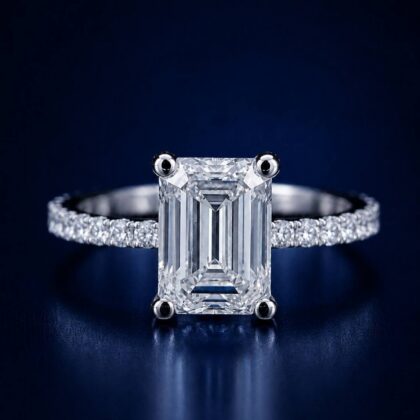
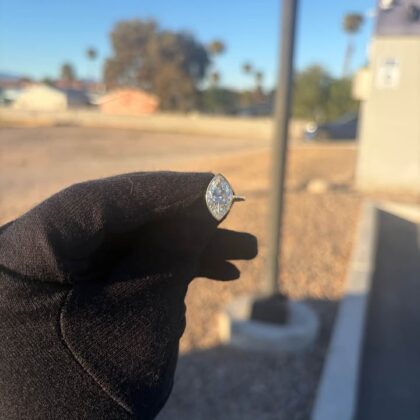
A 3-carat lab-grown diamond is not a giant disc on the hand. It's a serious center stone with real presence, but the exact look depends on shape, depth, and how the stone spreads face-up. On a size 6 finger, the difference between a stone that looks balanced and one that looks bulky often comes down to millimeters, not carats.
Carat is weight, not face-up size
A round brilliant at 3.00 ct measures roughly 9.3 mm, while an oval can reach about 11.0 x 7.7 mm, an emerald around 9.6 x 6.8 mm, a cushion about 8.9 x 8.2 mm, and a pear about 12.0 x 7.6 mm. Those measurements explain why an elongated shape can look bigger than a round even when both weigh the same. Lab-grown and mined diamonds share the same crystal structure, so the visual size on the finger is the same when the proportions match.
The lesson is this. Face-up area, depth percentage, and shape determine presence more than carat alone. A deep stone hides weight under the setting, while a shallow, well-cut stone puts more of that weight where people can see it.
Rule of thumb: at 3 ct, a 1 mm diameter shift translates to roughly 11% face-up area. That's why small measurement differences matter so much.
Shape changes the read on the hand
Here's the practical effect. A round reads classic and compact. An oval, pear, or marquise stretches the finger visually. An emerald reads refined and architectural, while a cushion softens the look without making the stone disappear. The shape you choose tells the room whether you want clean symmetry or maximum spread.
| Shape | Approx. Length x Width (mm) | Relative Face-Up Presence |
|---|---|---|
| Round | 9.3 mm | Balanced and classic |
| Oval | 11.0 x 7.7 mm | Larger-looking, elongated |
| Emerald | 9.6 x 6.8 mm | Sleek, elegant, less sparkle-heavy |
| Cushion | 8.9 x 8.2 mm | Softer outline, moderate spread |
| Pear | 12.0 x 7.6 mm | Strong elongation, bold look |
The right way to shop a 3-carat stone is to stop asking only “How many carats?” and start asking “How does it sit on the hand?” That's the question that separates a ring you admire from a ring you wear well.
What a 3 Carat Lab Grown Diamond Costs in 2026
Pricing at 3 carats is finally transparent enough that buyers can stop guessing. In 2026, shape still changes the number, but the difference isn't about rarity. It's about how much rough diamond gets lost in cutting, which is why some shapes carry more price per carat than others.
Real counter ranges by shape
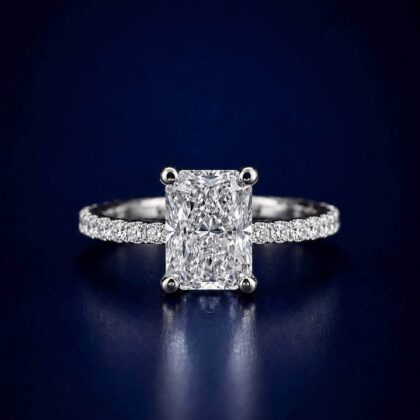
At the counter, the practical budget bands I'd give a buyer are straightforward. A round brilliant often lands around $7,500 to $10,200, an oval around $6,400 to $8,900, an emerald around $6,200 to $8,400, a cushion around $6,600 to $9,000, a pear around $6,800 to $9,300, a radiant around $6,500 to $8,800, a marquise around $6,000 to $8,200, and a princess around $6,200 to $8,500. Those are the bands buyers should have in mind before they text a jeweler.
The big point is that 2026 pricing has stabilized after the 2024 oversupply correction, so you're no longer shopping in the same chaos buyers saw earlier. A 3-carat lab-grown ring still carries volatility underneath, but the visible counter pricing is no longer moving like a panic market.
| Shape | Low ($) | High ($) | Notes |
|---|---|---|---|
| Round Brilliant | 7,500 | 10,200 | Highest demand, strongest premium |
| Oval | 6,400 | 8,900 | Best value for spread |
| Emerald | 6,200 | 8,400 | Clean lines, step-cut look |
| Cushion | 6,600 | 9,000 | Softer outline, balanced pricing |
| Pear | 6,800 | 9,300 | Long outline, higher visual impact |
| Radiant | 6,500 | 8,800 | Brilliant style with corners |
| Marquise | 6,000 | 8,200 | Lowest-cost elongation |
| Princess | 6,200 | 8,500 | Square look, efficient cutting |
Why the savings feel so dramatic
A 3-carat lab-grown ring is roughly 85% below a comparable mined diamond at retail, which is why this size has become realistic for more buyers. Independent industry commentary also notes that lab-grown diamonds often cost 70 to 90% less than mined diamonds of equivalent size and grade, and the savings widen as carat size increases (commissionedjewellery.com). That's the budget advantage that makes a 3-carat center stone a real Las Vegas purchase instead of a fantasy one.
For a clear, local breakdown of what you're paying for in the case, look at Lab-Grown Diamond Engagement Rings in Las Vegas. The point is not that every 3-carat stone should cost the same. The point is that the buyer should know the band before the first text.
Cut, Color, and Clarity Trade-Offs at 3 Carats
At 3 carats, bad proportions show instantly. That's why cut is the first filter, not the last. A stone can look expensive on paper and flat in person if the light doesn't move properly through it.
Spend where the eye can see it
Cut deserves the highest priority because it controls brilliance, fire, and spread. If the cut is weak, the stone wastes weight under the setting and looks smaller than it should. After that, color matters most in how white the diamond reads in the chosen metal, then clarity becomes the best place to save when the inclusion pattern is friendly.
A G or better holds white in white gold. H to J can read warm in yellow gold, which is not automatically a problem if the buyer likes that look. Clarity is where many shoppers overspend. VS2 and even a well-placed SI1 can disappear under normal viewing distance, especially once the ring is set.
Direct advice: never trade down on cut to save money. That's where the visible regret starts.
| Profile | Cut | Color | Clarity | Best For | Trade-Off |
|---|---|---|---|---|---|
| Near-flawless | Excellent | G | VVS2 | Buyer wants a very clean, bright stone | Pays for top-tier specs that may not look very different on hand |
| Sweet spot | Excellent | E | VS2 | Most buyers who want maximum beauty without waste | Slightly less rare on paper, stronger value in practice |
| Budget build | Very good or better | H | SI1 | Yellow gold buyers who want size first | Must inspect the inclusions carefully |
What I'd choose on the counter
If the stone will sit in white gold, I'd push a buyer toward E to G color with VS2 clarity and a strong cut. If the ring is going into yellow gold, a warmer color can work because the metal softens the tint. The one combination I don't like is a bargain stone with a weak cut and a shiny certificate trying to hide it.
A 3-carat ring should look confident, not compromised. Cut first, color second, clarity third is still the right order, and any combo that looks too cheap for the specs deserves a hard second look.
Setting Choices and Ring Size Without On-Site Resizing
The setting has to fit the stone and the hand, and at this size the ring can't be treated casually. If the size is wrong, you'll feel it every time the ring turns, slides, or catches. At a downtown counter, that means the buyer has to come prepared.
The metal and style choices that make sense
The practical metal options are 14K white gold for a bright, modern read, 14K yellow gold for warmth against a slightly warmer stone, and 14K rose gold as a limited special-order option. The most common setting styles are solitaire, hidden halo, pavé, and the classic three-stone. For a 3-carat center, I'm usually more confident with a cleaner setting than a busy one because the stone already carries the visual weight.
A ring like this should be chosen from the published inventory, not assumed to be adjustable on the spot. Rings ship at the size shown on each listing, and resizing isn't performed in the store, so sizing has to be right before the visit. A printable sizer or a local jeweler measurement is the safe move.
How to avoid a sizing mistake
If the proposal is a surprise, text a photo of the recipient's current ring or send a string measurement if that's all you can get. Don't overthink the process. Get a likely size, confirm the setting can be worn comfortably, and leave the heroic guesses out of it.
- Check an existing ring: Compare the inner diameter to a known size if the wearer already owns one.
- Use a local measurement: A jeweler's sizer beats guesswork.
- Text a photo if it's secret: A clear image often tells me more than a long message.
The safety net is the 30-day exchange window, which helps if the fit isn't right after the fact. That's not a substitute for good sizing, but it does matter for buyers moving fast. The downtown model works because the ring is ready, not because the store plans to resize around the problem later.
Same-Day Pickup Around the Marriage License Bureau
The Las Vegas same-day ring experience works because the clock is real. The Clark County Marriage License Bureau is at 201 E. Clark Avenue, and it's open 365 days a year from 8 a.m. to midnight, including holidays (Clark County location and hours). Clark County also says the bureau is usually least busy on Sundays and Tuesdays, with the least busy times from 8 to 10 a.m. and again from 8 p.m. until midnight (Clark County FAQ). That timing matters when you're trying to fit a ring purchase into a chapel day.
The three-step visit that actually works
A couple texts the budget first, gets curated options pulled from the case, and then buys the ring in one visit. That's the whole model. It's clean because the ring is already in stock, photographed, and priced before they walk in.
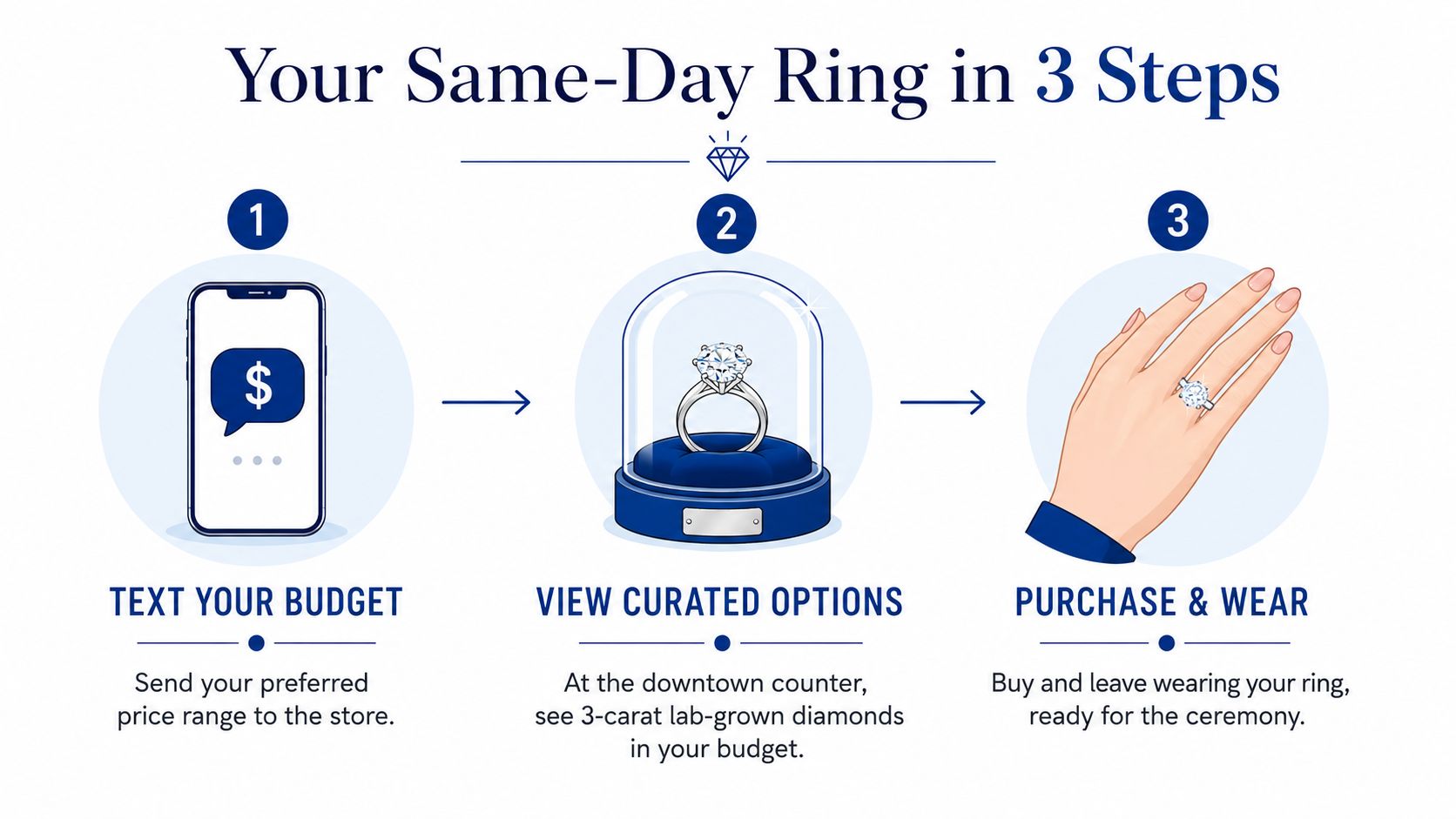
A realistic downtown timeline looks like this, text before 10 a.m., arrive by 11 a.m., finalize by noon, and head to the chapel by 2 p.m. with the license already handled. That timeline is tight, but it's normal in Vegas. People don't come here for a long retail experience, they come here to get engaged.
Parking near the courthouse area is manageable if you're planning the route instead of improvising. Payment methods at the counter should be confirmed by text ahead of time so there's no pause at checkout. If you're staying on the Strip and can't make downtown in time, shipping to a hotel can be the fallback, but same-day pickup is the cleaner move when the schedule allows.
For the local view, Engagement Rings in Las Vegas NV is the relevant starting point. The point is simple, a same-day ring is only useful if the store treats same-day as the default, not the exception.
Reading the IGI Certificate on Every Listing
A 3-carat lab-grown ring should never be bought off appearance alone. The paper trail matters because it tells you exactly what the stone is, and that matters for insurance, upgrades, and any future trade-in conversation. IGI grading reports include a unique report number that can be checked in the lab's report system, and the report itself states whether the stone is a natural diamond or a laboratory-grown diamond (IGI report reading guide).
What to check first
The fields that matter most are the carat weight, shape, color grade, clarity grade, cut grade, measurements in millimeters, and the unique report number. Those are the facts that determine whether the listing and the stone match. If the report number doesn't line up, stop there.
IGI documents are useful because they don't bury the origin. The lab-grown designation is visible on the report itself, which protects the buyer when a ring is appraised later or submitted for a claim. That paper should travel with the ring in a printed sleeve, not sit in a text thread that nobody can find two years from now.
| Field | What It Tells You |
|---|---|
| Carat weight | The stone's actual weight |
| Shape | The outline and face-up style |
| Color grade | How white or warm the diamond reads |
| Clarity grade | How visible the inclusions are |
| Cut grade | How well the stone handles light |
| Measurements | The actual size in millimeters |
| Report number | The verification key for the exact stone |
Why the paperwork matters later
Insurers in Nevada commonly ask for a copy of the IGI report when a 3-carat lab-grown ring is scheduled, and that's not paperwork to toss in a drawer. If you want a clean replacement conversation later, keep the certificate intact. The same document is also what you'll want for future upgrade, trade-in, or claim discussions.
The rule here is essential. Buy the ring, verify the report number, and keep the certificate with the ring. If a listing doesn't make the paperwork obvious, that listing isn't ready for a serious buyer.
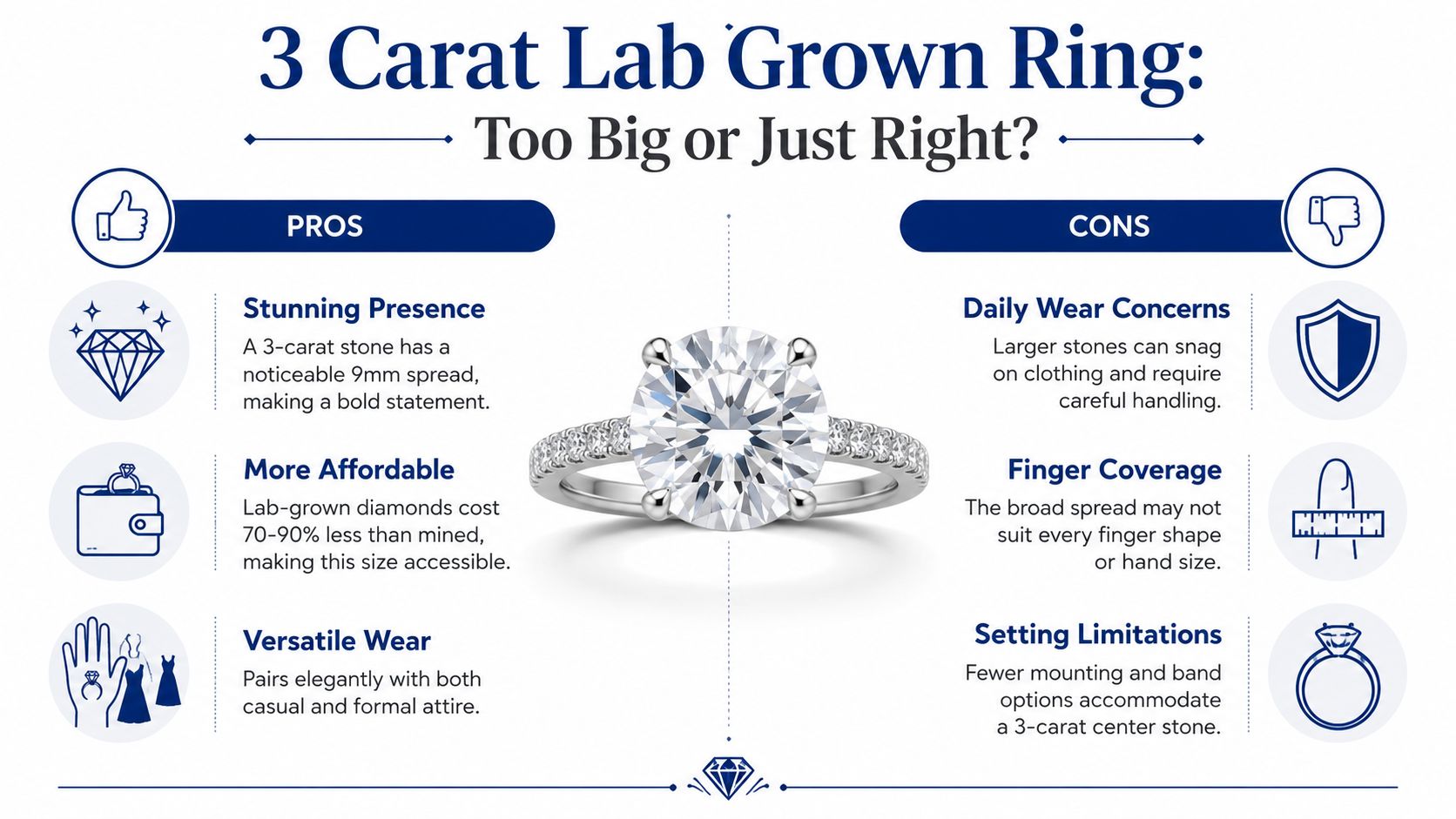
Is a 3 Carat Lab Grown Ring Too Big or Just Right
A lot of buyers assume 3 carats is the obvious upgrade. In practice, it's a ceiling for some people and a sweet spot for others. Recent market coverage says lab-grown center stones now account for 61% of engagement ring purchases and average ring carat has risen to 1.9 ct, while a June 2026 dataset from 950 U.S. independent jewelers reportedly found that the 3-carat threshold acts as a consumer ceiling for LGD engagement rings (JCK market coverage). That tells you the question isn't just bigger or smaller. It's whether the size fits real life.
The hand, the lifestyle, and the photos
A well-cut 3-carat oval or elongated cushion can look larger than a deep round of the same weight because the spread is stronger. That's why shape matters so much at this size. The stone also behaves differently in daily life. Active hands, childcare, gym routines, office work, and fabric snags all become more relevant once the center stone is this prominent.
The upside is obvious too. A 3-carat lab-grown ring photographs beautifully, feels like a milestone gift, and gives you a strong presence without the mined-diamond price shock. For many buyers, that's the whole argument.
Three questions that settle the decision
Ask yourself three things before you commit.
- Will I wear it every day? If your hands are always busy, a lower-profile setting may be smarter.
- Do I want it to dominate photos? If yes, a 3-carat center gives you that visual payoff.
- Does my style lean bold or restrained? If you prefer subtlety, a 2.5-carat or a slimmer shape may wear better.
My view is blunt. A 3-carat lab-grown ring is right when the buyer wants presence, value, and a clear statement without mined-diamond pricing. It's wrong when the size is chosen just because the number sounds impressive.
If you're in Las Vegas and want a certified 3-carat lab-grown diamond engagement ring you can view in person and take home the same day, Last Call Rings LV keeps the inventory in the downtown case and prices each ring on the listing. Text your budget, come to Fremont Street, and see the stone that fits your hand, your timing, and your chapel schedule at Last Call Rings LV.