August 31, 2026 · Uncategorized
Engagement Rings Las Vegas NV: A Same-Day Buyer’s Guide
You're in downtown Las Vegas, your proposal window is tight, and you need a ring you can leave with today. That changes the whole game. engagement rings Las Vegas NV aren't a catalog exercise here, they're a logistics problem, and the buyer who wins is the one who texts first, verifies second, and walks out with a certified ring that already fits the plan.
Table of Contents
- Why Buying an Engagement Ring in Las Vegas Works Differently
- Booking Your Private Viewing by Text
- Reading an IGI Report Before You Buy
- Choosing the Right Cut, Carat, and Ring Size
- Same-Day Pickup and What Happens at the Counter
- From Ring to Chapel Without Leaving Downtown
- Quick Checklist Before You Text the Jeweler
Why Buying an Engagement Ring in Las Vegas Works Differently
Las Vegas runs on short notice. Clark County issued 76,779 marriage licenses in 2024, which works out to about 210 licenses per day, and by April 2025 the daily average had climbed to 227 according to the county-linked wedding statistics summary. That is not a seasonal bump. It is the way the city moves, and it is why ring shopping here has to be fast, local, and already in stock.
The downtown buyer is not browsing for a future purchase
A lot of ring advice assumes you have weeks to compare settings, wait for shipping, and think it over. Downtown Las Vegas does not work like that. Nevada issues marriage licenses immediately, there is no waiting period, and the city says couples can get licensed and married the same day through the official visitor guidance. That turns the ring into a same-day purchase, not a long project.
Practical rule: if the ring cannot be inspected, sized, and boxed before your chapel slot, it is the wrong ring for Las Vegas.
The local buying workflow follows the wedding infrastructure, not the jewelry industry's usual rhythm. Chapels, license runs, hotel check-ins, flights, and dinner reservations all sit inside the same narrow time window. The buyer who texts first, verifies the IGI report on their phone, and walks out before the chapel call arrives is the one who keeps the schedule intact.
Inventory beats ordering every time
Ready-to-take-home lab-grown inventory matters here because visitors cannot wait for a special order to come back from a vendor. A ring on a future delivery date does not help a couple with a same-day plan. What matters is whether the stone is here, whether the certification checks out, and whether the ring can leave the store immediately.
That is why this guide treats the text-to-counter workflow as the core framework. You are not hunting for a dreamy future ring. You are matching a certified stone to a same-day wedding plan.
Booking Your Private Viewing by Text
Texting is the cleanest way to start because it removes the two biggest sources of delay, vague expectations and showroom back-and-forth. A good first message should include exactly six things, budget ceiling, preferred carat range, shape, metal, ring size if known, and the time window for visiting. Send those details up front and you'll get pulled inventory that fits your situation instead of a random tray of options.
What to send in the first message
If you know the size, send it. If you don't, say that clearly and ask for a best-fit estimate or sizing guidance. Don't overthink the first text, the point is to narrow the case quickly so the jeweler can set aside stones that are physically there that day.
- Budget ceiling: gives the jeweler a hard limit so you don't waste time on rings you won't consider.
- Preferred carat range: lets the case pull reflect what you want to see.
- Shape: round, oval, emerald, radiant, pear, and similar shapes behave very differently in person.
- Metal: white, yellow, or rose changes the entire look of the ring.
- Ring size if known: helps avoid a mismatch at the counter.
- Time window: makes it possible to block a private slot around walk-ins and other same-day buyers.
If your first choice isn't available, the right response is simple, move to the closest fit in the same budget and shape family. Don't let the search stall because one exact listing sold before you arrived. In a downtown market, that's normal.
A buyer who texts ahead also avoids the show-up-and-wait problem. Parking, ID, payment prep, and appointment timing all go smoother when the showroom isn't trying to improvise around an unannounced visit. That matters even more when the rest of your evening already has a chapel or dinner reservation attached to it.
Direct advice: send the hard numbers first, then the style preferences. That order gets you to the counter faster.
Reading an IGI Report Before You Buy
An IGI-certified lab-grown stone should never be treated like a mystery box. The report is the whole point, because it lets you verify what you're buying before money changes hands. IGI's own lab-grown diamond report page says the report number can be checked on IGI's site to confirm the document is genuine and matches the database through IGI's certification page. Use that check on your phone while the stone is still on the counter.
The fields that matter most
Start with the report number. If that number isn't visible or doesn't match the listing, stop there. Then compare the grading fields that affect what you'll see in person, especially the 4Cs and any notes that affect appearance. On a same-day purchase, you're not studying every line for curiosity, you're checking whether the certificate, the stone, and the invoice all describe the same object.
The report number should match the inscription on the girdle when it's present, and the loose stone should match the paper in your hand. If the weight on the certificate doesn't line up with the stone in front of you, that's a hard stop. If the grading seems inconsistent with the visual appearance, don't assume it's a harmless error. Assume the stone needs another verification.
Red flags you should not ignore
- Missing report number: no number, no purchase.
- Weight mismatch: the stone and the certificate must agree.
- Grading mismatch: if what you're seeing doesn't look like what the report describes, the stone needs closer inspection.
- “Pending” style ambiguity: avoid anything that leaves the final document unclear.
Certified lab-grown buying is about reducing misrepresentation risk, not just proving that the stone is real. The report protects the resale and insurance trail, and it keeps the purchase clean for the person who has to carry it into a same-day wedding schedule.
Buy it this way: certificate first, stone second, payment third. Never reverse that order.
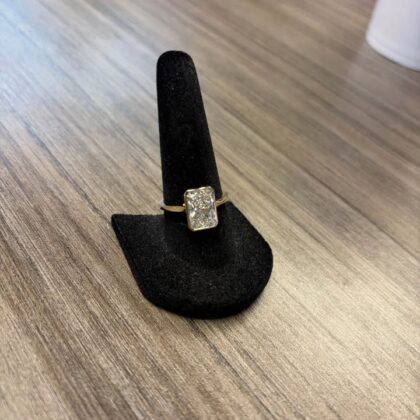
This IGI-certified radiant-cut example shows the kind of listing that makes this process easy when the report details are visible and the stone is already matched to the setting.
Choosing the Right Cut, Carat, and Ring Size
Same-day inventory is narrow by design, so shop from the counter. In-stock lab-grown rings cluster around cuts that photograph well and resize cleanly. The unusual shapes show up less often. The best pick is the ring that fits the budget, the finger, and the clock.
Cut and setting should work together
Round brilliants remain the safest default because they wear well and stay easy to service later. Oval and emerald cuts are common enough to be realistic same-day options, while pear, marquise, and asscher are harder to source in a ready case. If you choose a pointed shape, ask about prong style right away. A marquise needs proper tip protection.
Bring a photo of her everyday stack if you can. White, yellow, and rose metal read differently against skin and against a wedding band later. A ring that looks right on the tray but fights the wearer's usual jewelry is the wrong ring, even if the diamond is excellent.
For sizing, don't guess wildly. Ask for a printable ring sizer PDF or a plastic mandrel before you arrive. If the finger measurement still isn't certain, use a resize window instead of forcing a bad fit on the spot. If her finger swells in heat, size up half a size for a Vegas proposal in September. This guide shows what you get for your money if you want a cleaner read on value before you commit.
A timeless round brilliant in a four-prong solitaire is still the safest same-day move. It resizes cleanly, pairs well with later band choices, and avoids the mistakes that come from chasing a shape that only sounds better in theory.
| Cut | Typical In-Stock Carat Range | Best Sizing Strategy |
|---|---|---|
| Round | Often found in classic solitaire-friendly sizes | Safest default, easiest to resize and pair later |
| Oval | Common in ready-to-take-home lab-grown cases | Good if you want more finger coverage without chasing a larger number |
| Emerald | Often selected for a cleaner, geometric look | Best when the wearer prefers structure over sparkle |
| Radiant | Frequently stocked for buyers who want brightness and shape | Check prong alignment carefully before walking out |
| Pear | Less common, but useful for a more distinctive look | Confirm tip protection and avoid guessing on size |
Choose the cut that can leave with you today. The ring has to be real at the counter, not on a future order sheet.
Same-Day Pickup and What Happens at the Counter
The counter process should feel tight and repetitive. That's a good sign. A smooth same-day pickup means the jeweler already knows the ring, the stone, and the paperwork before you walk in, and you're there to confirm the final details, not to rebuild the order from scratch.
The sequence should stay boring
Payment comes first. Certified funds clear fastest, though major credit card and cryptocurrency are also common in this kind of purchase. Once payment is confirmed, the jeweler pulls the loose stone and checks the IGI report number against the laser inscription on the girdle with a loupe or microscope. That match is the checkpoint that matters most before any final setting work proceeds.
Then inspect the mounting. Look for the 14K gold stamp inside the band, make sure the prongs sit correctly over the stone, and ask for a final polish under bright light so surface marks don't surprise you later. The finished ring should be photographed for records, boxed with the report, and accompanied by the receipt and any resize paperwork if the band allows it.
The best same-day pickup is the one where you're never guessing what was sold to you.
Expect roughly 20 to 30 minutes from greeting to walking out if no resizing is needed, and add 30 to 45 minutes if a size adjustment is requested and the band allows it [per the same-day pickup workflow described in the buyer brief]. That's why the first text matters so much. Every missing detail adds time you may not have.
Ask for a direct mobile number before you leave. If anything needs attention before the proposal, you want one person who already knows the ring and the paperwork.
From Ring to Chapel Without Leaving Downtown
Downtown Las Vegas makes a ring-to-ceremony handoff unusually easy because the jewelry counter, the license bureau, and the chapel circuit sit close together. Clark County's Marriage License Bureau is open 365 days a year, from 8 a.m. to midnight, and the county notes that Sundays and Tuesdays are usually the least busy days, with 8 to 10 a.m. and 8 p.m. to midnight typically the quietest windows per the county FAQ. If you're planning a same-day wedding, that timing matters.
The downtown route works because the distances are short
The advantage is not romance, it's logistics. The Marriage License Bureau sits at 201 E. Clark Avenue in downtown Las Vegas, and the city says same-day marriage is allowed after the license is issued through the official Las Vegas guidance. That means the ring can be picked up, the license can be secured, and the ceremony can happen without crossing town.
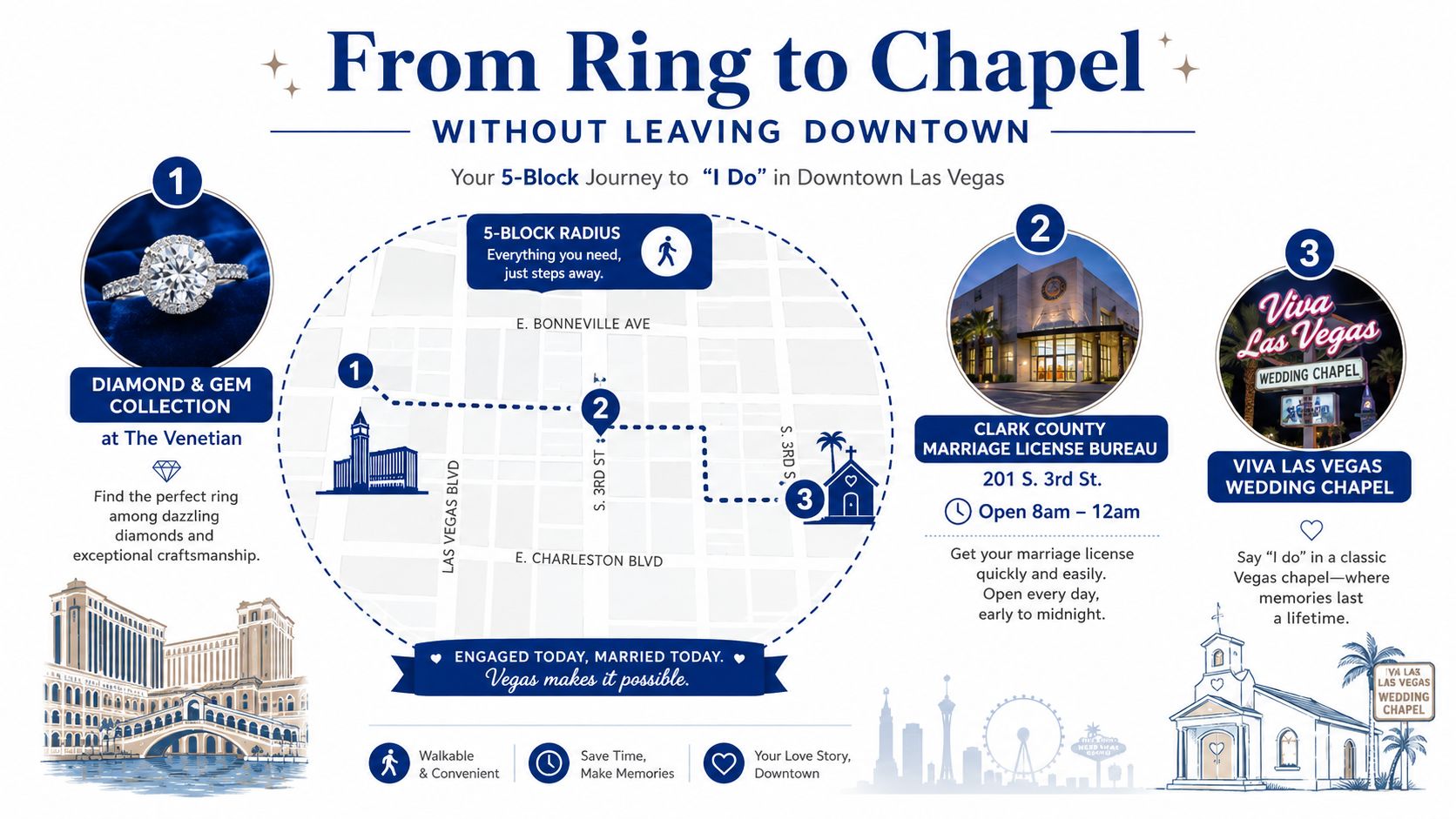
A practical downtown plan keeps the ring handoff inside the chapel instead of on the sidewalk. The lighting is better, the box looks cleaner in photos, and nobody has to juggle paperwork and packaging in the middle of a busy street. If you're using a chapel slot later in the day, tell the jeweler your timing by text so the ring is polished, sized, and ready when you arrive.
This is why downtown buyers need to think in blocks, not in days. The best ring purchase is the one that fits the license window, the chapel slot, and the walk between them.
Quick Checklist Before You Text the Jeweler
Use one clean text and force the decision tree to shrink. The more precise you are up front, the less time you'll lose at the counter, and in Las Vegas, that time can be the difference between leaving with the ring and missing the rest of your night.
Send these confirmations before you leave
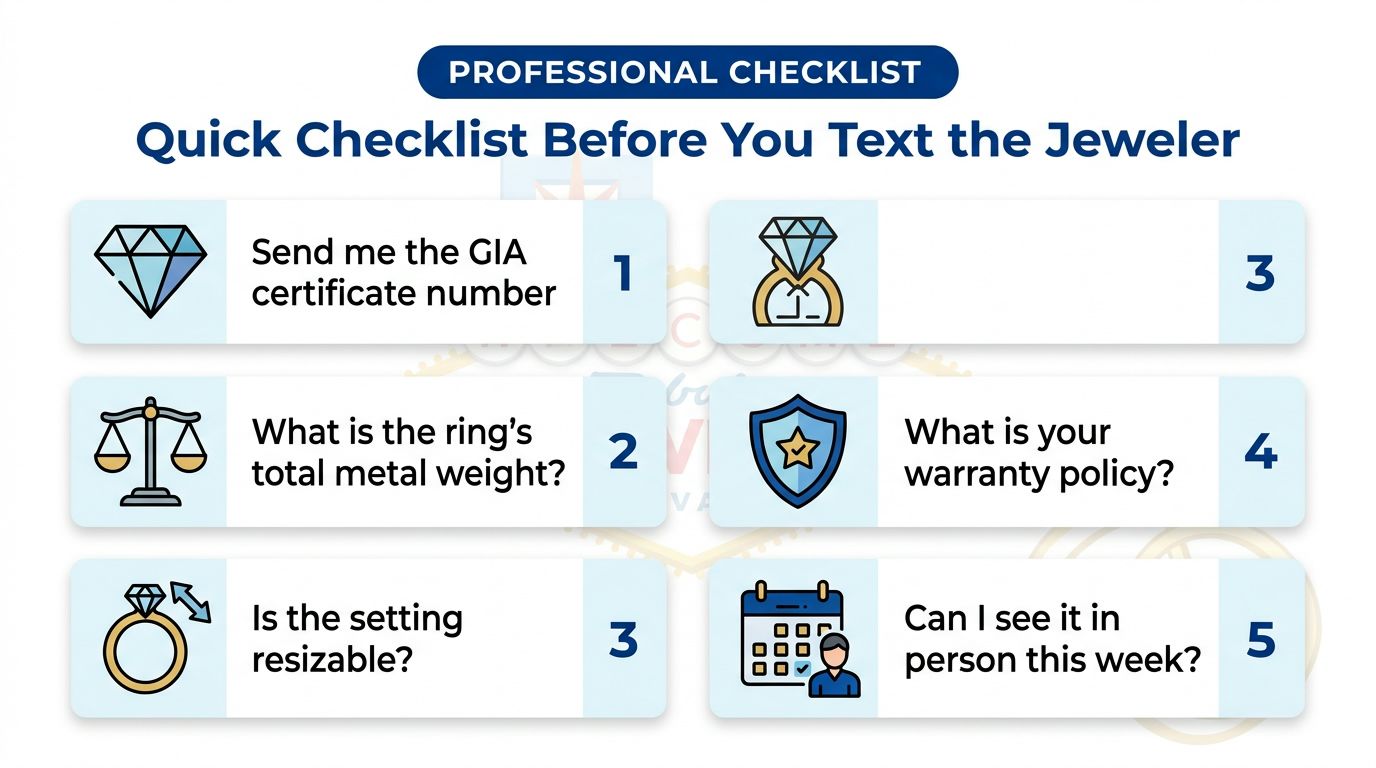
- Send the budget ceiling, carat range, and shape. That's the fastest way to pull the right cases.
- Ask for the exact IGI report number tied to the in-stock stone. Don't settle for a vague description.
- Confirm the 14K gold setting is included. Make sure you're not looking at a placeholder listing.
- Ask whether sizing is available on-site or whether a sizer can be provided before the visit. A bad fit kills momentum.
- Verify the counter appointment window and payment methods accepted. That keeps you from arriving unprepared.
- Confirm parking and chapel-proximity logistics if you're proposing the same evening. Downtown convenience only works if you plan it.
If the ring is for a same-day chapel timeline, also confirm that the stone is physically in the downtown case and not something that still needs to be moved in. That's the difference between a real inventory-first operation and a website that looks local but behaves like a mail-order shop.
These buyer guides are worth reading before you make the trip if you want the shortest path from text to counter.
If you want a downtown jeweler who treats same-day buying like a real workflow, not a sales script, visit Last Call Rings LV and text your budget, shape, and timeline before you come in. They keep in-stock lab-grown rings ready for same-day pickup, and that's exactly the setup this city rewards.