September 13, 2026 · Uncategorized
1.1 Carat Diamond Guide for Las Vegas Ring Buyers
You're in Las Vegas, the proposal or chapel appointment is close, and you need a ring you can see, trust, pay for, and take with you today. You may be comparing a 1.0-carat diamond with a 1.1 carat diamond, wondering whether that extra weight will look larger on the hand or cost more. If you're shopping for an in-stock lab-grown engagement ring near downtown, the useful answer depends on more than the carat number.
This guide explains what a 1.1 carat diamond weighs, how large it can look face-up, what current natural and lab-grown pricing means, and how shape, cut, clarity, color, and certification affect the finished ring. It also covers the practical Las Vegas details, including appointment timing, downtown access, ring size, and same-day pickup.
Table of Contents
- Introduction to the 1.1 Carat Diamond in Las Vegas
- What 1.1 Carat Means for Size and Appearance
- How Much a 1.1 Carat Diamond Costs Right Now
- How Cut and Shape Change the Look of 1.1 Carat
- Choosing Clarity Color and Certification With Confidence
- Buying Your 1.1 Carat Ring Today in Downtown Las Vegas
- Final Takeaways for Your 1.1 Carat Decision
Introduction to the 1.1 Carat Diamond in Las Vegas
A visitor might arrive in Las Vegas with a proposal planned for that evening, while a local buyer may have already chosen a chapel and only needs the right ring. In both cases, online ordering introduces uncertainty. The stone may not be physically available, the ring size may be wrong, or the final price may change after the buyer starts comparing settings and grading details.
A 1.1 carat lab-grown diamond ring can be a useful middle ground. It sits just above the familiar 1.00-carat threshold, gives the center stone a little more visual presence, and remains part of a price-compressed lab-grown market. The practical question isn't, “Is 1.1 carats impressive?” It's, “Does this specific stone look right, fit the budget, and exist in a ring I can take home today?”
For Las Vegas shoppers, location matters. The Clark County Marriage License Bureau is at 201 E. Clark Avenue, and the county says it's open every day of the year from 8 a.m. to midnight, including holidays. The bureau also says no appointment is necessary and that the process typically takes less than one hour. You can review the official Clark County Marriage License Bureau location and hours before planning your route.
The next decision is timing. Clark County identifies Sundays and Tuesdays as its least busy days, with quieter windows from 8 to 10 a.m. and 8 p.m. to midnight, according to its Marriage License Bureau FAQ. Those windows can help visitors coordinate a ring viewing with a same-day wedding plan, although you'll still need to confirm a jeweler's appointment availability.
A good purchase starts with three questions:
- How will it look? Check millimeter dimensions, not only carat weight.
- What will it cost? Compare lab-grown and natural pricing separately.
- Can I leave with it? Confirm that the ring is physically in stock, certified, and available in the listed size.
What 1.1 Carat Means for Size and Appearance
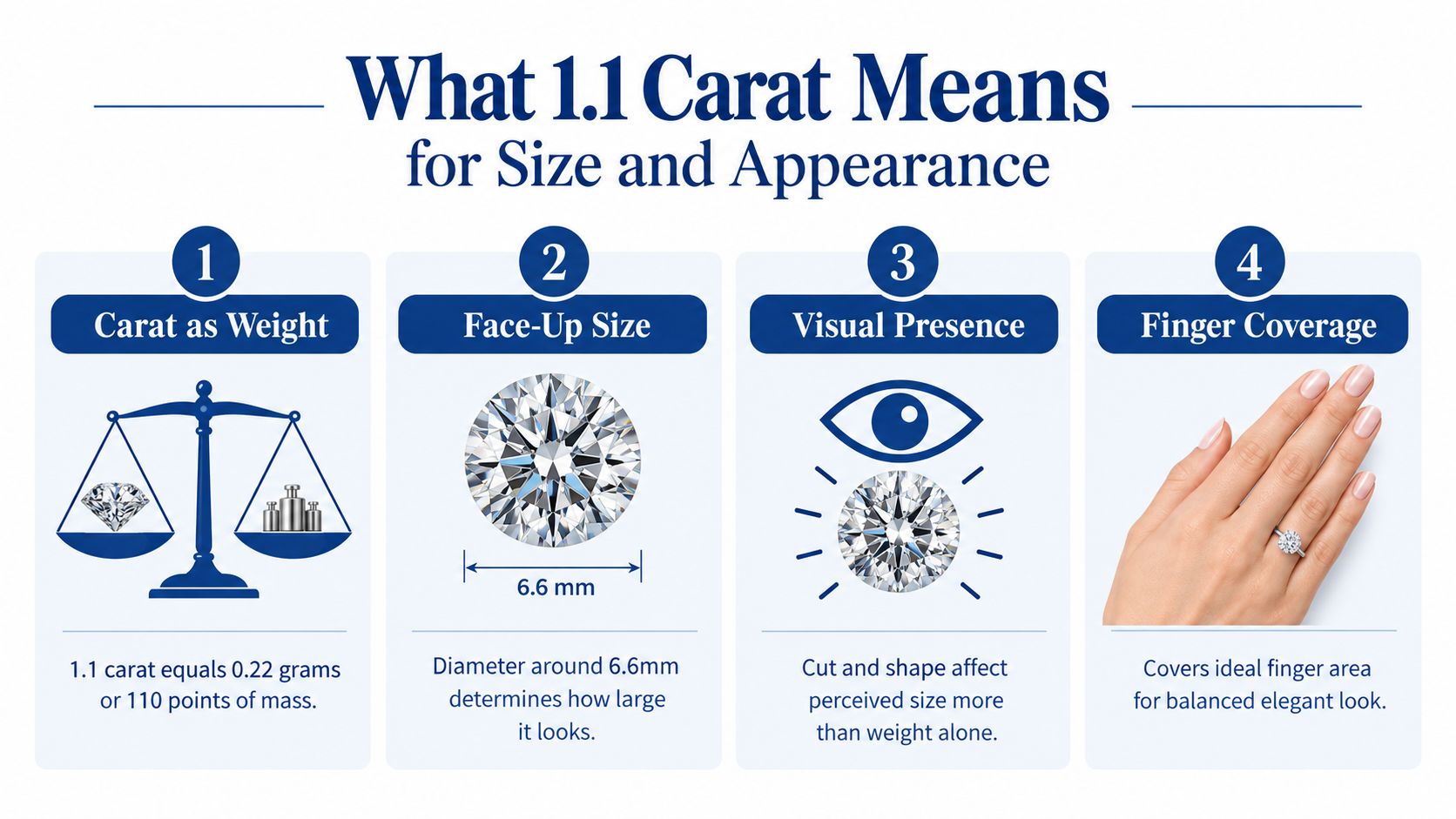
Carat is a weight measurement. It isn't a direct measurement of diameter, surface area, or how much of your finger the diamond covers.
One carat equals 0.2 grams, so a 1.1-carat diamond weighs about 0.22 grams, according to the Montclair State University diamond reference. In gem-trade language, 1.1 carats equals 110 points. Think of points as smaller units used to describe a diamond's carat weight, much like cents describe part of a dollar.
Key concept: Carat measures weight, not spread.
That distinction matters at the counter. A round 1.1-carat diamond is commonly around 6.71 millimeters in diameter, with a reported face-up area of about 35.36 square millimeters. The same reference identifies the stone's volume as 62.5 cubic millimeters. These measurements are more useful for judging visible size because your eye sees the diamond from the top, not from a scale.
Why two stones can look different
A diamond carries some of its weight below the table, inside the pavilion. If a stone is cut deeper, more of its mass sits underneath, and the top view may look smaller than expected. A thick girdle can have a similar effect. Another 1.1-carat stone may distribute its weight more efficiently across the visible surface and appear wider.
The 2026 diamond price chart reference uses 35.36 square millimeters as a typical face-up benchmark for a 1.1-carat round diamond. It notes that stones within approximately 5% lower to 3% higher face-up area than that reference can be considered adequate. That gives shoppers a practical filter when comparing listings.
The difference from 1.0 carat is physically small. A 1.1-carat diamond is only 0.02 grams heavier than a 1.0-carat diamond, yet its visible dimensions can be noticeably larger depending on proportions and shape, as explained in the Montclair reference. When you're viewing an in-stock ring, ask to see the report and the millimeter measurements together. Weight tells you what the diamond weighs. Measurements tell you what you're likely to see.
How Much a 1.1 Carat Diamond Costs Right Now
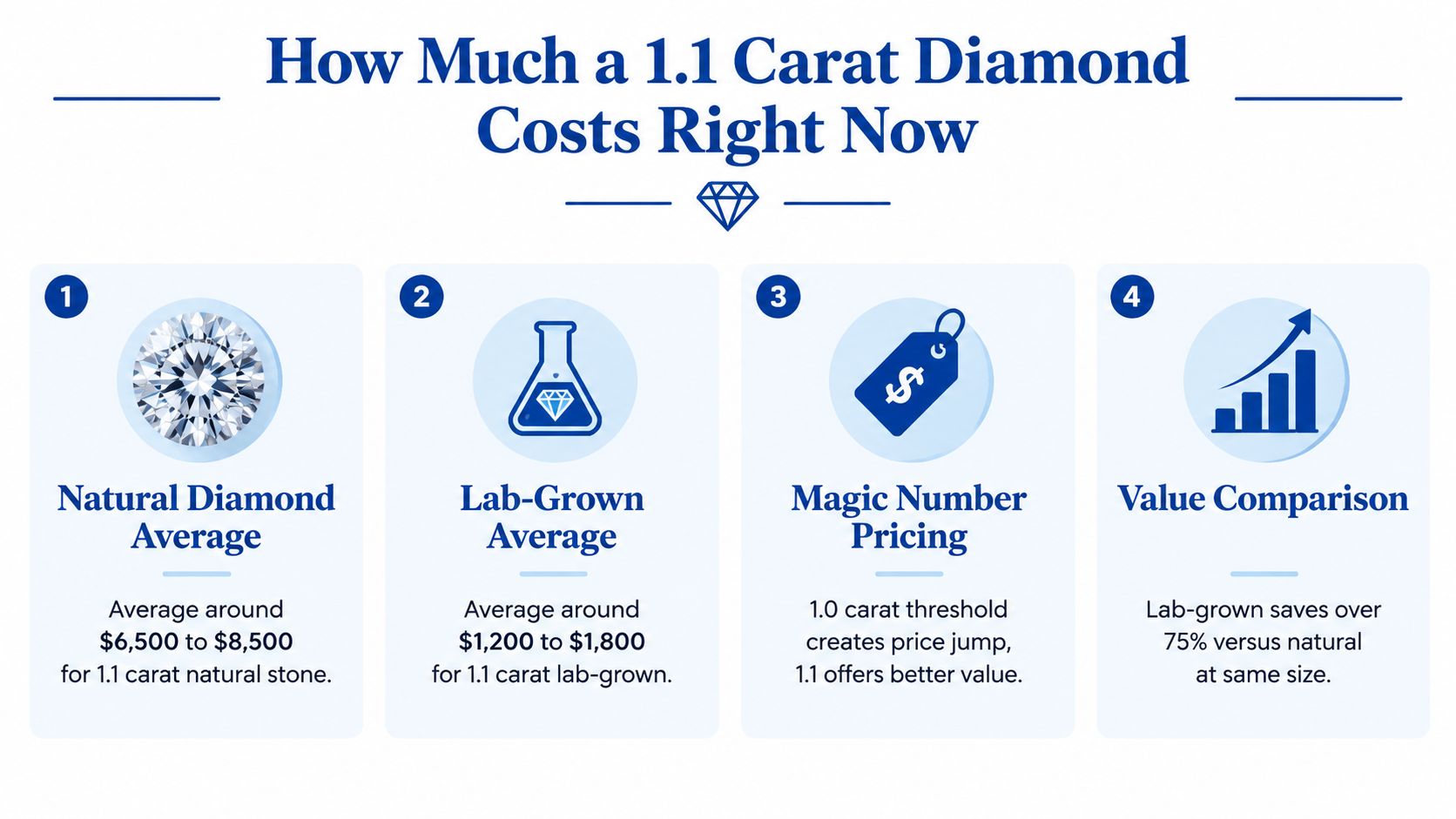
The price difference between natural and lab-grown diamonds is substantial at this size. September 2026 market data lists the average price for a 1.1-carat natural diamond at about $4,917, with reported prices ranging from approximately $867 to $13,017. The same source lists average 1.1-carat lab-grown pricing around $556 to $622. You can review the current 1.1-carat diamond price benchmarks for the market context behind those figures.
Those numbers aren't a quote for a finished Las Vegas ring. A listing can also include the setting, metal, certification, retailer margin, and the exact combination of shape, cut, color, and clarity. Still, they show why a lab-grown 1.1 carat diamond often makes a larger-looking ring possible within a controlled budget.
Pricing also changes at popular carat thresholds. The market commonly treats 1.00 carat as a key pricing boundary, and the 1.0 to 1.2 carat band averages about $4,951 per carat, based on the StoneAlgo data. The extra 0.1 carat doesn't always add cost in a straight line because buyers and sellers pay attention to these milestone weights.
Why lab-grown pricing changes the comparison
Current lab-grown pricing is compressed enough that the additional weight can represent a modest absolute increase while producing a visible difference. For comparison, 2026 benchmarks place comparable 1-carat lab-grown diamonds around a $690 fair market value, with mainstream retail ranges around $590 to $780 and broader same-spec listings ranging from $295 to $899, depending on retailer and grading mix. The 2026 lab-grown diamond pricing guide explains why shoppers should compare the complete specification rather than rely on a single advertised average.
A mid-2026 comparison of IGI-graded VS2 lab-grown diamonds lists an average of about $700 for 1.00 carat, $1,350 for 2.00 carats, and $2,200 for 3.00 carats, according to CaratWire's lab-grown price data. The figures illustrate how lab-grown buyers can move into larger sizes without the same natural-diamond price structure.
For a closer look at a ready-to-wear option, compare the lab-grown 1-carat diamond ring selection and then check whether a 1.1-carat ring offers the better balance of spread, setting, and total price.
How Cut and Shape Change the Look of 1.1 Carat
A 1.1-carat round diamond gives you a familiar reference point, but other shapes can create a different visual impression at the same weight. The outline, length-to-width ratio, facet pattern, and depth all affect what your eye notices first.
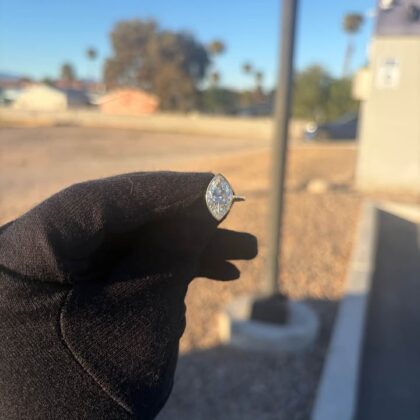
Round brilliant stones are chosen for lively sparkle and balanced symmetry. Ovals often appear longer across the finger, so their outline can create more coverage in the lengthwise direction. Pear shapes combine a rounded end with a point, which can make the finger look more elongated, while the setting needs to protect and properly orient the tip.
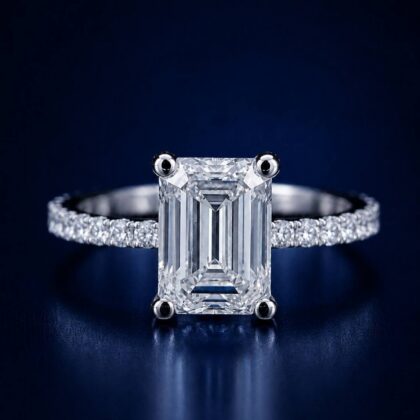
Emerald cuts behave differently. Their broad, open facets create flashes and reflections rather than the dense sparkle pattern associated with a brilliant cut. That makes clarity and the stone's internal appearance especially important when viewing an emerald-cut 1.1 carat diamond in person.
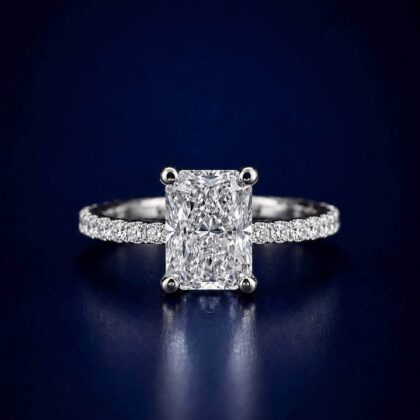
Radiant cuts combine a rectangular or square outline with brilliant-style faceting. They can look bright and substantial, but the corners and length-to-width ratio vary widely from one stone to another. Two radiants with the same carat weight may feel completely different on the hand.
| Shape | Visual character | Best for |
|---|---|---|
| Oval | Elongated outline with soft curves and a lengthening effect | Buyers who want a larger-looking profile across the finger |
| Emerald | Clean step-cut flashes and a more architectural appearance | Buyers who prefer understated elegance and visible facet pattern |
| Radiant | Rectangular or square outline with lively brilliant-style sparkle | Buyers who want strong brightness with a modern silhouette |
| Pear | Rounded end, pointed tip, and directional shape | Buyers who like a distinctive outline and elongated look |
The engagement ring shapes and cuts guide can help you compare these outlines before visiting. The final choice should still happen with the ring on your hand, because the setting changes the apparent proportions.
Shop-floor rule: At the same weight, compare the millimeter measurements and the diamond's face-up appearance before comparing the certificate grades.
A well-proportioned 1.1-carat stone can look more substantial than a deeper stone with the same weight. The setting also matters. A narrow band can make the center appear more prominent, while a heavier halo or wider band changes the visual balance around it. Those effects are easiest to judge with the actual ring in front of you, not from a carat number alone.
Choosing Clarity Color and Certification With Confidence
A grading report gives you a shared reference point, but it shouldn't replace your eyes. For an in-stock lab-grown diamond, start by checking the report number, then evaluate how the stone performs under normal viewing conditions.
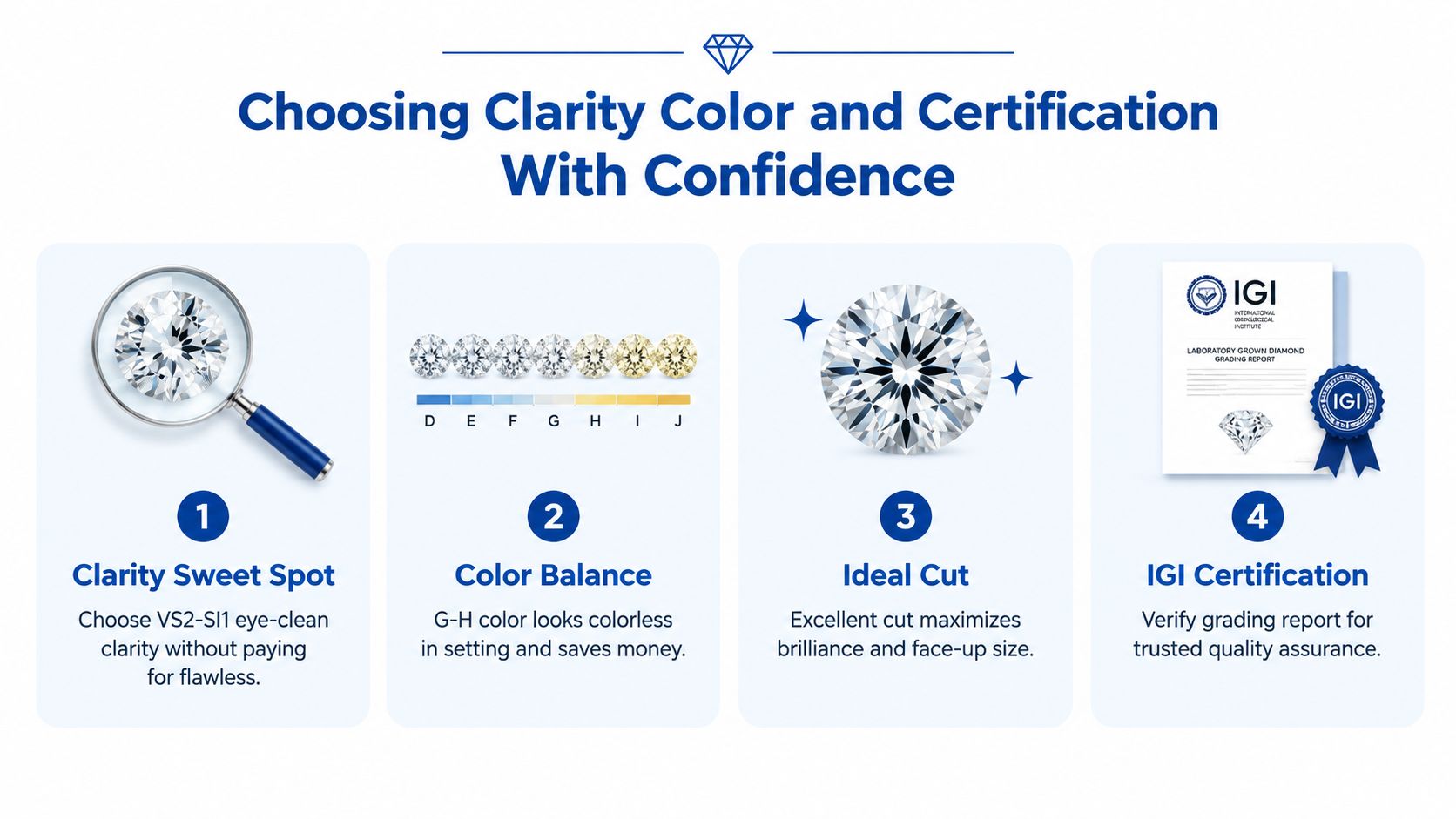
Clarity describes internal and surface characteristics. Many engagement-ring buyers focus on whether the diamond looks clean without magnification rather than whether it carries the highest possible clarity grade. A VS2 or SI1 stone can be worth considering when inclusions aren't visible to the unaided eye, but the exact location and type of inclusion still matter.
A practical viewing filter
Start with eye cleanliness. Look at the diamond from the top, then tilt it under the store lighting. A dark mark near the center may be more distracting than a small feature near the edge. If you can't evaluate it comfortably, ask to inspect the actual stone with a loupe and without one.
Check color in the setting. G to H color can offer a balanced appearance for many white-gold or yellow-gold settings, but the metal and shape influence what you see. Step-cut stones can reveal body color differently from brilliant cuts, so compare actual rings rather than choosing a letter in isolation.
Prioritize cut performance. Cut controls how the diamond returns light. Look for brightness across the face, lively flashes as the ring moves, and no obvious dull area through the center. A higher clarity or color grade can't compensate for a stone that looks flat.
Verify IGI documentation. Match the certificate or report number to the listing and the stone. The report should identify the laboratory-grown origin and state the carat weight, measurements, shape, color, clarity, and cut information where applicable. Ask to see the report before paying.
The International Gemological Institute's laboratory-grown diamond information can provide broader background on grading reports and laboratory-grown stones. For a same-day purchase, the critical point is matching the physical ring to the documented diamond. Also confirm the listed ring size before you travel, since ready-to-take-home inventory may not include on-site resizing.
Buying Your 1.1 Carat Ring Today in Downtown Las Vegas
Same-day buying works best when you start with inventory, not a vague request. Text the jeweler your budget, preferred metal, shape, and ring size before you arrive. A prepared selection can then focus on the 1.1-carat lab-grown rings that are physically available rather than showing options that require ordering.
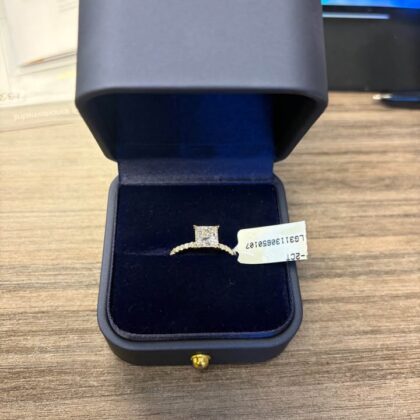
At Last Call Rings LV, the published model is appointment-only and inventory-first. The shop is located at 2925 Fremont St, near downtown chapels and the Marriage License Bureau. Listings show the ring's price and size, and the in-stock collection includes lab-grown diamonds in cuts such as oval, emerald, radiant, and pear, with settings in 14K white or yellow gold.
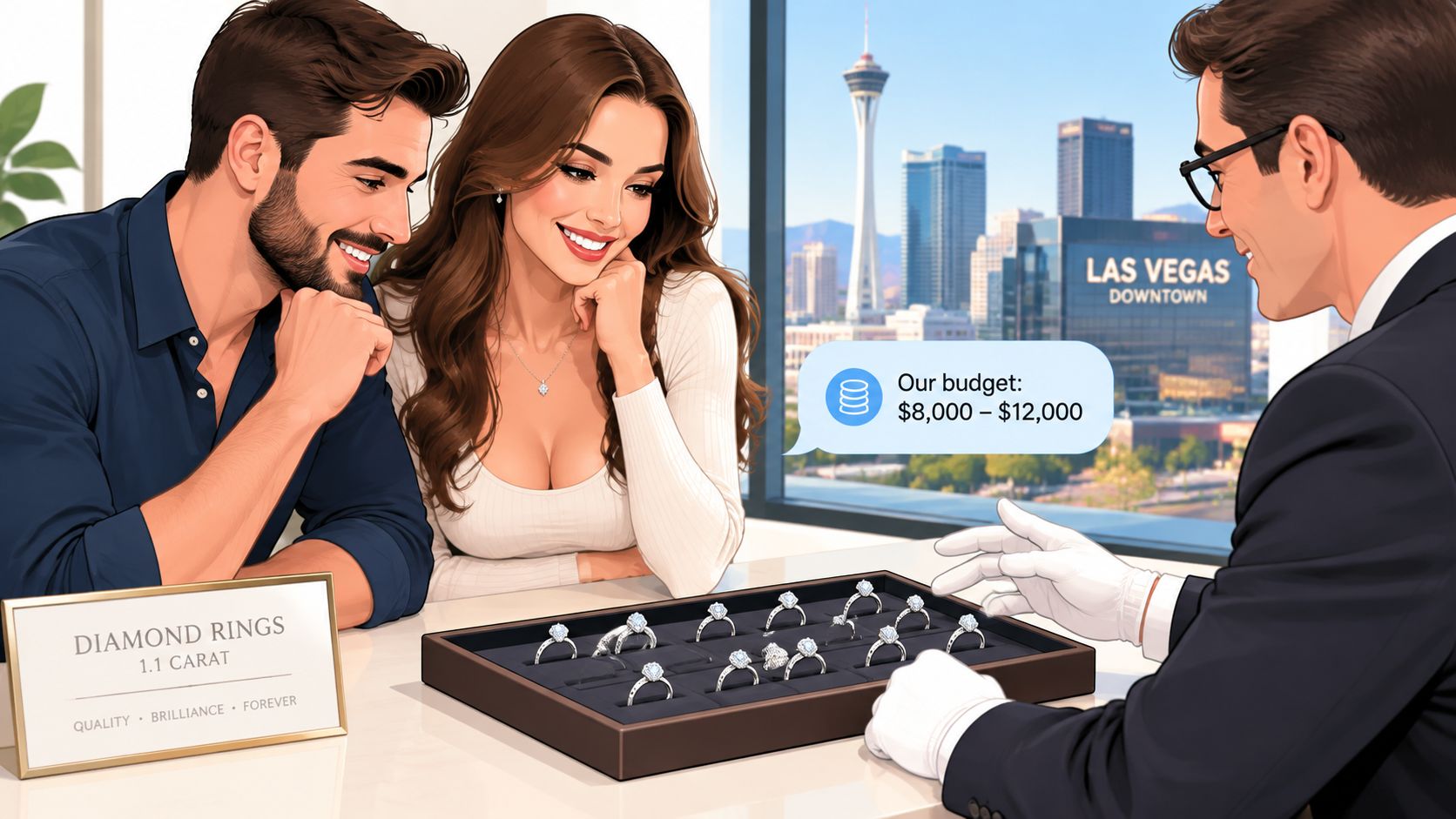
A simple same-day sequence
- Send the details by text. Include your budget, desired shape, metal preference, approximate ring size, and whether you need the ring today.
- Review the pulled options. Confirm the center carat weight, millimeter measurements, IGI report reference, setting metal, and listed size.
- View the actual rings privately. Check face-up spread, sparkle, color, clarity appearance, and how each band looks on the hand.
- Confirm the final purchase details. Ask about the certificate, receipt, care guidance, and the fact that the ring is ready to take home.
The shop's ready-today listings are intended to represent physical inventory rather than dropshipped products. That distinction matters when a visitor has a proposal or chapel schedule. The service also has a clear limitation, there's no on-site resizing, so the published ring size deserves attention before you book the viewing.
Late-evening appointments can suit visitors who have dinner, a show, or a ceremony earlier in the day. If your plan includes the marriage license bureau, verify both schedules directly and leave travel time between the ring appointment and the ceremony. For local shoppers, the same process can be slower and more deliberate, with the advantage of returning to compare a setting or confirm sizing.
Browse the Las Vegas engagement ring selection before texting. Use the listing information to narrow the visit, then judge the 1.1-carat diamond in person.
Final Takeaways for Your 1.1 Carat Decision
A 1.1 carat diamond makes sense when you evaluate it through three separate lenses.
First, look at spread. The stone weighs about 0.22 grams and equals 110 points, but the face-up measurements determine how large it looks from across the table. For a round stone, approximately 6.71 millimeters in diameter and about 35.36 square millimeters of face-up area provide a useful reference. Proportions, pavilion depth, and girdle thickness can change the result.
Second, separate origin from size. September 2026 benchmarks place the average 1.1-carat natural diamond around $4,917, while reported lab-grown averages sit around $556 to $622. Those figures don't determine the exact price of a finished ring, but they explain why lab-grown options can provide strong visual presence at a lower stone cost.
Third, choose the diamond you can inspect. An oval may create a longer outline, an emerald cut may show broad step-cut flashes, a radiant may combine a rectangular profile with brilliant sparkle, and a pear may provide a distinctive tapered silhouette. The best choice is the one whose cut performance, face-up dimensions, color, clarity, certificate, setting, and ring size work together.
For a Las Vegas buyer, an in-stock ring reduces the biggest same-day risks. You can verify the stone, read the IGI report, try on the setting, confirm the price, and leave with the ring instead of waiting for an online order. Text your budget and preferred shape to Last Call Rings LV, request a private viewing of available 1.1-carat lab-grown rings, and confirm the listed ring size before you arrive.
Last Call Rings LV offers physically in-stock, IGI-certified lab-grown engagement rings with visible listing prices and same-day pickup in downtown Las Vegas. Text your budget, preferred shape, and ring size to arrange a private viewing, then choose a 1.1-carat ring you can inspect and take home today.